All posts by Trevor Larkum

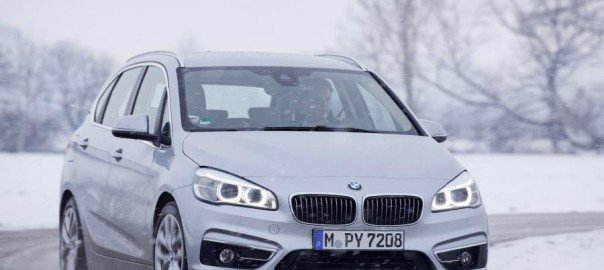
BMW 225xe Active Tourer PHEV

2016 BMW 2 Series Active Tourer 225xe review

BMW expands their range of plug-in hybrids with the four-wheel drive 225xe. Does a 25-mile electric only range increase the 2 Series Active Tourer’s appeal?

BMW 225xe Active Tourer PHEV

The plug-in hybrid has proved a popular choice for many in the UK.

Given the tax breaks and sizeable government grant plug-in vehicles receive, it’s no surprise to see BMW expanding their range of hybrids to include the 2 Series Active Tourer, particularly given that it’ll be one of the very few plug-in cars in this high-roofed, five-seat MPV class.

The 225xe has enough battery capacity to run for up to 25 miles on electricity alone before the 1.5-litre turbocharged petrol engine kicks in to give you just as much range as a standard petrol 2 Series.

Even this limited electric range gives it some impressive claimed fuel economy and CO2 emissions figures. The 225xe emits 46g/km of CO2 – meaning it falls into the lowest company car tax band – and has a combined fuel economy figure of 141.2mpg.

What is the 2016 BMW 225xe Active Tourer like to drive?

Driven carefully and with a fully charged battery, the 225xe acts just like an electric car. Around town, it’s easy to keep the engine from firing unless you either flatten the throttle or switch the car to battery save mode to preserve charge.

If you’re determined to run on volts alone, there’s an electric-only mode that will prevent the petrol engine from running even under harder acceleration. As you would expect, though, the quicker you gain speed and the higher your speed, the sooner the battery runs out.

Once the battery is fully depleted, the engine runs for much longer periods of time. This means the 141.2mpg figure is only achievable over short distances where the car can run in electric mode for much of the time.

Thanks to the relatively small capacity of the battery, charging doesn’t take too long even off a normal three-pin plug, which will charge the battery in 3.5 hours. A BMW supplied Wallbox charger will cut that to two hours and 45 minutes.

There are other benefits to the hybrid system; while the 1.5-litre turbocharged petrol engine produces just 134bhp, the rear-mounted electric motor produces another 87bhp. That means there’s 221bhp with both working together, enough for a 0-62mph time of just 6.7sec accompanied by a sporty sounding warble from the engine.

Read more: What Car
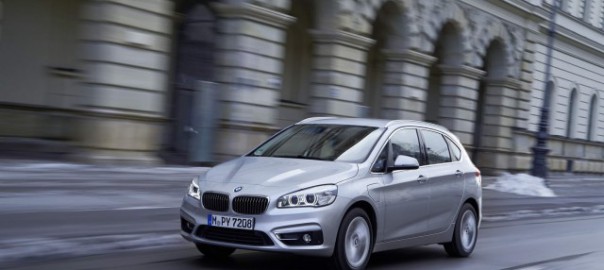
BMW marries hybrid and 4WD in new 225xe Active Tourer (Image: BMW)

First drive: BMW 225xe Active Tourer

BMW’s expansion of its non-i hybrid portfolio continues, as hot on the heels of the 330e is the 225xe Active Tourer. Yes, that means it’s a petrol-electric version of Munich’s unusual mini-MPV, but a tour on mixed roads near the company’s Bavarian headquarters revealed a few surprises in the 2 Series’ armoury…

BMW marries hybrid and 4WD in new 225xe Active Tourer (Image: BMW)

What’s this?

A BMW 2 Series Active Tourer that has been given the drivetrain of the i8 sports car. Sort of. But turned through 180 degrees. So, for the 225xe you get all three modes of traction in one: in Auto eDrive, the car’s software chooses from and mixes up the 1.5-litre three-cylinder petrol’s 136hp and the rear-mounted electric motor’s 88hp, giving you all-wheel drive; switch to Save, and only the engine and the front axle are used, while the on-board lithium-ion battery pack is replenished by both the combustion engine and the regenerative brakes; and finally, in Max eDrive, providing you have charge, then the 2 Series becomes rear-wheel drive and fully electric with zero emissions.

This clever system, all packaged up in the practical if rather cumbersome Active Tourer body, makes this an ideal car for daily commuters with young families who live in cities where there are extremes of weather. Which might sound like a narrow window of opportunity, but actually there’s a bigger market for such a 2 AT than you might expect. BMW reckons that after the US and Japan, the UK, Holland and Germany will lap this thing up.

Prices are extremely competitive for the PHEV. It starts at £35,155, so with the £5,000 Government grant that brings it down to a little more than £30,000; cheaper than the 225i xDrive’s £32,010. However, from March 1 the rules change and the 225xe will be a Category 2 Ultra-Low Emissions Vehicle (ULEV), meaning the grant reduces to £2,500, making the 2 AT PHEV at least £32,655. Pricey, perhaps, but for that, you’ll get a part-electric, all-wheel drive, premium, five-seat MPV, which puts it in a class of… one, for the time being. And, visually, it looks like any 2 Series Active Tourer, save for the external ‘225xe’ and ‘eDrive’ badging, the ‘extra filler’ charging port flap on the front nearside wing and an interior that features a lot of blue lighting and stitching, a few extra hybrid-related screens in its digital displays and an eDrive button on the centre console. Pretty, the 225xe ain’t, but with regards to its primary purpose of shuttling people about, it is at least functional.

How does it drive?

On the face of it, marvellously well. It’s another blinding integration of electrification by BMW, as the 225xe feels superb on first acquaintance. The petrol-electric drivetrain is great at nipping what is a fairly hefty machine (1,660kg) through town and once the roads open out, the Two’s full punch is pretty impressive. The steering’s great, the six-speed Steptronic auto is an utter gem, the brakes are… well, they’re good, although the task of harvesting energy for the battery under deceleration always makes them feel just a little odd underfoot, but generally it proves to be a likeable, premium motor to cruise about in. The three-cylinder engine also makes a great noise under hard acceleration, which is a boon.

Read more: Car Enthusiast

BMW 225xe Active Tourer PHEV

2016 BMW 225xe Active Tourer review

BMW’s plug-in hybrid extravaganza continues with its 225xe Active Tourer, offering practicality allied to tiny CO2 emissions and pure electric drive

BMW 225xe Active Tourer PHEV

What is it?:

The BMW 225xe Active Tourer takes the fundamentals of the petrol-electric hybrid driveline layout first unveiled on the i8 sports car and turns it 180deg, creating an intriguing four-wheel-drive hatchback-cum-MPV capable of travelling up to 25 miles on electric power alone.

This allows the new five-seater to claim combined cycle fuel consumption of 141mpg and average CO2 emissions of just 46g/km on the controversial EU test cycle – figures that see it qualify for the UK government’s OLEV grant and mean it is exempt from congestion charges such as that in place in central London.

The new BMW is based around the front-wheel-drive 218i Active Tourer. However, some significant engineering changes have taken place to turn it into the four-wheel-drive 225xe Active Tourer, which is planned to go on sale in the UK in March at a price of £33,055.

While the i8 boasts electric drive on the front wheels, the imminently more practical 225xe employs electric drive on the rear wheels via a BMW-produced electric motor mounted within its rear axle assembly that delivers 87bhp and 122lb ft and provides drive via a fixed-ratio gearbox acting as a rear differential.

A similar change in configuration is reserved for the combustion engine. The turbocharged 1.5-litre three-cylinder petrol unit employed by the i8 sits in an east-west position behind the cabin and channels drive to the rear wheels, but the similar configured powerplant in the 225xe is mounted transversely up front and directs its reserves to the front wheels.

The petrol engine boasts the same tuning as that of the 218i Active Tourer, serving up 134bhp and 162lb ft on a reasonably wide band of revs between 1250 and 4300rpm. As on the i8, the moderate reserves are channelled through a six-speed automatic gearbox with paddle shifts mounted on the steering wheel.

Altogether, there’s a combined system output of 221bhp and 284lb ft. It’s not the most powerful 2-Series Active Tourer model, though. That honor rests with the 225i, whose turbocharged 2.0-litre four-cylinder petrol engine makes 228bhp and 258lb ft.

Electrical energy used to run the electric motor is sourced from a 7.6kWh lithium ion battery mounted underneath the rear seat in the same space as the fuel tank is located in conventionally powered Active Tourers.

As a result, the fuel tank has been reduced in capacity by 15 litres to 36 litres. It’s now also made of steel rather than plastic and is pressurised to allow petrol to be stored safely over longer periods if the 225xe is used predominantly in electric mode. The rear seat has also been raised by 30mm to accommodate the battery, which uses the same cells as that employed by the new 330e.

Even so, boot capacity has been reduced by 70 litres to 400 litres owing to the packaging of the power electronics in the front section of the boot floor.

Aside from a flap integrated in the front left-hand wing, housing the socket for charging cable, the 225xe looks like any other 2-Series Active Tourer. Recharging time on regular mains electricity is claimed to take 3hr 15min, with an optional high-power wall box reducing this to 2hr 15min.

Read more: Autocar

BMW 330e PHEV (Image: BMW)

First drive: the BMW 330e, a plug-in 3-Series

Why are you reviewing a normal-looking BMW 3-series?

BMW 330e PHEV (Image: BMW)

Because it’s got a plug-in hybrid drivetrain, that’s why. But it’s not like the 225xe people carrier, which is a natively front-driven car. That car’s hybrid system adds an electric motor at the back for the bonus of 4WD.

This 330e, on the other hand, is natively rear-drive. It uses a motor hooked directly to the flywheel driving through the regular automatic gearbox, so it’s still rear-drive only. So closer to BMW’s tradition.

OK, got it. Any numbers for me?

It uses a four-cylinder, 2.0-litre petrol engine with 184bhp. Add the e-motor to the equation, and you have 252bhp in all. Because the electric motor is geared one-to-one with the engine, its contribution is there for you all the time (the 225xe’s rear motor has a single-speed transmission and its effort falls away to nothing at motorway speed). So the 330e has the poke of a 330i petrol, and gets to 62mph in 6.1sec. Hot hatch quick.

Does it feel as lively as the numbers suggest?

Pretty much. There’s a smooth urge at mid revs thanks to the ever-alert electric torque. The petrol engine is quiet, but its tone is boring and grumbly. But nothing like as loud as the diesel engine you’d be buying instead.

In town, you’re often propelled by uncannily smooth and silent e-drive. Provided the battery has charge, the electric motor, at 88bhp, is plenty powerful enough for urban use without troubling the engine at all.

And the economy?

Officially, 149mpg and 44g/km.

Read more: Top Gear

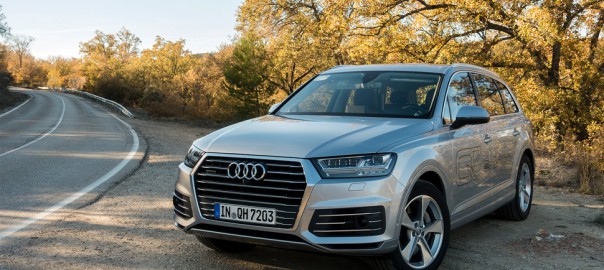
Audi Q7 e-tron PHEV

Audi Q7 e-tron first drive: Electro efficiency

Plug-in electric vehicles are on the rise, with the Audi Q7 e-tron joining the A3 Sportback e-tron and R8 e-tron – taking the German maker’s count up to three. There’s clearly momentum behind electric, thanks to its efficiency, environmental and fuel-saving implications.

Audi Q7 e-tron PHEV
Audi Q7 e-tron PHEV

But going green might put you in the red. The Q7 e-tron’s anticipated £65,000 starting price is a good £15k more than the combustion-only model – the one we took for a spin back in the summer of 2015 – which is a sizeable premium for this sizeable SUV. Is it worth it? We took the e-tron electric hybrid on the road to see what we made of it.

Audi Q7 e-tron first drive: It’s a 5-seater

First thing’s first, if you’ve thought about buying an SUV then the Q7 really ought to make your shortlist simply because it’s a good looking driving machine that avoids being too tank-like in its ways.

But – and it’s a critical one – if your eyes have veered over to the e-tron version, hand on environmental heart, then you’ll need to consider the space implication of the batteries. They’ve got to go somewhere, after all, and in the case of the Q7 e-tron that means it can only be a five seater, not a seven seater (which may sound at odds with its name, but that’s that way it is).

Audi Q7 e-tron first drive: Electric range

But the obvious trade-off between seating arrangements is that the Q7 e-tron can scoot along happily using only its electric motor – which with 94kW of output, translates to 128bhp – for up to a 35-mile range per charge. That might sound quite conservative, but let’s not forget this is a 2.5-tonne vehicle (it’s 450kgs more than the standard Q7), so perhaps that’s no surprise.

If you’ve got a commuting route with a charger at the other end (7.2kW charging means a refill in 2.5-hours; at-home means 8-hours per recharge), then you’ll quickly save on those pricey diesel top-ups over the course of time.

Read more: Pocket Lint

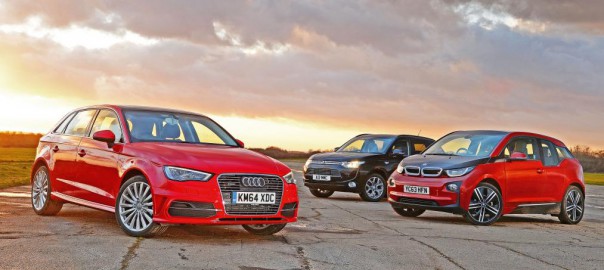
Audi A3 e-tron, Mitsubishi Outlander and BMW i3 plug-ins

Rush of orders expected before plug-in grant changes

Vehicle leasing providers are encouraging those looking at plug-in hybrid vehicles to place their order as soon as possible to make the most of the current UK Government Plug-in Car Grant (PiCG) scheme.
etron-statics-258_Etron_i3-Outlander_AutoExpress

With the grant system set for a shake-up from Tuesday 1st March 2016, there are only a few weeks left to get orders in before the level of government subsidy halves for PHEVs – the fastest growing alternative-fuel car market.

New rules for the PiCG see three categories come into force with only pure electric vehicles (EVs) eligible for the full £4,500 subsidy. These are models that emit less than 50 g/km CO2 and have a zero-emission range of at least 70 miles.

Categories 2 and 3 involve less than 50 g/km CO2 models with a zero-emission range of 10-69 miles and 50-75 g/km CO2 vehicles with a zero emission range of at least 20 miles respectively. These two categories will receive grants of £2,500 off the price of a car, rather than the current £5,000.

It is unclear what manufacturers will do once the new PiCG levels kick in, with some manufacturers potentially set to absorb the additional expense in the list price. There is no requirement for them to do this though so the car that you are looking at now could end up a few thousand pounds more expensive in a month’s time.

Next Green Car’s leasing partners GKL Leasing forecast that businesses will see increases in premiums of at least £90+VAT from 1st March and are encouraging customers to make the most of these savings by placing orders before the end of February.

Sam Young, Low CO2 Business Development, Westward Leasing (GKL Bristol), said:

“If you are even considering one of these vehicles this year then you need to act now. These cars are never going to be any less than now. With the delivery window so long and with the ability to pre-order for dates later in the year then the time to act is now to make things as cost effective as they will ever be.

“If you have cars doing less than 20,000 miles per year the savings available from tax benefits, urban fuel use and the great environmental benefits and image for a business makes this type of car an essential part of any fleet. So don’t get left behind and end up paying more when you realise it’s what you should have done before.”

Source: Next Green Car

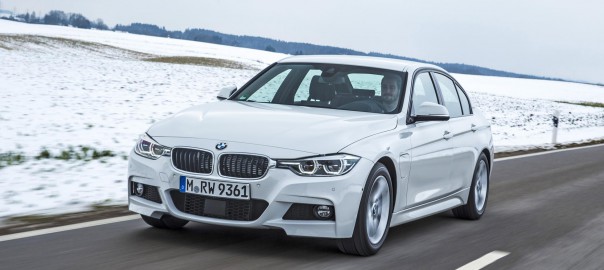
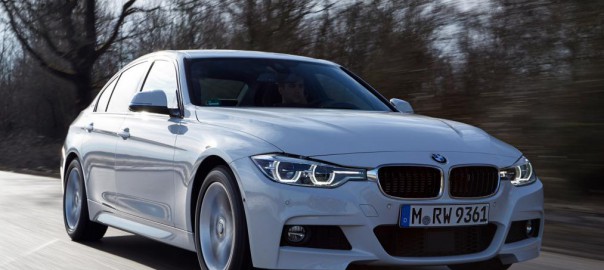
BMW 330e plug-in hybrid

BMW 330e plug-in hybrid 2016 review

MW’s 3 Series gets more economical with plug-in hybrid powertrain

Verdict: 4 stars
As hybrids grow in popularity, the BMW 330e is likely to become a fleet favourite among company car drivers – and deservedly so. It joins the Mercedes C 350e in moving the game on from the comparatively thirsty (and non plug-in) Lexus IS 300h. It looks and drives like a 320d, but costs a fraction of the price to run and is utterly silent around town. Audi will feel a desperate rush to get its upcoming A4 e-tron to market, and double quick, too.

BMW 330e plug-in hybrid

BMW wants a 10 per cent share of the electric car market worldwide by 2020. The success of models like this 330e will be key, and with plug-in versions of the 2 Series, 7 Series and X5 all on their way – it doesn’t look an impractical goal.

While the company is a long way from ditching its fast but frugal diesels, it is looking to the future with its expanding range of plug-in cars. The 330e gets an all-electric range of around 25 miles, which BMW says offers “the right solution” for its customers.

From the outside, it looks much like any other 3 Series. There is a pair of badges on the rear wings, as well as the tell-tale 330e moniker on the back – but save the additional charge port ahead of the front-left wheel, there’s no distinguishing this from the already fleet-friendly 320d.

Inside, it’s much the same story. So much so, in fact, you’d be hard pushed to tell this example is capable of as much as 148mpg. There is a small ‘eDrive’ button by the gear lever, but aside from that it’s business as usual.

Read more: AutoExpress

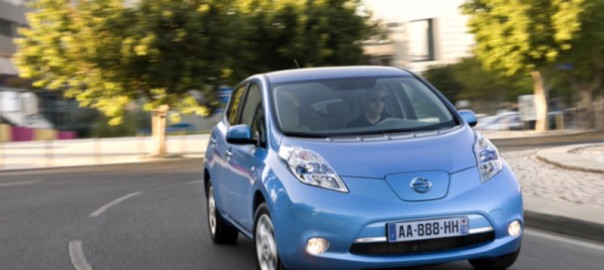
The Leaf 30kWh has an official range of 155 miles - with 124 miles of real world range

Nissan Leaf 30kWh UK launch

Next Green Car was invited along to the UK launch of the Nissan Leaf 30kWh at Silverstone yesterday (Tuesday 26th January), giving us another chance at an early test for the new longer-range model.

The Leaf 30kWh has an official range of 155 miles - with 124 miles of real world range
The Leaf 30kWh has an official range of 155 miles – with 124 miles of real world range

With around 12,000 UK sales, the current Leaf is the best selling electric vehicle (EV) on the market and has played an important part in increasing the growth of plug-in vehicles in the country. Since its UK launch in 2011, the Leaf has been been joined by the likes of the Renault Zoe, BMW i3, and VW’s e-Golf and e-up! in terms of pure-electric models, and a number of plug-in hybrid vehicles also to increase ultra-low emission vehicle (ULEV) sales dramatically in the last five years.

As a market leader then, Nissan is keen to maintain its position as a familiar EV manufacturer to the general public, and this new version of the Leaf shows its commitment to improving the offering available to consumers.

The previous generation of Leaf – the 24kWh battery model – had a quoted range of 124 miles, and a real world ability to cover around 99 miles on a single charge. The 30kWh model extends that official range to 155 miles which, although it is highly unlikely that drivers will ever achieve this figure, the real world range only drops to 124 miles – or the official range of the previous model.

When we attended the European launch towards the end of last year, we had an extended and challenging test route set up which took us up into the Alpes Maritime, with some long climbing making the range plummet before a downward section that saw us recuperate a large amount of energy. This tested the Leaf’s range to extremes and it coped very well, averaging some impressive figures. However, it was worth seeing how well the new Leaf would do on a cold and wet January morning in Britain, with muddy surfaces, pot-holes and a wide range of different roads available to deal with.

In terms of testing the biggest change to the Leaf – the increased range – the Nissan again performed well. The route was less obviously demanding, there are no mountains to climb in Northamptonshire after all, but conditions and roads represented a far more typical journey.

The car we were allocated came with a full charge and an indicated 99 miles worth of range. This low figure was explained by both a cold night and, of greater impact, the fact that the car had been used for press images the previous day, with the Leaf having weighted its indicated range to some spirited driving.

Deciding to treat the Leaf without any deference normally due to an EV, we set off on the route and drove exactly as if we were in a petrol or diesel model. The only difference was the use of the Leaf’s Eco button once acceleration was completed and we were largely up to speed. This meant sitting at around 70 mph on dual carriageways and motorways for about a third of the 55 mile route.

Read more: Next Green Car

Nissan LEAF Sales Rose 29% In UK In 2015

Nissan LEAF sales in the UK continued their fast rise last year — with 5,236 registrations of the popular electric vehicle being reported in 2015.

image18-e1453683418820_Nissan_Leaf_unk

That means that Nissan LEAF sales in the UK rose roughly 29% in 2015 — as compared to 2014’s sales of the all-electric (EV) car.

According to company reps from Nissan, that means that the LEAF outsold other all-electric vehicles in the UK in 2015 by a more than 2-to-1 margin. The Nissan LEAF has now been the top-selling all-electric vehicle in the UK for the last 4 years — a winning streak that looks likely to continue for at least one or two more years.

“This record year for Nissan highlights once again the importance of our investment in the UK and commitment to electric vehicles,” stated James Wright, Nissan Motor GB Managing Director. “We’re proud to be leading the industry when it comes to 100% electric vehicles and with our new longer range LEAF and e-NV200 there are options available to everyone.”

Also worth noting here is that Nissan’s partnership with the renewable energy electricity supplier/utility company Ecotricity has been going well, and that EV charging stations are now spread across over 95% of the UK’s highway (motorway) system.

Read more: Clean Technica

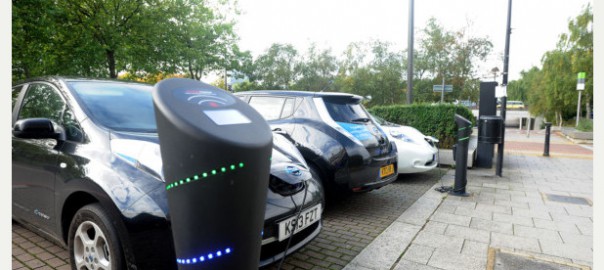
Electric cars charging in Central Milton Keynes

MILTON KEYNES RECEIVES £9MILLION GOVERNMENT FUND TO PROMOTE ELECTRIC CARS

MILTON Keynes has been named as one of several UK cities to receive funds worth millions of pounds to promote electric cars.

Electric cars charging in Central Milton Keynes

£9million has been allocated to MK to construct a Electric Vehicle Experience Centre that promotes electric cars and can arrange short-term loans. Funds will also be used to make the city’s 20,000 parking spaces available for all electric cars, and to allow them to use bus lanes in the city, which will be re-designated as “low-emissions lanes”.

Transport Secretary Patrick McLoughlin made the announcement earlier today, which is part of a £40million scheme.

He said,

“These Go Ultra Low Cities have proposed exciting, innovative ideas that will encourage drivers to choose an electric car. I want to see thousands more greener vehicles on our roads and I am proud to back this ambition with £40 million to help the UK become international pioneers of emission cutting technology.”

At present, a number of parking areas in Central Milton Keynes are designated for electric vehicles, and charging points have become an increasingly common site in the city. Milton Keynes will also pay host to a trial for driverless vehicles.

The other cities to receive a share of the money are London, Bristol and Nottingham/Derby, while further funds have been established for new projects in Dundee, Oxford and North East England.

Poppy Welch, who is the head of advocacy group Go Ultra Low, said,

“We’re excited to see the innovative ideas put forward by each of the winning Go Ultra Low Cities become reality over the coming months. The £40 million investment by government, combined with funds from each winning area, will transform the roads for residents in and around the 4 Go Ultra Low Cities.”

Source: Citiblog

f