Warnings of climate emergency after surface temperatures 1.35C warmer than average temperature for the month
Drought-hit land in Thailand (Image: EPA/R. Yongrit)
February smashed a century of global temperature records by a “stunning” margin, according to data released by Nasa.
The unprecedented leap led scientists, usually wary of highlighting a single month’s temperature, to label the new record a “shocker” and warn of a “climate emergency”.
The Nasa data shows the average global surface temperature in February was 1.35C warmer than the average temperature for the month between 1951-1980, a far bigger margin than ever seen before. The previous record, set just one month earlier in January, was 1.15C above the long-term average for that month.
“Nasa dropped a bombshell of a climate report,” said Jeff Masters and Bob Henson, who analysed the data on the Weather Underground website. “February dispensed with the one-month-old record by a full 0.21C – an extraordinary margin to beat a monthly world temperature record by.”
“This result is a true shocker, and yet another reminder of the incessant long-term rise in global temperature resulting from human-produced greenhouse gases,” said Masters and Henson. “We are now hurtling at a frightening pace toward the globally agreed maximum of 2C warming over pre-industrial levels.”
Study shows that large number of diesel vehicles exceed emissions limits; pressure to reduce environmental impact spurs support for new tax structure
The first year rate of Vehicle Excise Duty (VED) for new diesel cars should be raised by up to £800 to help reduce emissions, according to Policy Exchange.
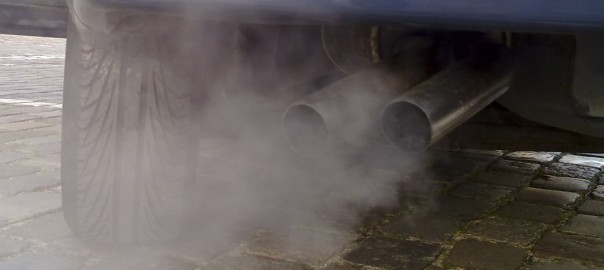
Car exhaust pollution (Image: Wikipedia)
The think tank is proposing HM Treasury increase the first year VED rate for new diesels to reflect the greater air pollution caused, in a bid to encourage people to buy lower emission alternatives such as petrol, hybrid or electric cars, instead. Based on a 50% decrease in diesel car sales, the increase in VED would raise around £500 million a year in additional taxes.
A study launched in January as part of a response to the VW ‘dieselgate’ scandal, found that a large number of diesel vehicles were breaking official emissions limits, despite actually following testing processes.
Richard Howard, head of environment and energy at Policy Exchange, said:
“Air pollution is overwhelmingly a diesel problem. The CO2 advantage of diesels has now been eliminated with data from the Society of Motor Manufacturers and Traders showing that, in 2013, CO2 emissions from new petrol cars were lower than those of diesel cars (on a sales-weighted basis).
“Euro 5 diesel cars sold as recently as 2014 perform no better in terms of NOx emissions than Euro 1 diesels sold in the 1990s. Despite this, Government policies continue to promote diesel vehicles. Consequently, diesel cars have increased from 14% of the car fleet in Britain in 2001, to 36% today. While the latest Euro 6 diesel cars show some improvement over Euro 5, on average they still emit six times more NOx than the latest petrol vehicles.”
A diesel scrappage scheme is also being proposed to provide grants for drivers who trade in their old diesel car or van for a lower emission vehicle.
Renault is planning to offer a range of battery capacities for its electric vehicles in the near future, enabling drivers to choose between long range and low cost to suit their needs.
Renault could soon offer multiple battery options for the ZOE, as Nissan and Tesla offer for their electric vehicles
Eric Feunteun, Head of Renault Electric Vehicles, said the company is working to improve energy density through better cell chemistry, to provide longer-range batteries within the same physical space – just as Nissan has recently started offering two versions of the LEAF, and Tesla has multiple options on the Model S and Model X.
“If you ask somebody if they want a larger range the answer is, of course, yes,” he explained. “Then when you move from emotion to facts, and you have a choice between 100 and 200 miles, and the cars with difference prices, the reaction becomes more rational. Some would definitely need the 200, either because they have less constraint in terms of cost or because they use it for 200. Others say they have enough with 100, and they can manage with it.
“I think two routes that will open, not only for Renault but for the market. One focusing on range, one route focusing on cost of ownership. The two routes are important, especially when you consider in the long term that the incentives might be reduced, so that’s how we see the future.”
In December I found myself sliding into a state of extreme unwillingness to take on new projects, to continue work on those in hand, to write, or do much of anything else, really, at work or at home. I found myself prodded awake in the night by worries about global warming, the tides of war and migration, the ramifications of random, dismal environmental facts come upon during the course of a day’s work, or of social justice problems encountered in the news and on the streets of Chicago; about any of which I can do very little to help. There were too many meetings with environmental groups, and no time for walks. I could not look at a tree without wondering how its species would fare in coming, climate disrupted years. I had reached a state of incipient burnout.
Thus, for a few weeks–a month and more, actually–after the solstice, I went into a state of semi-retreat. I did this by allowing myself to hope that COP21 would help bend the climate curve, and by pretending that our ongoing environmental catastrophe, of which climate change, is, after all, only a pernicious, deadly symptom, isn’t happening. I also attempted to pay less attention to the ever increasing spate of bad news, from war, to race relations, to migration, to the grim presidential race—and on and on and on, much of which is at least partly related to said catastrophe, with some industrial civilizational collapse, resource depletion and overpopulation thrown in.
Life depends on it. Bill McKibben on the big changes we’ve already made in remarkably short order.
We Need to Keep 80 Percent of Fossil Fuels in the Ground (Image: Yes!/J. Eckwell)
Physics can impose a bracing clarity on the normally murky world of politics. It can make things simple. Not easy, but simple.
Most of the time, public policy is a series of trade-offs: higher taxes or fewer services, more regulation or more freedom of action. We attempt to balance our preferences: for having a beer after work, and for sober drivers. We meet somewhere in the middle, compromise, trade off. We tend to think we’re doing it right when everyone’s a little unhappy.
But when it comes to climate change, the essential problem is not one group’s preferences against another’s. It’s not—at bottom—industry versus environmentalists or Republicans against Democrats. It’s people against physics, which means that compromise and trade-off don’t work. Lobbying physics is useless; it just keeps on doing what it does.
So here are the numbers: We have to keep 80 percent of the fossil-fuel reserves that we know about underground. If we don’t—if we dig up the coal and oil and gas and burn them—we will overwhelm the planet’s physical systems, heating the Earth far past the red lines drawn by scientists and governments. It’s not “we should do this,” or “we’d be wise to do this.” Instead it’s simpler: “We have to do this.”
And we can do this. Five years ago, “keeping it in the ground” was a new idea. When environmentalists talked about climate policy, it was almost always in terms of reducing demand. On the individual level: Change your light bulb. On the government level: Put a price on carbon. These are excellent ideas, and they’re making slow but steady progress (more slowly in the United States than elsewhere, but that’s par for the course). Given enough time, they’d bring down carbon emissions gradually but powerfully.
Time, however, is precisely what we don’t have. We pushed through the 400 parts per million level of CO2 in the atmosphere last spring; 2015 was the hottest year in recorded history, smashing the record set in … 2014. So we have to attack this problem from both ends, going after supply as well as demand. We have to leave fossil fuel in the ground.
As I wrote in a previous post about looking for wasted energy around the home “Fuel Included isn’t just about electric cars, but about the transition to a low carbon lifestyle”. Having insulated our hot water tank the next logical step seemed to be to power it from our renewable electricity supply so as to save the carbon footprint of heating it with gas.
Figure 1: Timer in place, ready to close up (Image: T. Larkum)
Of course, electricity is more expensive than gas per unit so I looked for a way to power it cheaply. This can be done during the day from solar, and also at night on an Economy 7 tariff. Therefore I needed a timer controller that would switch on the electric immersion heater only during the Economy 7 hours and, later in the year when there’s significant sunshine, during peak solar hours.
Figure 2: Old thermostat, removed from top of tank (Image: T. Larkum)
To make a fairly short story even shorter, I wired in a small timer and it was a relatively easy job (though I wouldn’t recommend it if you have no electrical experience or knowledge). We had had some problems with the immersion heater (audible bubbling, etc.) that indicated that the thermostat needed replacing so I simply bought a new thermostat and picked up the timer at the same time. They were from a local Screwfix outlet, but obviously there are lots of other suppliers available.
Figure 3: New thermostat installed, note temperature adjustment (Image: T. Larkum)
The one I got was an LAP Digital Weekly Immersion Timer and it seems to get the job done at a reasonable price. I switched off the electrics, cut the cable from the immersion switch to the immersion element and fitted the timer; the instructions that came with it were basic but sufficient.
I installed the new thermostat at the same time and adjusted its set temperature to be higher than the gas one (which is on the front of the tank) so that it can act as a ‘pre-heater’ and do the bulk of the water heating overall. Combined with installing the new insulated jacket previously described I’m expecting to see a significant reduction in our gas bill from now on.
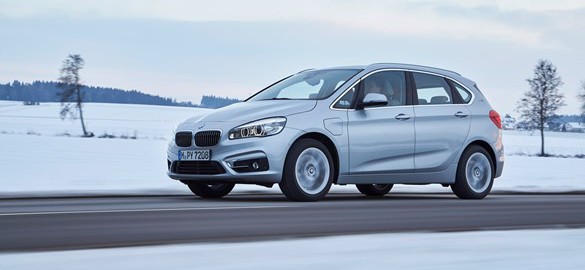
BMW 2 Series Active Tourer 225xe Sport plug-in hybrid car
Fleet operators who want their vehicles to reflect greater concern for the environment are expected to boost sales of the BMW 2 Series Active Tourer.
With its petrol engine supplemented by an electric motor, the new plug-in hybrid model will have strong appeal in the corporate sector, believes Ian Wasp, product manager for BMW UK.
“Since its introduction at the end of 2014, the Active Tourer has become something of a segment benchmark and our pure electric i3 model has also been a great success over the same period,” he said.
“This new product puts them both together in a car that offers a best-of-both-worlds solution for the growing number of companies who want to combine high efficiency transport with green credentials.
“Potential savings for fleet operators are phenomenal because trips of up to 25 miles can be completed in EV mode, and as more businesses are keen to show their customers they care about environmental issues, we are confident our car will tap into this new corporate desire.”
Available from April, the model is the first premium hybrid in its market segment and the only plug-in car to feature an on-demand electric all-drive system.
Now that changes to the UK Government’s Plug-in Car Grant and Electric Vehicle Homecharge Scheme have come into place and everything has settled down, Next Green Car has taken a look at what the market has done to react. This guide will explain what it means now to buy a plug-in car in the UK and charge it at home.
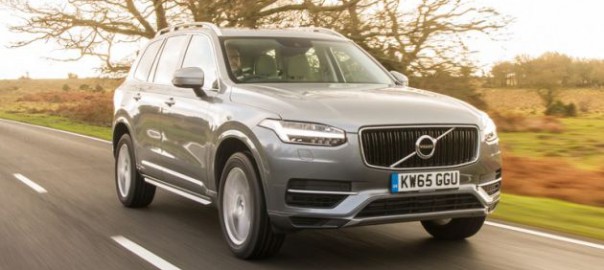
Volvo XC90 T8 Plugin Hybrid (Image: Volvo)
Before the changes came into effect, there were predictions that different manufacturers would offer prices with varying degrees of discount to customers. Some could have passed on all of the reduction in funding to customers, others absorbed some of the price change with buyers picking up the rest, and a few able to bang the drum loudly by absorbing all of the extra cost themselves.
Unfortunately, companies have passed on the cut in grants directly to customers who now pay more for both their cars and home charge points than in February 2016. It must be said that this is hardly unexpected or unfair considering that margins are tight and the car manufacturers and charge point installers have businesses to run rather than charities.
It must be remembered too that the grants were effectively paid to the manufacturer rather than the customer – with buyers quoted an on-the-road (OTR) price for cars, and fully fitted cost for charge points, subject to the grant.
However, there did seem to be an opportunity for someone to mount a PR coup and capture a large share of customers by absorbing some of the grant cuts themselves. It hasn’t happened though, so we have rounded up what cuts in funding have been made, and what effect that has had.
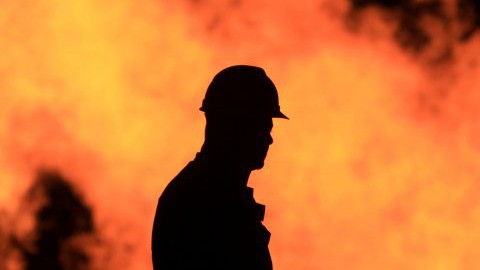
An unidentified oil worker walks in front of a natural gas flame burning off in the Persian Gulf desert oil field of Sakhir, Bahrain (Image: AP/H. Jamali)
The canary at the drill rig just croaked.
Last week, one of the largest energy companies in the U.S. – and a major darling of the shale or “fracking” industry — started showing major signs of distress.
“Chesapeake Plunges 40% on Report It Hired Restructuring Adviser” shouts the headline from Bloomberg.
Chesapeake is closing in on bankruptcy? This is big news. And whether you’re an energy investor or not, there’s much to be gleaned from this huge story. Today, most of the major financial indexes are following the price of crude oil and the energy sector. As the drill bit goes, so does the market. And right now things are getting scary – which, as I’ll share in a moment, could be bad news for one “once safe” sector.
With oil trading hands for less than $30 a barrel, there’s major strain on the American fracking industry. For most American oil companies, $50-60 dollars a barrel is needed just to break even. The same goes for gas companies like Chesapeake, natural gas prices are far below most frackers’ break even.
Partnership allows Renault to reach new audiences through music and showcase electric vehicle line-up
ZOE and Twizy to be used around the Eden Project during the Eden Sessions
Renault was Europe’s leading EV manufacturer in 2015
Renault becomes the Official Car Partner of the Eden Sessions
Renault has become the Official Car Partner of the Eden Sessions in a deal with the Eden Project in Cornwall.
Renault will use the sponsorship to demonstrate and promote their Z.E. electric vehicle range, including the ZOE and Twizy models, and to reach new audiences in the South West and beyond.
Rita Broe, Marketing Director, Eden Project, said:
“This is a great partnership for Eden, and for the Sessions. We are keen to promote the benefits of electric vehicles in reducing carbon emissions, and look forward to working with Renault to do that in a fun and engaging way.
“This year looks set to be one of the best Sessions seasons ever and we are delighted Renault will be part of it.”
James Boyer, Marketing Director, Renault UK, said:
“As electric vehicle market leaders in Europe, we are passionate about our zero tailpipe emissions vehicles and the great benefits they have for the environment, air quality, running costs and driver enjoyment. Partnering with the Eden Sessions is a great fit for Renault, something we are very excited about and we look forward to showcasing our Z.E. electric range to Eden concert goers over the summer months.”
The Eden Sessions are a series of outdoor gigs at the Eden Project, featuring some of the best acts in the world playing against the backdrop of Eden’s famous Biomes. The 2016 Eden Sessions will see Lionel Richie (June 14 and 15 – both sold out), Tom Jones (June 26 – sold out) and Jess Glynne (July 14 – sold out) each play shows against the backdrop of Eden’s world-famous Biomes. More acts will be announced in the coming weeks. The Eden Sessions enter their fifteenth year in 2016.
The Eden Sessions has its own free-to-view online TV channel (www.youtube.com/edensessionstv) featuring regularly-updated videos of some of the gigs’ finest shows.
Eden has long been a supporter of electric cars and has hosted events to showcase some of the ground-breaking vehicles now available. The project also has charging points for electric cars available for its visitors.
Renault is the leader in EV sales in Europe – ZOE is Europe’s best-selling all-electric passenger car and the Kangoo Van Z.E. is the best-selling electric LCV. The award-winning Renault Z.E. range consists of the ZOE hatchback, the Twizy – a fun, distinctive, urban runaround and the Kangoo Van Z.E. – a commercial vehicle that is identical to a normal Kangoo Van but with all the advantages of an EV, including no tailpipe emissions. In 2015, UK sales of the ZOE more than doubled compared to 2014 to 2,053 vehicles. Renault is a pioneer of the electric vehicle market with more than 83,000 EVs sold worldwide to date.