From ‘Travel Electric’ – some information on their eNV200 camper
Tour of our flexible campervan conversion from a full electric Nissan env 200, with a 250w solar panel
From ‘Travel Electric’ – some information on their eNV200 camper
Tour of our flexible campervan conversion from a full electric Nissan env 200, with a 250w solar panel
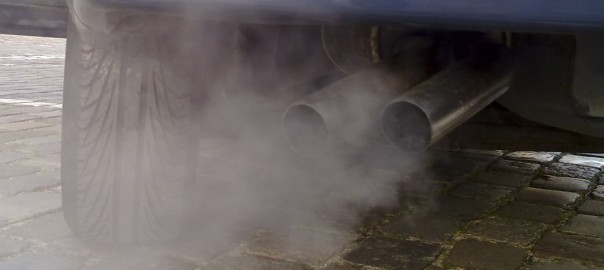
All new cars registered in Germany need to be emissions free by 2030 at the latest to help meet pollution reduction goals, a senior government official said.

Germany’s pledge to cut carbon dioxide output by 80 percent to 95 percent by 2050 will be in jeopardy unless the country radically reduces transportation pollution, said Deputy Economy Minister Rainer Baake. Since cars typically have a 20-year lifespan, registrations of new diesel and gasoline cars needs to be cut over the next 15 years, he said.
“Fact is there’s been no reduction at all in CO2 emissions by transport since 1990,” said Baake at a Tagesspiegel newspaper climate forum in Berlin. “We don’t have any answers to cut truck emissions right now but we do have answers for cars.”
Germany is lagging behind cuts to greenhouse gas that transportation emits, which according to the Environment Ministry account for a fifth of the country’s carbon dioxide pollution. The sector needs to cut some 10 million metric tons of carbon dioxide over the next 5 years from a tally of about 165 million tons last year. While the country has committed to reducing emissions 40 percent by 2020 compared with 1990 levels, its adoption of electric cars has been sluggish.
Chancellor Angela Merkel’s government pledged subsidies this year to speed e-car sales, a move that was accelerated by Volkswagen AG’s emission-manipulation scandal. Buyers of all-electric and hybrid vehicles can claim cash incentives, moves already in operation in countries including China, Norway and France. The program may spark sales of about 500,000 electric cars by 2020, according to the Environment Ministry.
Read more: Bloomberg
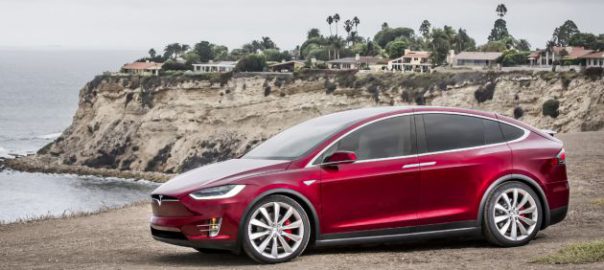
Pricing for UK specifications of Tesla’s Model X have been revealed, with the entry level 75D starting at £71,900. This will buy you a five seat all-electric SUV with four wheel drive, a quoted range of 259 miles, and a 0-60mph time of 6.0 seconds.

Moving up a rung sees the 90D with a range of 303 miles, 4.8 second 0-60mph time and a cost of £82,400, while the top of the range P90D drops the fastest sprint time to 3.2 seconds and provides 290 miles of range at £99,800.
Five seats are offered as standard, while six and seven seat configurations are available at a cost of £2,550 and £3,400 respectively. Ludicrous mode for the fastest model costs £8,700, Autopilot £2,200, and smart air suspension the same – though this last point is standard kit on all but the entry level Model X 70D.
Standard equipment includes the much talked about Falcon Wing doors, all-wheel drive, parking sensors, DAB+ radio, keyless entry and start, a huge panoramic windscreen, electric tailgate, and maps and navigation with over-the-air updates. The cost also includes free use of Tesla’s Supercharger network for life.
No fixed date has yet been set for when the Model X will arrive in the UK, but orders placed now will arrive in ‘Late 2016’, while those who got in early can expect theirs around autumn.
Source: Next Green Car
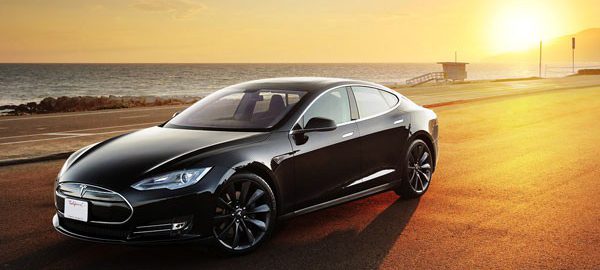
Tesla has launched a new entry level model for its Model S range in the shape of a 60kWh version. Coming in under the previously entry level 75kWh variant, the Model S 60 is available in either single motor configuration, or in dual motor 60D spec.

The Model S 75 is now offered as an upgrade to the Model S 60 which increases driving range by around 19 per cent according to Tesla.
The changes come as part of the company’s continuous evolution of its range, whether that is in the form of regular software updates or changes in battery capacity offered. The Model S 60 is in response to customers saying they want a Tesla but can’t really afford the price of the Model S 70 – though those that can will be able to specify the 75 kWh battery for a cost of £7,850 on top of the Model S 60 price.
Quoted at offering a range of around 248 miles, the Model S 60 will still complete the 0-60mph sprint in 5.5 seconds and go on to a top speed of 130mph, while the 60D is faster still thanks to its all-wheel drive capability and increased power.
In terms of the battery specification, Tesla are fitting Model S 60 and 60D models with a 75kWh battery that then has its capacity restricted. This is in part to simplify battery production, while the main reason is that customers can retro-upgrade their model at any time in the future with a software update, should they wish to unlock the battery’s potential.
There are also small changes to the interior trim and equipment levels, while Tesla’s Autopilot system will be available as an option, and use of the Supercharger charging network is free for all customers.
The new Model S 60 and 60D are available to order now with prices starting at £53,400 for the single motor, or £57,800 for ths 60D. Both prices exclude the UK Government’s Plug-in Car Grant, which takes £4,500 off the cost.
Source: Next Green Car
With soaring pollution levels, the mayor of Paris wants diesel cars out of the French capital by 2020, and other cities could well follow

Not so long ago, it seemed as though everyone thought diesel cars were the saviours of the motoring world. They tend to be much more efficient than the equivalent petrol, with much better fuel economy and CO2 figures. With this in mind, governments across the world have incentivised the running of oil-burning cars, particularly France, where the fuel is significantly cheaper than unleaded, and 80 per cent of cars run on the ‘devil’s fuel’.
However, it turns out the French government has properly shot itself in the foot over this, as they – and others – are now realising there’s a little more to being eco friendly than just focusing on reducing CO2 emissions. The issue with diesels is they puff out all sorts of nasty things from their tail pipes, including nitrogen oxides (NO2) and particulate matter, and the modern crop of oil-burning vehicles simply haven’t cleaned up their act enough.
They’re still letting out far more NO2 – which can cause respiratory issues plus heart and lung disease – than petrol cars, and the filters designed to catch the particulate matter can cause running issues, leading to many owners removing them altogether. As a consequence of the former, numerous European cities experienced levels of NO2 far beyond the limit set by the European Union.
Mayor of Paris (a city no stranger to drastic emissions-cutting measures) Anne Hidalgo has extreme plans to clean up the French capital’s air quality, saying recently
“I want diesel cars out of Paris by 2020.”
For a country with so many diesels on the road, that’s a rather big deal.
It’s not just Paris, either. London Mayor Boris Johnson plans to raise the congestion charge for diesel vehicles from £10 to £20. Drivers of petrol cars built before 2006 will also bit hit by the higher charges. Some campaigners think that as in Paris, an eventual outright ban for diesels is on the cards in the British capital.
The tide seems to be turning against diesel cars, so unless manufactures can find ways to drastically curb the contents of their exhaust pipes, the future for motors powered by the stuff from the black pump looks decidedly dicey.
Source: Car Throttle

Exclusive: scientists find no trace of the Bramble Cay melomys, a small rodent that was the only mammal endemic to Great Barrier Reef
Human-caused climate change appears to have driven the Great Barrier Reef’s only endemic mammal species into the history books, with the Bramble Cay melomys, a small rodent that lives on a tiny island in the eastern Torres Strait, being completely wiped-out from its only known location.
It is also the first recorded extinction of a mammal anywhere in the world thought to be primarily due to human-caused climate change.
An expert says this extinction is likely just the tip of the iceberg, with climate change exerting increasing pressures on species everywhere.
Read more: The Guardian
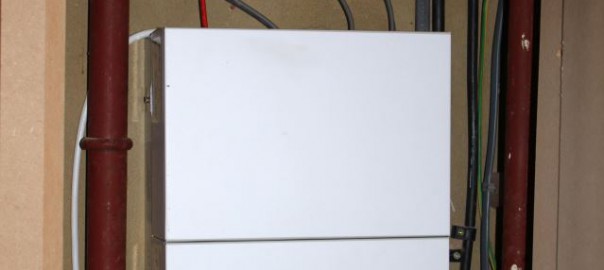
Moixa Technology, the UK leader in residential energy storage, today announced with ScottishPower, a ground-breaking pilot of Moixa’s smart battery Maslow product in customer homes, helping them to save money and use more of the energy they generate

London, 8 June 2016: Moixa Technology, the UK leader in residential energy storage, today announced with ScottishPower, a ground-breaking pilot of Moixa’s smart battery Maslow product in customer homes, helping them to save money and use more of the energy they generate. It also demonstrates how storage technology could address the challenges facing the UK’s overstretched grid.
In pilots with major energy industry partners such as ScottishPower, British Gas, SSE PD, Good Energy, the government (DECC) and direct customer sales, Moixa has deployed 1MWh of its British-manufactured Maslow smart battery system, deployed across 500 sites, combined with solar panels. These smart batteries can be aggregated to provide a range of services and income, using the patented GridShare battery software platform.
Smart batteries mean a revolution for utilities. They are home storage units that enable customers to save money through accessing smart tariffs, store excess solar energy for use during peak hours or share batteries with the grid for a range of network saving benefits.
Moixa has deployed 47 Maslow energy storage systems for ScottishPower in partnership with BillSaveUK. Its GridShare software dashboard enables ScottishPower householders to view energy, battery and solar use in real time on a smartphone or iPad and identify improvement opportunities. This can lead in some cases to over 20% reduction in energy costs.
Neil Clitheroe, CEO Retail and Generation at ScottishPower, said:
“Electricity is the only commodity that we can’t store at scale. We need to develop more large-scale storage projects, like pumped-storage hydro schemes, but also smaller in-home storage ideas, like Moixa’s smart battery concept. As one of the UK’s leading renewable energy companies, we plan to take a leadership role in the development of electricity storage. Our work with Moixa and BillSaveUK will allow us to understand how customers interact with electricity storage at home, and how systems like this can be tailored to offer real benefits for customers.”
Read more: Alt Energy Mag

Electric cars can be a very effective way to save you money on motoring. Read on for our top five ways to save by switching to driving electric…

Fuel
It can cost less than 2p per mile to drive an electric car. Compared to the cost of running an average internal combustion engine vehicle (around 12p per mile), this can add up to big savings for electric car owners. In fact, you could save over £750 a year in fuel bills alone by making the switch!
Road tax
Electric vehicles are exempt from road tax (or Vehicle Excise Duty) due to their low levels of CO2 emissions. That’s one more bill that you won’t have to worry about as an electric car owner.
Garage bills
Switching to an electric car could save you hundreds of pounds on your service and maintenance bills. The cost of an annual service can be pretty steep for all car owners, but the price of annual servicing and maintenance for a new pure electric vehicle is just £94. The equivalent cost for a petrol or diesel car is £400, so that works out to a saving of over £300 a year for electric motorists!
Government grant
The UK Government can lend you a helping hand with the upfront cost of buying an electric car. They provide a Plug-In Car Grant of up to £4,500 off the price of an electric car, and up to £8,000 off the price of a van. This grant will be applied during your purchase at the dealer, so you don’t even need to worry about applying yourself.
Local perks
As an electric car owner you may be eligible for specific benefits in your area through regional initiatives, such as discounted or free parking, or being exempt from the congestion charge in London. The number of these local incentives is increasing as electric vehicles grow in popularity and through the help of the Go Ultra Low Cities initiative, so check with your local council to see what’s available in your area.
Source: Go Ultra Low

Your monthly energy bills can get quite expensive, especially during the summer. You need lots of energy to stay cool and power your electronics, but buying your energy from an outside company isn’t always the most efficient or cost-effective.

That’s where at-home batteries come in.
Combined with advancements in solar technology, these large batteries have the potential to provide a whole new way to store and control the energy used in your home.
It’s for that reason that an increasing number of companies are working on at-home batteries to change the modern home into a sustainable vision for the future.
Here’s 9 at-home battery makers on the market today.
We would be remiss to make a list of at-home battery makers and not include Tesla toward the top. The $3,000 Powerwall can store solar energy and provide backup power for your home.
Read more: Business Insider

To help fight climate change, France’s Total commits to leaving some fossil fuels in the ground.
One of the world’s biggest oil companies is factoring global goals for combating climate change into its multi-decade business plan.
French oil giant Total acknowledged in a report released Tuesday that “a part of the world’s fossil fuel resources cannot be developed” if nations are to fulfill the Paris climate accord agreement to hold global temperature increases to 3.6 degrees Fahrenheit.
The company stood by a 2015 decision to reduce investments in oil production from Canadian tar sands, adding that it confirmed at that time “that we do not conduct oil exploration or production operations in the Arctic ice pack.” Total first announced its position on Arctic drilling in 2012, according to Reuters.
Total’s leaders are “trying to link their strategies and investments to climate decisions,” said Alexander Shestakov, the director of the World Wildlife Fund’s global Arctic program.
“That’s a positive sign coming from one of the world’s oil majors.”
Read more: Take Part