All posts by Trevor Larkum

Kia Optima PHEV

2016 Kia Optima PHEV review

Plug-in hybrid Optima is a practical, tax-efficient PHEV that undercuts rivals and fulfils its main remit well

Kia Optima PHEV
Kia Optima PHEV

What is it?

Kia’s first plug-in hybrid, complete with the credibility-stretching fuel economy and emissions figures we’ve come to expect from cars of this type. The Optima PHEV combines the efforts of a normally aspirated 2.0-litre petrol engine and a 50kW electric motor to deliver a peak system output of 202bhp.

There will be more interest among company car drivers in the Optima’s price and CO2 figure. At £31,495 after the UK government’s £2500 plug-in incentive, it undercuts both the Mitsubishi Outlander PHEV and Volkswagen Passat GTE, the VW by nearly £5000. The 9.8kW/h lithium ion polymer battery, which is located underneath the rear of the car, is powerful enough to deliver a claimed 33 miles of electric-only range, and because the official EUDC consumption test allows plug-ins to start with a full battery and finish with a depleted one, the Optima scores a 176.6mpg rating and 37g/km of CO2.

Getting anywhere close to those figures in the real world will mean lots of short journeys between charging stations, of course, and a little patience. Kia says the battery pack can be replenished from flat in three hours by a 240V domestic supply.

Although it is Kia’s first plug-in, the Optima PHEV is mechanically pretty much identical to the Hyundai Sonata PHEV already on sale in some markets. Like its sister, it uses a six-speed automatic gearbox rather than a CVT, with the electric motor effectively replacing the torque converter at low speeds. Thereafter it can either supplement the petrol engine or, in EV mode, power the car by itself at up to 75mph.

Read more: Autocar

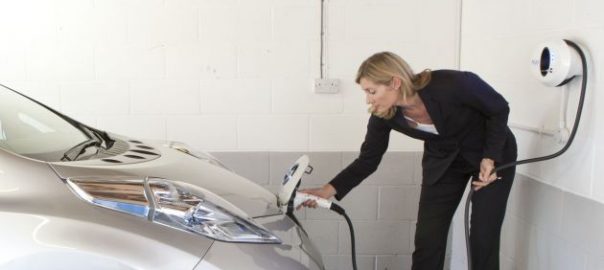
A 3.7kW Chargemaster or Pod Point unit will be fully fitted for free as part of the deal (Image: Chargemaster)

Free homecharge units offered to Nissan Leaf buyers

Nissan is offering free homecharge units to new Leaf buyers, giving new owners a ready-made charging set-up.

A 3.7kW Chargemaster or Pod Point unit will be fully fitted for free as part of the deal (Image: Chargemaster)

The offer is part of a nationwide campaign with the Japanese manufacturer’s official charging partners – Chargemaster and Pod Point.

Buyers of new Leafs on one of Nissan’s finance packages will be eligible for a free Pod Point or Chargemaster unit if the car is bought before Friday 30th September. The deal is on all models and specifications of Leaf, the best selling pure-EV in the UK.

With all buyers of Plug-in Car Grant (PiCG) eligible cars – of which the Leaf is one – able to claim the Electric Vehicle Homecharge Scheme (EVHS) grant too, there has long been help for buyers of new EVs to easily add a home charge point at the same time. The grant offers up to £500 off the cost of buying a unit and having it installed.

Chargemaster and Pod Point are offering 3.7kW Nissan-approved home charge units fully installed as part of the offer, saving customers just under £400 compared to if they had bought an EVHS-backed unit from the installers directly.

The process needs no input from the buyer once they say that they would like to take Nissan up on the offer. The dealership notifies the installers, which then take over, organising home visits and arranging for engineers to fit the unit free of charge.

David Martell, Chargemaster CEO, said:

“Our relationship with Nissan GB has evolved since we announced that Chargemaster was an official charging partner in the UK. We are delighted to be able to offer Nissan’s finance customers a trouble-free home charging solution free of charge. Chargemaster is committed to making charging easy and accessible for every EV motorist, and the team can’t wait to get started on the campaign and future homecharge installations.”

Erik Fairbairn, CEO and founder of POD Point, said:

“We are very pleased to continue our close partnership with Nissan GB by providing its electric car customers with free home charging points. The ability to charge an electric car at home is a key part of the EV experience and we are excited to help Nissan ease the transition into the world of electric driving.”

Visit the Pod Point and Chargemaster websites for more information on the charge points provided.

Source: Next Green Car

Arctic sea ice crashes to record low for June

From mid-June onwards, ice cover disappeared at an average rate of 29,000 miles a day, about 70% faster than the typical rate of ice loss, experts say

The summer sea ice cover over the Arctic raced towards oblivion in June, crashing through previous records to reach a new all-time low.

The Arctic sea ice extent was a staggering 260,000 sq km (100,000 sq miles) below the previous record for June, set in 2010. And it was 1.36m sq km (525,000 sq miles) below the 1981-2010 long-term average, according to the National Snow and Ice Data Center.

That means a vast expanse of ice – an area about twice the size of Texas – has vanished over the past 30 years, and the rate of that retreat has accelerated.

Aside from March, each month in 2016 has set a grim new low for sea ice cover, after a record warm winter.

January and February obliterated global temperature records, setting up conditions for the further retreat of the Arctic summer ice cover, scientists have warned.

Researchers did not go so far as to predict a new low for the entire 2016 season. But they said the ice pack over the Beaufort Sea was studded with newer, thinner ice, which is more vulnerable to melting. Ice cover along the Alaska coast was very thin, less than 0.5 meters (1.6 ft).

The loss of the reflective white ice cover in the polar regions exposes more of the absorptive dark ocean to solar heat, causing the water to warm up. This goes on to raise air temperatures, and melt more ice – reinforcing the warming trend.

Scientists have warned the extra heat is the equivalent of 20 years of carbon emissions.

From mid-June onwards, ice cover disappeared at an average rate of 74,000 sq km (29,000 sq miles) a day, about 70% faster than the typical rate of ice loss, the NSIDC said.

Sea ice loss in the first half of the month proceeded at a lower pace, only 37,000 sq km (14,000 sq miles) a day.

The overall Arctic sea ice cover during June averaged 10.60m sq km (4.09m sq miles), the lowest in the satellite record for the month, according to the NSIDC.

There was more open water than average in the Kara and Barents seas as well as in the Beaufort Sea, despite below average temperatures, the NSIDC said.

Read more: The Guardian

The new model intends to offer a more affordable Tesla for customers

Electric cars could rule the road in just over 10 years

Sales of the vehicles are surging so fast the market looks set to meet government forecasts for the end of new diesel and petrol cars by 2040

The new model intends to offer a more affordable Tesla for customers
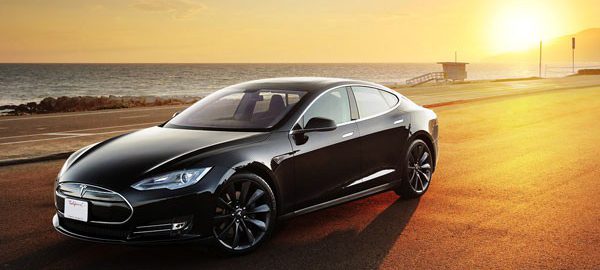
Tesla Model S

Electric cars could out sell diesel and petrol models by 2027, according to industry experts.

Surging sales of electric vehicles suggest the market is on course to meet government forecasts for all new cars and vans to be electric by 2040.

And current trends put electric vehicles on the road to accounting for more than half of all new registrations – around 1.3m a year – by 2027.

The figures are revealed in a new automotive industry forecast by Go Ultra Low, the government and industry-backed campaign.

The electric car revolution began in 2011 with the launch of the plug-in car grant with just over 1,000 annual registrations.

Since then, record-breaking volumes of electric vehicles have been registered every year – 2015 saw more than 28,000 electric cars registered.

This year started with the best period for EV uptake since records began, with UK buyers registering the equivalent of one electric car every 13 minutes.

With vehicle manufacturers introducing more and more electric and plug-in hybrid models, the new car market is accelerating towards a point in the future where plug-in power overtakes petrol and diesel models.

Steve Fowler, Auto Express editor-in-chief, said:

“The positivity and appreciation of electric vehicles by their owners is suggestive of a step-change in public perception of these vehicles.

“We are moving towards a tipping point for electrically powered cars, so it’s entirely possible that by 2027 these vehicles will dominate the market as the top choice for new car buyers.”

Source: Mirror

Car exhaust pollution (Image: Wikipedia)

Diesels even more polluting at low temperatures

Pollution from many popular diesel cars is much worse when it is colder than 18C outside, new research suggests.

Car exhaust pollution (Image: Wikipedia)

Testing company Emissions Analytics told the BBC it has measured a significant rise in poisonous gas emissions from a wide range of models as the temperature drops.

It found the problem is worst among the Euro 5 category of cars, which became mandatory in 2011.

The firm tested 213 models across 31 manufacturers.

The finding means millions of vehicles could be driving around much of the time with their pollution controls partly turned off.

But it seems many cars are deliberately designed that way and it is all perfectly legal.

Taking advantage

European rules allow manufacturers to cut back on pollution controls as long as it is to protect the engine.

Engineers agree that hot and cold weather can damage components.

But some suggest car companies are taking advantage of the rule to switch things off, even in mild weather, because it improves the miles per gallon of the car.

“I would say from the Euro 5 generation of cars, it’s very widespread, from our data. Below that 18 degrees [Celsius], many have higher emissions… the suspicion is, to give the car better fuel economy,” Emissions Analytics CEO Nick Molden told the BBC.

“If we were talking about higher emissions below zero, that would be more understandable and there are reasons why the engine needs to be protected. But what we’ve got is this odd situation where the [temperature] threshold has been set far too high, and that is a surprise”.

Read more: BBC

The welcoming entrance of Disney’s magic kingdom (Image: L. Larkum)

How Far Behind is the US in General, and Disney in Particular?

Culture Shock

With apparently ever-increasing globalisation most of us have an expectation that we can travel to other Western countries and find facilities and a culture similar to our own – after all, a McDonald’s Big Mac bought in Paris is recognisably the same as one from New York.

Occasionally, though, we find things to be suddenly different from what we expect. The difference is marked because it is not just a different food or architecture. It is marked – a culture shock – because it arises from very different assumptions about how a culture should be. I had such a feeling twenty-five years ago when, as a member of the British armed forces, I moved into married quarters in Germany. For the first time ever I encountered a culture with sustainability as a core value – we found recycling facilities all along our street, and were given full instructions on how to recycle our waste as part of moving in.

Such an approach was entirely absent in the UK, there we were still wondering whether we should consider starting to recycle some waste, and so returning to the UK felt like going back in time. Of course, since then the UK has caught up, at least to a large extent. For example, there are weekly collections of plastic and metal/can containers, of paper and cardboard, of glass, and of food waste, plus fortnightly collections of garden waste.

I write this as I approach the end of a vacation in Disney World and Florida, having experienced another such step back in time. Things are so far behind here it has been another culture shock. We last visited twenty-five years ago and it seems that the culture in general and Disney World in particular are virtually unchanged over that time.

Conspicuous Consumption and Pollution

It began with our accommodation – a lovely rented villa in a community estate in Davenport, half an hour outside Orlando. It’s huge and well-appointed with a very nice small pool and patio. However, it feels like living in a ‘consumption machine’. I write this in the open-plan kitchen/lounge area. Behind me upstairs the air conditioning system rattles away providing welcome cooling throughout the house – but it seems to be on permanently, 24/7, set to a temperature of 76°F (24°C). The energy consumption must be enormous, but its controls are locked away so we don’t have the choice to turn it off and save energy.

Behind me just outside the wall is the monstrous pump and filter system for the pool, whirring away. In front of me is a massive fridge which almost never goes quiet. Later today we’ll have men coming round making noise along the road (strimmers, leaf blowers, etc.). This evening we’ll have the sprinklers coming on to disturb our sleep. Not just carbon pollution, but noise pollution seems to be an accepted part of life here.

Even the cars of our neighbours coming and going seem inordinately loud, and why must they beep their horns every time they lock the doors? Everything is just so noisy (in this house we even watch TV in the same large living space as the dishwasher, washing machine and tumble dryer). The whole concept of noise pollution seems alien here, as though it were something to be embraced rather than avoided. I can’t imagine how hard it would be to try and get some peace and quiet. Yet in the UK people put a premium on quietness whether it’s buying a quiet car (such as an electric) or a house in the country – here the preference seems to be for cars and houses that are as big and noisy as possible.

The big irony, of course, is that the massive carbon footprint of this house is entirely unnecessary. A big chunk of it is for air conditioning because of the powerful sunshine here, yet it is precisely that excess of solar power that could be powering the house with solar energy for free. Instead, it is using fossil fuels and their associated carbon emissions to try and offset the energy being dissipated on the roof. I’ve only seen one house in the area with solar panels, and I noticed that precisely because it was an isolated example in a sea of blank rooftops.

Part of that irony is that we have solar panels on our home in England, even though we are at a much higher latitude than Florida and so get correspondingly less solar energy. Nonetheless, even with our supposedly cloudy and rainy climate the panels produce more than half the energy used by the house over the course of a year. In Florida a similar setup could potentially power the entire house, and with some left over going into the grid to reduce its overall footprint, or used to fuel an electric car.

It was good to see that our housing estate had a weekly recycling collection, even if it was just a mixed box (and many of our neighbours’ wheelie bins were overflowing with cardboard boxes and other items that could have gone in recycling).

No Leadership From Disney

So on to Disney. Over the last two weeks we have visited Magic Kingdom, Hollywood Studio and Animal Kingdom twice each, and Epcot and the Typhoon Lagoon water park once each. We had a good time on the roller-coaster and other rides, and at the various shows. However, it felt like very little had changed in the last quarter century.

A tram with its diesel exhaust just a few feet from waiting passengers (Image: T. Larkum)

After parking up we were transferred to the park entrances via vehicles referred to as ‘trams’. While in Europe that name implies electric trolley buses, and given their workload and fixed routes these vehicles could have been electric, it was immediately obvious they were not. You didn’t have to get very close to them to hear the roar and smell the nauseous and toxic fumes that gave away that they were powered by massive diesel engines. And this, in the 21st century, and with half the passengers being young children.

Read more: Linked In

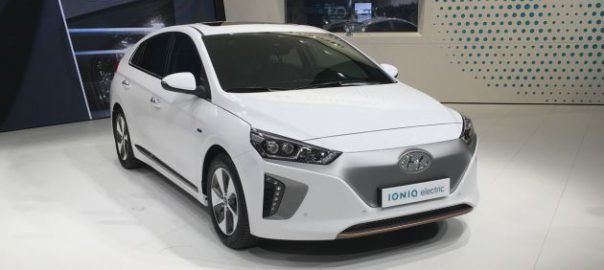
The Ioniq will first be available as a hybrid and EV, with a PHEV coming later

Hyundai Ioniq specification and pricing announced

Hyundai has revealed details of its Ioniq range – the first to be offered in hybrid, plug-in hybrid or pure-EV specifications. The family hatchback will start at £19,995, and goes on sale later this year.

The Ioniq will first be available as a hybrid and EV, with a PHEV coming later

The Ioniq Hybrid will be the first available in the UK, going on sale on Thursday 13th October. It is the conventional hybrid that starts the range off, with prices starting at just under £20,000 for the Ioniq Hybrid SE 1.6 GDi. This will feature a 1.6 litre petrol engine, CO2 emissions rated at 79 g/km, and comes in one of three trim levels – SE, Premium, and Premium SE. The Hybrid range tops out at £23,595.

Following on closely from the hybrid is the Ioniq Electric, which will be available in selected specialist dealerships to start with, before being rolled out nationwide soon after. Prices for the all-electric vehicle start at £28,995, with just the two trim levels – Premium and Premium SE. The latter costs £30,795 – though neither price includes the £4,500 Plug-in Car Grant (PiCG), which it is expected to be eligible for.

Both models are priced very competitively against predicted competition. The Ioniq Hybrid’s main rival is expected to be Toyota’s best-selling Prius, which starts at £23,295. The Ioniq Electric’s biggest challenger on the other hand is likely to be the Nissan Leaf – also a best seller in its market.

The Leaf starts at £21,530 for a 24kWh model with a quoted range of 124 miles, while the longer-range Leaf 30kWh has an official range of 155 miles and starts at £25,230. The Ioniq Electric – presuming it is eligible for the PiCG – will sit slightly askew of the two models in terms of price at £24,495 and £26,295 for each trim. However, it has a quoted ‘maximum potential driving range’ of 174 miles from its 28kWh battery and 88kW motor.

Equipment levels are good across all trims, and all three Ioniq models will feature Hyundai’s five year, unlimited mileage warranty – the Ioniq Electric’s battery covered for eight years or 125,000 miles.

The final version to come to market – the Ioniq Plug-In Hybrid will go on sale in the UK early 2017, with prices and specification details to be announced closer to launch.

Source: Next Green Car

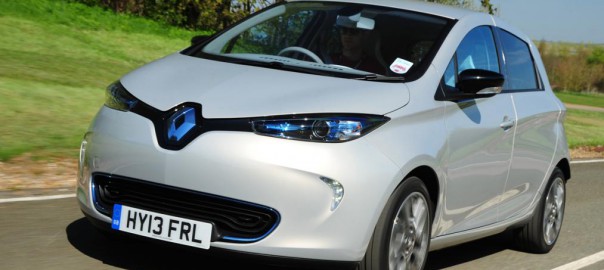
Renault ZOE Primer: First Drive

This is a quick introduction to using the ZOE. It is intended to give just the basic information required for a test drive, use of a ZOE from a hire/rental company, or to get your ZOE home the day you buy it.

Rapid Charging the ZOE (Image: T. Larkum)

Doors

  1. The ZOE is a five door car designed to look like a three door car: the rear doors are opened by pressing on the concealed black handles (marked with a thumbprint) next to the windows.
  2. ZOE uses keyless entry, i.e. it opens electronically via a key fob rather than with a physical key. There are two methods, the simplest is to lock and unlock the doors using the buttons on the key fob.

Driving

  1. The ZOE has been designed to feel like a small automatic car so it has a large gear lever beside the driver. It has the usual positions from front to back: Park (P), Reverse (R), Neutral (N) and Drive (D); these modes and the current selection are shown on the dashboard when power is on.
  2. To start the car:
    1. The gear lever must be in Park (all the way forward).
    2. The key fob must be somewhere within the car.
    3. Press and hold the brake pedal.
    4. Press the Start/Stop button to the left of the steering wheel.
    5. The car will start with an audible chime and ‘READY’ will show on the dashboard – the car is ready to move.
  3. To move away engage the Drive gear position (with foot still on brake) and release the handbrake (beside the driver’s seat).
  4. Note that the ZOE has been programmed with ‘creep’, i.e. it will move forward like an automatic even when the accelerator is not pressed.
  5. The ZOE has both conventional and electronic brakes and at low speed, below about 10mph, the brakes can feel a bit ‘grabby’ especially if you are not used to it; take care in car parks and other confined spaces.
  6. There will be an external sound for warning pedestrians when you drive forward up to about 20mph. Note, however, there is no warning sound when reversing.
  7. Once in Drive mode, since there is no gearbox, you can accelerate up to maximum speed (about 84mph) without changing gear.
  8. You can come to a complete stop in Drive If you are stopping for any length of time you should then engage the handbrake and Park mode.
  9. To turn off completely use the Start/Stop

Charging

  1. If charging from a home charge point ensure it is powered up and ready (a Chargemaster/Polar charge point shows an amber light, for example).
  2. Ensure the car is in Park mode, the handbrake is engaged and the motor is off (no ‘READY’ sign).
  3. Release the charging port door (it carries the Renault badge on the nose) using the button on the key fob.
  4. Open the charging port door (which swings to your left) and the internal charging port cover (which swings to your right) by hand.
  5. Insert the charging cable from the charge point. This should be followed by an audible click as the ZOE locks the connector into place (it cannot be pulled out by hand).
  6. If charging from a public charge point, at this point you need to initiate a charge (the method will depend on the charge point model).
  7. The ZOE dashboard will read ‘Ongoing Checks’ as it communicates with the charge point. The charge point will also likely give an indication (a Chargemaster/Polar unit will show amber and green lights, for example).
  8. When the charge begins it will be accompanied by a high pitched whine (not always audible to everyone). The dashboard will show how long the charge will take as ‘Time Remaining : ’ plus an hours:minutes display. It will also show the percentage charge complete.
  9. The car should be locked if unattended, but operating the locks and doors has no effect on the charge operation.
  10. The ZOE may sit at 99% for a long time to battery balance – it does no harm to stop charging at this or any other point occasionally if it’s convenient (e.g. when in a rush).
  11. If at a public charge point the charge should be stopped at the charge point. A home charge point can be turned off or left on and the cable simply disconnected.
  12. Release the charge cable connector using the button on the key fob, and withdraw the connector.
  13. Close the charging port cover and charging port door; charging is complete.

Top Gear finally breaks free from Jeremy Clarkson with Tesla film

Rory Reid’s piece on Tesla’s revolutionary electric car in episode four shows the BBC2 programme is at least trying to head in a new direction

“This car might just be on the cusp of changing everything.”

ClUuOEwWYAA7x6Z_Tesla_ModelX_TopGear

Matt LeBlanc’s Top Gear intro last night didn’t just herald a brave new world in electric cars. It also suggested that the new show had finally turned a corner.

Chris Evans has been accused of simply trying to copy what Jeremy Clarkson did first and best. But last night at least hinted that the show is trying to put some distance between it and old Top Gear, thanks to some smart handling from occasional presenter Rory Reid.
Reid was in New York City to drive new electric car the Tesla Model X.

Now, both electric in general and Tesla in particular have been dirty words round Dunsfold Aerodrome for years, ever since Clarkson eviscerated the company’s Roadster sports car in a film in 2008.

Back then Clarkson, shock horror, actually enjoyed his time in the electric car – until he realised how much it cost and how quickly it would run out of charge. “What we have here is an astonishing technical achievement: the first electric car that you might actually want to buy,” he said. “It’s just a shame that in the real world, it doesn’t seem to work.”

Tesla were so angry with the film that they attempted to sue Top Gear, but their appeal case was eventually dismissed by the court of appeal in 2013.

Fast forward to Clarkson-free Top Gear 2016 and Tesla were back with their new car, the Model X, which it is claimed will do 250 miles and charge in as little as 30 minutes.

Rory Reid was completely won over by the new motor and its ‘Ludicrous Mode’, which apparently turns it from family SUV into a drag racer that’s more than a match for even the biggest gas guzzlers.

“Everything changes right now,” Rory said pointedly. “The Model X pushes the reset button.”

Read more: Radio Times