All posts by Trevor Larkum

Exclusive London New Build Installs 38 Evolt Charge Points

Exclusive London New Build Installs 38 Evolt Charge Points

One of London’s most high-profile and successful new mixed-use developments, Fitzroy Place in Fitzrovia, W1, has installed 38 electric vehicle (EV) charge points from Evolt.

Exclusive London New Build Installs 38 Evolt Charge Points

The developer of Fitzroy Place, Exemplar, appointed Evolt not only to supply and install single outlet AC wall mount charge points, but also the latest load distribution technology.

The latter ensures the total power to all charge points is consistently available, evenly distributed and prevents overloading. When an EV is fully charged, its power usage is re-distributed to the other EV’s so that they can achieve a full charge in the fastest possible time.

The charge points are split into four groups, with each group being controlled by a distribution board. They are also connected to a centralised server, which manages the entire system and provides a real-time reporting function for operators. The server also has a failsafe mechanism in case of a local power outage, where it ‘instructs’ the distribution boards to continue charging vehicles at a default setting.

Michael Bucknell, Development Director at Exemplar says:

“Evolt’s installation of car charge points was a key contribution for us meeting our demanding sustainability objectives at Fitzroy Place.

“As we see Central London’s air quality moving up the political agenda, encouraging residents and occupiers to embrace electric vehicles will become increasingly key to tackling this very serious health and environmental issue”.

Justin Meyer, General Manager of Evolt, says that EV’s are fast becoming an essential part of city life:

“Charge points at new builds are becoming commonplace, as an increasing number of city dwellers and office workers are increasingly environmentally conscious.

“We are visibly seeing the demand for AC charge points at new builds,” he continues, “and it is important to install technology that manages power distribution, otherwise a site’s charge point network may never effectively charge numerous EVs simultaneously”.

The recently completed Fitzroy Place development provides 235 private apartments, 54 affordable homes, 20,000 sq ft of retail and restaurant space, 220,000 sq ft of commercial office space in addition to health and education facilities, and public open space.
Volkswagen Passat GTE plug-in hybrid prices and specs announced

Prices and specs for Volkswagen’s plug-in hybrid Passat GTE have been announced; it costs from £36,525 before a £2500 government grant

vw_gte_phev_vw

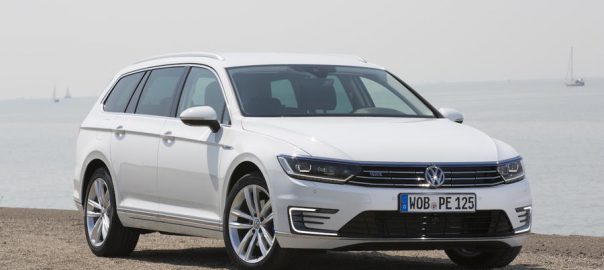
Volkswagen’s Passat GTE plug-in hybrid will arrive in showrooms this month, costing from £36,525.

Four models are available – two saloons and two estates. The prices exclude a government plug-in car grant of £2,500.

When this grant is applied, costs come down to £34,035 for the GTE saloon. The GTE Advance saloon costs £40,180, or £37,680 after the grant.

The Passat GTE estate costs from £38,075 (£35,575 with the grant), while the GTE Advance estate is £41,730 (£39,230).

All models are powered by a turbocharged 1.4-litre petrol engine and an electric motor, which give a combined output of 215bhp and 295lb ft of torque.

The car runs by default on electric-only ‘E-mode’, with 113bhp, 243lb ft of torque a range of up to 31 miles from a lithium-ion battery mounted under the rear seats.

The petrol engine kicks in when the battery is depleted. At this point, the Passat GTE runs as a full hybrid, recharging the battery using kinetic and braking energy. The driver can also select Battery Charge mode to save up electric power, for example for electric city driving at the end of a petrol-powered motorway journey. GTE mode runs both systems in tandem.

With both petrol and electric power engaged, the Passat GTE will go from 0-62mph in 7.6sec and reach a top speed of 140mph. It comes as standard with a six-speed DSG gearbox that features a third clutch, which disengages at the appropriate time to harness kinetic energy and increase efficiency.

The Passat GTE can have its battery charged from a home electricity supply in about four hours, 15 minutes, or using a dedicated 3.5kW wallbox in around two and a half hours.

The specifications of the Passat GTE are generous, and based on the Passat GT. Standard equipment includes LED head and tail lights, Alcantara and leather seats and a GTE-specific blue-stitched gear knob, as well as adaptive cruise control, parking sensors and Bluetooth connectivity. The Passat GTE also comes fitted with VW’s Car Net e-Remote system, which lets you control several functions from a smartphone, such as the locks, climate control and charging settings.

The GTE Advance model adds features that include an 8in Discover Pro sat-nav screen, a digital Active Info Display dashboard, LED premium headlights and Nappa leather upholstery.

Visually, you can spot a Passat GTE by its C-shaped LED running lights and a blue line running across the radiator grille, as well as a redesigned front bumper and 18in alloy wheels.

Source: Autocar

Nissan Leaf

Birmingham is the UK’s EV capital

The DfT’s data shows a total of 57,207 electric, plug-in hybrid and hydrogen fuel cell passenger cars registered in the United Kingdom in the first quarter of 2016. That’s 0.18% of the 31.4 million total passenger cars on the road, including models which aren’t eligible for the government’s Plug-in Car Grant.

Audi A3 e-tron, Mitsubishi Outlander and BMW i3 plug-ins

Discounting anomalies due to small volume areas, the West Midlands has the highest concentration of these vehicles, at 8,146 units or 0.27% of a total 2.98 million passenger cars in the region. Within that, 5,449 are registered in Birmingham – that’s almost one in every 100 vehicles, and only just behind the 6,094 in the London Boroughs.

At 0.92% of all passenger cars, that means Birmingham residents are four times more likely to own a ULEV than those living in Greater London (where these account for 0.23% of the total).

In England, one in every 500 registered cars (0.20%) is a now plug-in hybrid, electric or hydrogen fuel cell model, with uptake skewed towards the south of the country. The North East, North West, Yorkshire and East Midlands were all significantly below that overall average.

By region or local authority, the largest concentrations are found in the Cotswolds (2.03%), Peterborough (1.59%) and Slough (1.52%).

Uptake is slower in the other nations. Scotland has 3,041 ULEVs registered, or 0.13% of a total parc of 2.42m, with Glasgow (408 vehicles) and Edinburgh (252 vehicles) as the largest by volume. The technology is also finding a home in the Islands, with the Shetland Islands at 0.20% and the Orkneys at 0.74% – though obviously of a much smaller overall parc.

That falls to 0.13% (903 vehicles) in Northern Ireland, while in Wales, 0.09% (1,320 of 1,52m vehicles) are plug-ins, with Swansea recording the highest number of registered vehicles (171 units).

Source: EV Fleet World

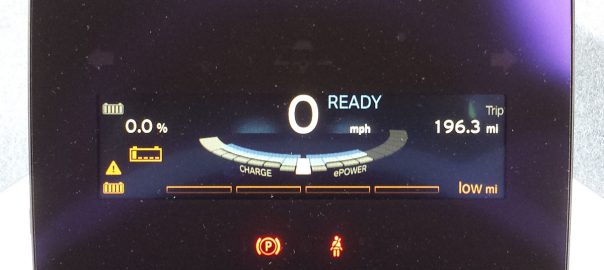
Our BMW i3 94Ah manages 196.3 miles on a charge (Image: T. Larkum)

Our BMW i3 (94Ah) Nearly Achieves 200 Mile Range

After my recent attempts at testing the range of the BMW i3 94Ah achieved 130 miles and 150 miles per charge I decided to go all-out for a final ‘ultimate’ test and see if I could reach 200 miles on a charge, something of a milestone for any electric car.

The method was the same as ever; commute to work for 4 days in a row driving 40 miles each day for work plus an additional mileage up to 10 miles each evening for family trips. This time I used Eco Pro+ Mode which limits the acceleration, the climate control system and the top speed. Moreover I made a lot of use of the cruise control set to 37mph for the faster stretches of the route, but 27mph wherever I could (e.g. passing through villages). Towards the end of the test I used the 27mph limit most of the time.

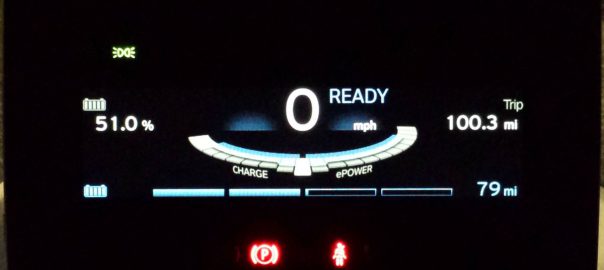
Only a quarter of the charge left but less than 150 miles done (Image: T. Larkum)

After two days, halfway through, the car was teasing the possibility of 200 miles on the charge, with 100.3 miles achieved and only 49% battery used. After the third day, however, it wasn’t looking quite so good with 147.2 miles achieved on 74.5% battery used. I believe this was largely my fault as during the day I had ‘shown off’ the i3 to a colleague, including demonstrating its acceleration, and that had cost me precious range.

And so it was that I failed. At the end of the fourth day, using up the last remaining bit of charge driving around a loop near my house, the range display changed from blue to orange and instead of showing a projected range it read ‘low mi’. I finally gave up and let the car drive down the local hill to home once the battery charge read 0%.

Our BMW i3 94Ah manages 196.3 miles on a charge (Image: T. Larkum)

After 4 days driving on a single charge the i3 had achieved 196.3 miles of range, with a displayed efficiency of 4.9mi/kWh. I had failed to achieve the intended 200 miles. So near and yet so far…!

Given how long the test had taken, and how slowly I had had to drive to achieve the mileage, I currently have no plans to repeat it (at least not this year, perhaps next summer).

The eDRIVE eco results showing 10+ mi/kWh consumption and 20+ mi/kWh regeneration (Image: T. Larkum)

So I lay down the challenge – who is going to be the first i3 94Ah BEV driver to achieve 200 miles on a single charge?

The two firms will launch an information campaign, install chargepoints, and improve network access

AA and Chargemaster partnership set to bust EV myths

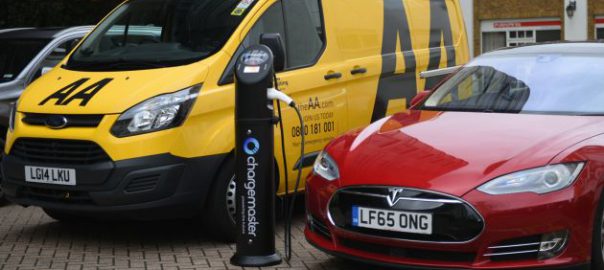
A new partnership between the AA and Charagemaster is set to help boost sales of electric vehicles. In the first partnership of its kind, the Automobile Association and EV charge point specialists will combine forces to provide discounted charging, increased access to home charge points, an information campaign, and the roll-out of charge points at AA-rated hotels.

The two firms will launch an information campaign, install chargepoints, and improve network access

According to research conducted through AA members, 96 per cent of motorists don’t know the real cost of running an EV. This is despite the Association predicting that more than 500,000 plug-in vehicles will be on UK roads by 2020.

To combat this, the AA and Chargemaster will be attempting to overcome misconceptions with an information campaign that highlights the benefits of EV use and ownership. The partnership will also have practical financial impact on AA members with a discount worth more than 10 per cent on Chargemaster’s Polar Plus network. This brings monthly membership down by £1 to £6.85.

The number of charge points located at AA-rated hotels is also set to expand dramatically thanks to the partnership. With 2,500 hotels in the UK rated by the AA, the potential expansion of the EV charging network is huge.

Edmund King OBE, AA president, says:

“We think that the EV revolution is about to take off and we want to help consumers understand the benefits of low cost, low emission driving and to show them it is accessible and affordable. Per mile driven an EV is five times cheaper than the average petrol car and carries no Vehicle Excise Duty.

“Modern electric vehicle designs and performance are comparable to conventional internal combustion-powered vehicles. Concerns and regulations about diesel emissions may also prove to be a tipping point. Sales of new ultra-low emissions vehicles (ULEV) doubled over the last year. And 63,000 drivers have taken advantage of the plug-in car grant. We expect the market to grow substantially, as buyers overcome their misconceptions.

“The vast number of car journeys are under 25 miles and a third of households have two or more cars. Hence, we estimate that more than two million second cars could be electric tomorrow, with no disadvantages and many cost-saving benefits. The AA’s research also shows that if drivers owned an electric vehicle, three-quarters (75 per cent) would expect to charge it overnight, mainly at home while a quarter (25 per cent) would rely on public charging points away from home.”

David Martell, Chargemaster CEO, points out that a significant barrier to electric vehicle ownership is concern that when they reach their destination, drivers will not find a charging point available. This worries 81 per cent of respondents to the AA’s research.

“We want to change that perception,” he says. “This new relationship with the AA will see hundreds more AA branded charging points installed. They’ll go in at AA-rated hotels and other accessible public places such as supermarkets, public car parks and town centres while we will be embarking on a public awareness campaign to show that charging a vehicle at home is neither difficult or costly.”

Edmund King concluded:

“The facts speak for themselves. The cost of electric vehicles is coming down and the £4,500 government grant helps make them competitive. Myths about batteries not lasting long have been blown away by use. Some of the earliest models have clocked up very high mileages with almost no diminution of battery capacity.

“Modern EVs have a much greater range and battery technology is advancing as fast as the cost is falling. Most family saloon cars will drive for 80 to 100 miles without difficulty, well over the average journey length. EV performance is startling – top-range vehicles will accelerate faster than sports cars and provide all the creature comforts.

“This is the future of motoring and we are proud to be launching this initiative with Chargemaster today. Now is the time to charge up the EV revolution.”

Source: Next Green Car

Eiffel Tower in Paris, France (Image: Rijin/Wikimedia)

Paris weekday ban on pre-1997 cars takes effect

Beginning this week, drivers will not be able to take older cars into the center of Paris on weekdays.

Eiffel Tower in Paris, France (Image: Rijin/Wikimedia)

The ban encompasses most cars made before 1997 and motorcycles made before 2000, and was enacted to combat rampant air pollution in the French capital.

Older cars and motorcycles now face fines for entering the city between 8:00 am and 8:00 pm on weekdays, although they are still free to drive into Paris on weekends.

Announced last year, the ban is one of the toughest measures taken by a European city to curb air pollution so far.

In order to enforce the ban, cars will be required to display colored stickers corresponding to one of six levels of exhaust emissions.

After an initial grace period extending to October, drivers who violate the ban will be fined 35 euros ($39).

The amount of the fine is expected to rise over time, starting with an increase to 68 euros ($75) early next year.

Paris has issued temporary car bans before, but this permanent ban of older cars has incited protests from groups expecting to be impacted by the new policy.

Driver groups initially expressed concern that classic cars—including iconic Citroën 2CVs commonly used to shuttle tourists—would no longer be allowed on Paris streets.

However, the Fédération Française des Véhicules d’Epoque (FFVE) collector-car organization recently met with government officials to secure an exemption for what are deemed “historic vehicles,” according to Hemmings Motor News.

Cars more than 30 years old that display a “Carte Grise de Collection” sticker—as opposed to the “Carte Grise de Normale” sticker issued to normal cars—will be excused from the ban.

FFVE officials reportedly hope to extend the exemption to newer cars that still fall into the “collector” category as well.

Read more: Green Car Reports

DECC Minister Amber Rudd visits UK Power Networks ‘Big Battery’, in Leighton Buzzard (Image: DECC)

National Grid sees major boost for solar, electric vehicles and batteries

The UK could adopt solar, electric vehicles and batteries much faster than expected just a year ago, according to the National Grid.

DECC Minister Amber Rudd visits UK Power Networks ‘Big Battery’, in Leighton Buzzard (Image: DECC)

The new outlook is part of a rapidly changing landscape for the UK energy system, laid out in the 2016 Future Energy Scenarios. Marcus Stewart, National Grid’s head of energy insights, says in a foreword to the report: “We are in the midst of an energy revolution.”

Carbon Brief runs through the key changes in the outlook compared to last year.

Energy revolution

The idea that the UK energy world is in the midst of a period of rapid and fundamental change has been gaining traction since the start of the year. The usually conservative National Grid is the latest of several industry and government groups to use the language of “revolution”.

In February, a report for industry group Energy UK talked of a coming “revolution”, similar to those that have overtaken telecomms and banking. Then, in March, the National Infrastructure Commission said embracing a “smart power revolution” could save the UK £8bn a year by 2030.

The National Grid report and press release includes Stewart’s quote on energy revolution, as well as saying that “electricity supply is going through a period of unparalleled transformation”. However, the report fails to spell out exactly how much the National Grid’s scenarios have shifted since last year.

They now see up to 39 gigawatts (GW) of solar installed by 2035, up from around 12GW today and up 7GW from last year’s maximum expectation for 2035 of 32GW. Two years ago, National Grid expected as little as 8GW and no more than 17GW of solar in 2030. Now, its minimum is 15GW.

The raised expectations for the number of electric vehicles on the road in 2035 is equally dramatic, ranging from a 23% to a 120% increase on last year’s report, with the range depending on the wider economic and policy environment. In total, there could be as many as 8.3m electric vehicles in 2035, the report says, making up nearly a quarter of all cars on the road.

This year’s scenarios also include, for the first time, a significant future role for battery electric storage. Last year’s outlook merely noted that storage was important and said new capacity could be unlocked with technological improvements, regulatory change and subsidies.

As of this year, “the value proposition has improved for storage”, says a National Grid document discussing stakeholder feedback received during its scenario development process.

This improvement is set to continue. The Future Energy Scenarios report says the cost of lithium ion batteries could halve by around 2019, and halve again by the early 2020s. It says:

Commercial and regulatory changes which are expected in the next 12 months will be key to the successful large-scale deployment of new storage technologies.

Read more: Carbon Brief

Learn more: UK Power Networks

Electric cars can be a very effective way to save you money on motoring (Image: Go Ultra Low)

Electric car sales to rise ‘once running costs myths are busted’

Electric car sales will soar once motorists overcome their misconceptions about the running costs, according to a new study.

Electric cars can be a very effective way to save you money on motoring (Image: Go Ultra Low)

More than half a million electric vehicles (EVs) will be in use by 2020 based on current buying intentions, research by the AA found.

The motoring organisation published a report which claimed this figure could rise significantly if concerns over the purchase price of EVs, availability of public charging points and the mileage that can be covered on a single charge are overcome.

Sales of new ultra-low emissions vehicles doubled over the past year and 63,000 drivers have taken advantage of plug-in car grants since they were introduced in 2011.

Motorists buying new vehicles with a zero emission range of over 70 miles are eligible for up to £4,500 while those purchasing cars with a shorter range – such as plug-in hybrids with a petrol or diesel engine – can receive £2,500.

AA president Edmund King said:

“We think that the EV revolution is about to take off and we want to help consumers understand the benefits of low cost, low emission driving and to show them it is accessible and affordable.

“Per mile driven an EV is five times cheaper than the average petrol car and carries no vehicle excise duty.

“Modern electric vehicle designs and performance are comparable to conventional internal combustion-powered vehicles. Concerns and regulations about diesel emissions may also prove to be a tipping point.”

The AA report stated that many plug-in hybrids are sold at “a very similar price” to the diesel equivalent, while it can cost as little as two pence per mile to power an EV.

It noted that within two years the vehicles are expected to have a range of around 200 miles on a single charge, making them a good option for a household’s second car.

Hundreds of charging points are to be installed at hotels rated by the AA in partnership with manufacturer Chargemaster.

Government advisers, the Committee on Climate Change, warned last year that 9% of new car sales should be electric vehicles by 2020 for the UK to meet its legal obligation to cut greenhouse gas emissions by 80% by 2050, compared to 1990 levels.

Source: Money AOL