All posts by Trevor Larkum

Living with ZOE

We think seeing is believing. That’s why we gave eight families – a mix of petrol-heads, gadget fans, commuters and school-runners – a week with the all-electric Renault ZOE. They all recorded their experiences with the help of a professional video crew, as well as dashboard-mounted cameras and a nightly video diary. And our users’ no-holds-barred reviews say more than we ever could…

See more: Living with ZOE

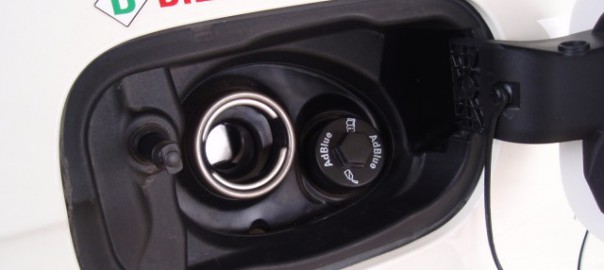
'Diesel fuel only' caution on Audi Q7 TDI (Image: GCR)

Are ‘Clean Diesels’ Actually Not Nearly As Clean As Claimed?

The only region where diesel passenger cars sell in equal numbers to gasoline-powered vehicles is Europe.

And until the advent this year of tougher Euro 6 emission standards, new European diesel cars were significantly dirtier than those sold since 2008 in North America.

But one European transport analysis group suggests that the newest European “clean diesels” actually emit far higher levels of nitrous oxides (NOx) than the legally permitted limits.

A report issued last October by the International Council on Clean Transportation (ICCT) showed that real-world emissions were far higher than the new Euro 6 emission standards and the U.S. Tier 2, Bin 5 limits would allow.

As the ICCT wrote in a summary, “On average, real-world NOx emissions from the tested vehicles were about seven times higher than the limits set by the Euro 6 standard.”

It said the excess emissions “could not be attributed to ‘extreme’ or ‘untypical’ driving.”

“Instead,” it concluded, “they were due to transient increases in engine load typical of everyday driving (e.g., going up a slight incline), or to normal regeneration events in the normal diesel exhaust aftertreatment systems.”

Read more: Green Car Reports

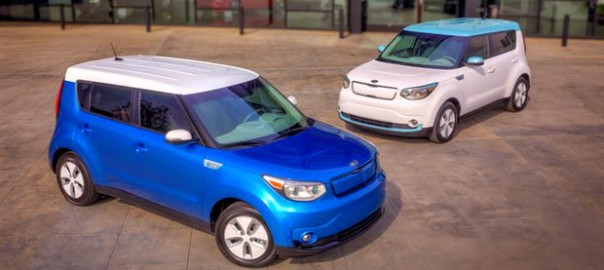
Kia Soul EV second only to Model S in driving autonomy

In my previous post about EVTEC’s four-port 100+ kiloWatt DC Fast Charging station, there’s a little footnote that deserves more attention — the Kia Soul EV supports 100 kiloWatt DC Fast Charging via CHAdeMO. The Kia Soul EV is getting strong reviews, with Kia making it available in several European countries, in Canada, and several U.S. States. The reviews indicate Kia carefully crafted an excellent electric car, and as a Soul EV owner I can attest to how good a car it is. That it also supports a 100 kiloWatt charging rate demonstrates the assertion that Kia paid attention to details with the Soul EV.

This, and the Soul EV’s driving range, make it second in driving autonomy to the Tesla Model S.

That’s a big claim to make about a car many people dismiss as a compliance car (it’s not), so let’s take a look at what it means.

Since September, the Soul EV has been shown twice alongside 100 kiloWatt CHAdeMO charging stations. Last September it was a Korean charging station maker demo’ing their station and the Soul EV in Europe. Then in late March, it was EVTEC (a Swiss company) showing off their four-port CHAdeMO/CCS station, alongside a Soul EV. Hence, while Kia hasn’t said much about it in public, this demonstrates the Soul EV’s capability of charging at 100 kiloWatts via CHAdeMO.

To my knowledge no other CHAdeMO or Combo Charging System (CCS) car can charge at this rate. Well…. that’s a hard assertion to test because the CHAdeMO and CCS public infrastructure doesn’t support 100 kiloWatts.

The Tesla Supercharger network, however, supports a 120 kiloWatt charging rate which is how the Model S is the first electric car that can implement proper road trips. That charging rate means a sub-1-hour recharge for a 260+ mile driving range.

Therefore, by supporting a 100 kiloWatt CHAdeMO charging rate, the Soul EV has the second fastest charging behind the Model S. BUT .. of course .. it’s difficult to be happy about that if you can’t find a 100 kiloWatt CHAdeMO station anywhere. We have to be satisfied with our 50 kiloWatt (or less) charging rate supported by the current infrastructure.

It does point to future standards compliant EV charging infrastructure, supporting electric cars from any manufacturer, with charging rates as fast as Tesla’s Supercharger system.

I said the Soul EV is “second in driving autonomy to the Tesla Model S”. We’ve just gone over the charging rate side of that, let’s now go over the driving range.

The Model S comes with two battery pack sizes – 60 kiloWatt-hours, 208 mile EPA range – 85 kiloWatt-hours, 265 mile EPA range.

The next longest electric car EPA range is the Kia Soul EV, coming in at 93 miles with many people reporting testing it at over 100 miles range. The Gen2 Toyota RAV4 EV has a longer EPA range, but is no longer on the market. The Mercedes-Benz B-Class Electric has a larger battery pack, but an 87 mile EPA range. Neither have fast charging.

The Kia Soul EV supports a 93 mile (or more) range, and 100 kiloWatt charging rate, with a 27 kiloWatt-hour battery pack. Some claim that a small pack like this cannot charge at such a rate without damaging the pack. Supposedly the rule of thumb is to not charge faster than 2x the pack capacity, so a Soul EV should max out at 54 kiloWatts charging rate.

That “rule of thumb” is a way of describing a 2C charging rate (1C means a 1 hour charging time, and 2C means a 1/2 hour charging time). The actual safe charging rate (“safe” meaning both actual safety from events like fire, and “safe” as in not damaging the pack) depends on the battery chemistry. Some chemistries can charge at a higher C rate than other chemistries. Did Kia choose battery technology that can charge at a 4-5C rate?

The phrase “driving autonomy” means a combination of charging speed and driving range. The gasoline cars are tops in both measures, with a 300+ mile driving range and a 5 minute recharge time. Our gasoline driving cousins prove every day what they can do with that sort of autonomy. It’ll be awhile before electric cars catch up (1 megaWatt charging rate?) but as the manufacturers push both driving range and charging rate forward we’ll get closer and closer to what the gasser drivers enjoy.

Going forward it’s best if electric vehicle drivers demand “autonomy” from automakers and charging network operators. That’s the only way to convince those stuck with range anxiety issues that electric cars are safe for adoption.

Source: The Long Tail Pipe
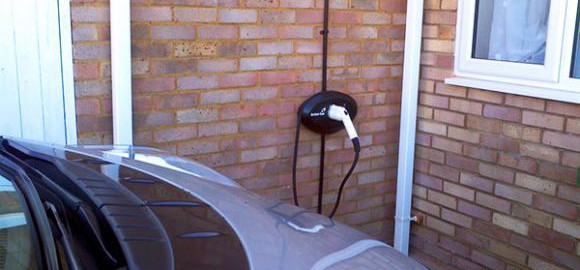
EV charge point manufacturers revise offers and pricing for home units

[From 9 April] With the Office of Low Emissions (OLEV) updating it’s EV Homecharge scheme at the start of next week, many charge point manufacturers have revised their offers on electric car charging points.

Although, the government will still be supporting the installation of charging points at homes across the UK, the grant has been capped at £700 as opposed to £900. Full details on what is on offer from the government under the new EV Homecharge scheme can be found on the OLEV website.

With less money on the table from the government this means that unfortunately for new EV drivers or those looking to get an EV there are no longer any charge point manufacturers offering domestic units and installation for free.

Having said that, there is still a substantial subsidy being offered which means home charging points are still relatively inexpensive to have installed; especially since EV drivers will be recouping the money almost immediately by avoiding petrol stations.

POD Point and Chargemaster both offer 3kW dedicated home charging units for under £200, incluing full installation. There is also the option to upgrade to a 7kW fast unit for around £100 extra.

Source: Zap-Map

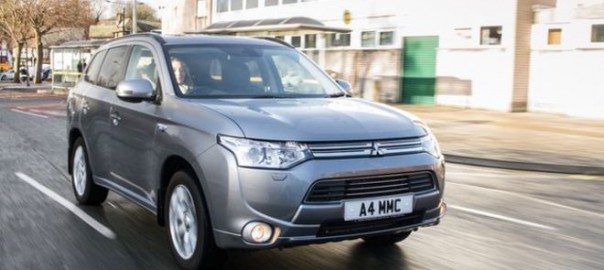
Britain's best-selling plug-in electric car has sold 10,000 vehicles in the last year: Mitsubishi Outlander PHEV

If you want to buy an electric car, you may need to be speedy

Just before Christmas 2010, the then transport secretary, Philip Hammond, declared that 2011 would be the year of the electric car.

He couldn’t have been more wrong.

However, had he said that 2015 would be the year – history might have judged him as prophetic.

Figures from the UK car industry this week suggest we might finally be waking up to the electric revolution.

In March 2015, we bought more than 6,000 “plug-in” cars, compared with around 1200 in March 2014 – a 400% increase.

Plug-in hybrids – which have a conventional engine as well as an electric motor – saw sales rise by 984% over the same period, according to the Society of Motor Manufacturers and Traders (SMMT), admittedly from a very low base.

Britain's best-selling plug-in electric car has sold 10,000 vehicles in the last year: Mitsubishi Outlander PHEV
Britain’s best-selling plug-in electric car has sold 10,000 vehicles in the last year: Mitsubishi Outlander PHEV

Given the fall in the oil price, which has made conventional motoring cheaper, you might have thought that electric vehicles would be falling out of favour.

In fact, the opposite has happened.

Indeed, if the trend continues, we could well buy more than 30,000 electric vehicles this year alone.

But the good news is also the bad: The government’s £5,000 subsidy on each new car will run out when a total of 50,000 have been sold – and that target could now be reached before the end of the year.

Read more: BBC

Fuel Included delivers its first Nissan Leaf electric car

Fuel Included recently delivered its first example of the Nissan Leaf electric car. Though it was not the first one sold, it was the first one collected from a set due to be delivered at about the same time.

It was collected by its proud new owner, Emma of Hemel Hempstead, from her local Nissan dealership, Glyn Hopkin of St Albans. We are grateful to Ben York, the electric sales specialist there, for his professional handling of the sale.

The New Car’s Keys are Handed Over (Image: FuelIncluded.com)

Emma chose the Leaf from our range of electric cars as the right combination of price and size for her family.

Emma Prepares to Drive Away (Image: FuelIncluded.com)

Trevor Larkum, Managing Director of Fuel Included Limited, was there to hand over the car keys. He said:

“We are very proud to turn over this new Leaf to Emma. We know it will provide her with years of trouble-free service while saving her fuel costs and helping the environment.”

Carlos Ghosn On Electric Car Range, Price & More – Video

When the topic of discussion is electric cars and the individual doing most of the talking is Renault-Nissan CEO Carlos Ghosn, we watch and listen.

We think you should too.

“Carlos Ghosn, chief executive officer at Renault, talks with Caroline Hyde about the growth of electric car technology, why development of autonomous vehicles will take at least 10 years, and his outlook for car sales in Russia. He speaks from the Mobile World Congress in Barcelona on ‘The Pulse.’”

There’s electric car range, price and more discussed in this 8-minute interview with Mr. Ghosn.

Source: Inside EVs

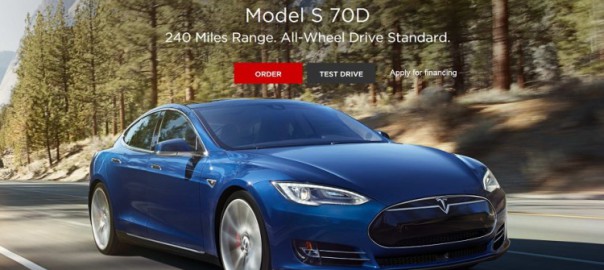
Tesla Introduces The New Base Model S – 70D (Image: Tesla)

Tesla Launches Model S 70D – Eliminates Base 60 kWh Model S

The Tesla Model S 70D is now the entry-level Tesla

It seems Tesla Motors is always tweaking its model lineup and making minor changes here and there to options, colors and so on. This latest change brings us a new model, while eliminating Tesla’s cheapest offering.

The new model, the Model S 70D, replaces the 60 kWh Model S. As the name implies, the 70D is a dual-motor AWD Model S that gets more range than the outgoing 60 kWh Model S. However, the price for entry jumps a bit from ~ $71,070 for the base 60 kWh Model S, to $75,000 for the dual-motor, all-new 70D.

Read more: Inside EVs

UK motorists now have more than 30 electric models to choose from

UK electric fleet passes 32,500 mark

Combining figures from the Department for Transport with new data from the Society of Motor Manufacturers and Traders (SMMT) reveals that the total number of electric cars and vans registered in the UK now exceeds 32,500 vehicles for the first time.

The latest statistics demonstrate the continuing growth in EV sales of high-quality electric cars and vans in the UK. Of the total number of EV registrations, the vast majority (29,979) are electric cars that are eligible for the Plug-in Car Grant. These vehicle comprise fully electric cars such as the Nissan LEAF, as well as plug-in hybrids an exemplified by the Mitsubishi Outlander PHEV.

The other electric vehicles represented by the figures include plug-in vans and cars which do yet yet qualify for the Govt grants. As of the end of December 2014, this group comprised 2,526 vehicles and (based on estimates since then) now number around 2,776 vehicles, the majority being Plug-in Van Grant eligible vans (approx. 1,345).

Given that a large number of successful claims for the Plug-in Car Grants have yet to be translated into registered vehicles, the total UK light-duty electric fleet may already be approaching, or indeed may have already exceeded 35,000 electric vehicles.

Cumulative electric vehicle registrations (UK) 2010-2015 (Image: NGC)

Another indicator that the electric market is growing in strength is the number of fully electric and plug-in hybrid models available in the UK. While only 9 EVs were available for the major manufacturers in 2011, this increased to 18 models in 2013, and now stands over 30 high-quality, fully crash tested cars and vans with more models due for launch in 2015.

Dr Ben Lane, Director of Next Green Car said:

“The number of EVs registered in the UK continues to grow exponentially demonstrating that UK car buyers are continuing to embrace both fully electric and plug-in hybrid power-trains. Reports from EV owners suggest that, rather than just financial benefits, it is the totally new driving experience that is really leading to a change in market preferences and driving the demand for electric vehicles.

“Recent research from Nissan also shows that many EV owners have stated that they would never consider returning to using an ICE car, yet more proof of the fundamental shift in consumer attitudes in favour of electric mobility.”

The latest EV model entrants include the Tesla Model S and Mitsubishi Outlander PHEV which have already made their mark in the UK market. Other high-quality models now available include the Kia Soul EV (which NGC range-tested in December 2014) and the Nissan e-NV200, the latter bringing all the benefits of electric to the small van market.

Source: Next Green Car

Sonnenspeicher features an intelligent management system that automatically controls the charging and discharging current (Image: ASD)

Never pay an electricity bill again: Smart battery lets you use solar energy at NIGHT

  • Sonnenspeicher was designed by Wolfram Walter and German firm ASD
  • Its lithium iron phosphate battery stores energy from solar panels
  • Cheapest model is €8,450 (£6,170), but it will save money on electricity bills
  • It also comes with ‘intelligent management system’ that controls current 

In the past year solar power in the UK has more than doubled while in the US it has grown by 30 per cent.

But many current systems fail to solve the problem of how energy is managed and used overnight when the sun sets.

Traditionally, energy gathered during the day is sent back to the grid, but this can prove costly if you need to buy it back – unless you have a smart battery that stores the excess energy in your home.

With this in mind, German firm Automatic Storage Device (ASD) and designer Wolfram Walter have created the Sonnenspeicher.

It uses a lithium iron phosphate battery to store the energy harvested during the day by solar panels fitted to a roof.

Sonnenspeicher features an intelligent management system that automatically controls the charging and discharging current (Image: ASD)

This energy is used throughout the day, and any excess is stored for when the sun goes down.

Rather than selling this excess electricity to the grid, and potentially having to buy it back at a later date or time, homeowners can use this stored supply to power their home until the sun rises again.

Sonnenspeicher features an intelligent management system that automatically controls the charging and discharging current, to make it easier to manage how much energy is being used.

Read more: Daily Mail