Daily Archives: June 8, 2015

10 Best ‘Eco Friendly’ Cars Of 2015

The 10 best ‘eco friendly’ cars of 2015 — as determined by the editors over at the noted vehicle valuation and information source Kelley Blue Book — were recently outlined in an interesting new list.

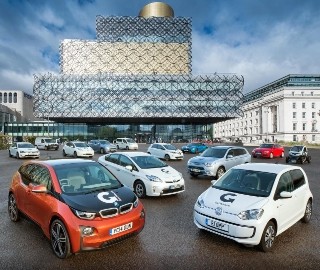
The top spot for the year was (not completely surprisingly) nabbed by BMW’s all-electric i3 model — following on the i3 grabbing other such honors elsewhere as well, and sitting at the top of all cars in the US in terms of “fuel” efficiency.

image24-e1429804688958_Green_Cars_Kelley

The new list from Kelley Blue Book is part of its yearly practice of compiling a ranking of the most efficient vehicles for the year, across all price ranges and power train variabilities.

“The list of ‘green’ vehicle standouts continues to blossom, and with strict Corporate Average Fuel Economy (CAFE) requirements coming down the pipeline, auto manufacturers are making stronger advancements each year in creating more environmentally friendly vehicles,” stated Jack R Nerad, executive editorial director and executive market analyst for Kelley Blue Book’s KBB.com.

“Topping this list for the second year in a row is the BMW i3 – an electric car that can sprint to 60 mph in just over 7 seconds, and is made in a factory powered entirely by four wind turbines. And if 81 miles of electric range doesn’t work for you, the i3 can be had with a small gas generator that lets you go as far as there are gas stations.”

Other vehicles that were ranked highly by the list include: the Volkswagen e-Golf (2nd); the Nissan Leaf (3rd); the Toyota Prius (4th); the Honda Accord Hybrid (5th); the Tesla Model S (6th); the Chevy Volt [Vauxhall Ampera] (7th); and onwards through the rest of the top 10.

Overall, a pretty ‘safe’ ranking arrangement — the e-Golf, the Leaf, and the i3 all got due recognition, as many other lists have been providing them. I suppose you could always contest Tesla’s position further on down the list, but all things considered, I’d say it’s probably fair. Myself, I’m heavily biased towards the Leaf, and would have placed it higher.

Source: Clean Technica

EVs could help reduce driving stress

According to new research, 70% of motorists believe that a quieter cabin would help improve their mood and reduce stress during the time they spend in the car.

The findings suggest that making journeys in an electric vehicle – renowned for the quietness of their interiors compared with road cars powered by internal combustion engines – can help keep driver and passengers happier.

The findings are the result of new research released today by the Go Ultra Low campaign, set up by the UK automotive industry and the public sector to highlight the benefits of ultra low emissions vehicles (ULEVs).

Tests performed by car manufacturers in the Go Ultra Low consortium showed that interior noise levels of electric vehicles and their conventionally-powered equivalents can vary by up to 6dB(A) – a significantly audible difference.

The new research also found that 74% of the UK’s car-driving population above 30 years-old desire “more ‘quiet time’ in everyday life”, with 83% of the same group believing that “Britain is a much noisier place compared with 10 years ago”.

Commenting on the findings, motoring journalist Quentin Willson said:

“When you start driving an electric vehicle the first thing you notice is the quietness of the cabin. Rather than it being a novelty, this can have a positive effect on your well-being. We all know how stressful car travel can be – I’ve found the electric motor can turn journeys into a zen-like experience!”

According to noise experts, fluctuations in sound levels can have a real impact on our emotions.

Professor Duncan Williams, psycho-acoustician at Plymouth University, said:

“Many of the sounds people find most annoying and stressful are dynamic – this is no surprise as humans are neurologically ‘hard-wired’ to respond to such noise. What makes this annoying is when the noises are beyond our control – they are basically unwelcome intruders into our personal space.”

While the research found that the ability to enjoy a ‘quiet’ car journey is important to the majority of motorists, eight out of 10 participants also believed that a reduction in car engine noise would allow them to hold better conversations with passengers and increase their enjoyment of music.

“Music has been shown to be a great mediator of moods,” added Professor Williams. “It has a clear effect on the brain, and is often prescribed in therapeutic contexts.”

Source: Newspress

Half of U.S. Fracking Companies Will Be Dead or Sold This Year

Half of the 41 fracking companies operating in the U.S. will be dead or sold by year-end because of slashed spending by oil companies, an executive with Weatherford International Plc said.

There could be about 20 companies left that provide hydraulic fracturing services, Rob Fulks, pressure pumping marketing director at Weatherford, said in an interview Wednesday at the IHS CERAWeek conference in Houston. Demand for fracking, a production method that along with horizontal drilling spurred a boom in U.S. oil and natural gas output, has declined as customers leave wells uncompleted because of low prices.

There were 61 fracking service providers in the U.S., the world’s largest market, at the start of last year. Consolidation among bigger players began with Halliburton Co. announcing plans to buy Baker Hughes Inc. in November for $34.6 billion and C&J Energy Services Ltd. buying the pressure-pumping business of Nabors Industries Ltd.

Weatherford, which operates the fifth-largest fracking operation in the U.S., has been forced to cut costs “dramatically” in response to customer demand, Fulks said. The company has been able to negotiate price cuts from the mines that supply sand, which is used to prop open cracks in the rocks that allow hydrocarbons to flow.

Oil companies are cutting more than $100 billion in spending globally after prices fell. Frack pricing is expected to fall as much as 35 percent this year, according to PacWest, a unit of IHS Inc.

While many large private-equity firms are looking at fracking companies to buy, the spread between buyer and seller pricing is still too wide for now, Alex Robart, a principal at PacWest, said in an interview at CERAWeek.

Fulks declined to say whether Weatherford is seeking to acquire other fracking companies or their unused equipment.

“We go by and we see yards are locked up and the doors are closed,” he said. “It’s not good for equipment to park anything, whether it’s an airplane, a frack pump or a car.”

Source: Bloomberg