Monthly Archives: December 2014

What’s Top Gear’s Car of 2014?

It’s here at last: Top Gear magazine’s massive, shiny Awards issue, in which we crown the very best cars of 2014.

And there have been some crackers from which to choose. From the ludicrous LaFerrari and revolutionary BMW i8 changing the face of hybrid, through Merc’s AMG GT S and Lamborghini Huracan pushing fast in a whole new direction, to the new Renault Twingo and Citroen Cactus proving budget doesn’t have to be boring, 2014 will go down as one of the epics in automotive history.


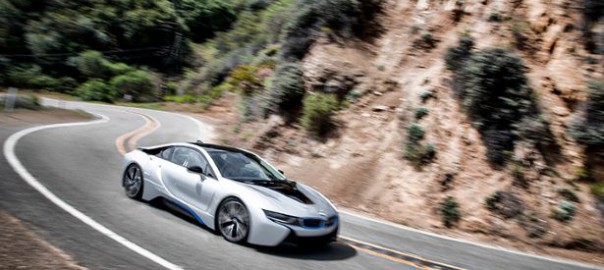
And our car of 2014 is… The BMW i8!

“The i8 is a milestone in the annals of automotive history and a glorious statement for an exciting and positive future. The i8 delivers – and then some.

It’s the kind of car we should celebrate, a beautiful vision of the future, delivered now. A car that tells us the future will be different, but still exciting. The i8 never places its technology in the way of simple enjoyment, and, despite the complexity of that mixed-media drivetrain, it’s all so easy to use, so natural, so right. And it has flip-up doors. Nothing says excitement like a set of beetle-wing portals.

We could have named the i8 Green Car of the Year, but it’s so much more than that. It’s Top Gear magazine’s Car of the Year. It’s the BMW i8.”


Other plug-ins that received awards:

James May’s Car of the Year: Ferrari LaFerrari

“I’ve driven the LaFerrari very hard around Fiorano, twice, and even I can handle it. That alone makes it my Car of the Year. It’s also an artwork. It’s a massive indulgement, so it really has a duty to be beautiful, as a courtesy to other people who are forced to watch it go by.”


Richard Hammond’s Car of the Year: Porsche 918

“The 918 is a direct product of racing experience and outstanding technological development and application. It melds electric and petrol power perfectly to move the supercar into entirely new possibilities. It feels, and is, unlike anything else before or now. It is my Car of the Year, no doubt.”

2015 Kia Soul EV Video Road Test

The Hamsters are back, and they’re performing a science experiment that resulted in this: the 2015 Kia Soul EV. It’s one of the newest electric cars on the market, but what’s it like to use?

Let’s start with what makes the Soul EV different from any other Kia Soul to date: the powertrain. It’s driven by an 80-kilowatt electric motor (that’s 109 horsepower) that produces 210 pound-feet of torque. The motor is powered by a 27-kilowatt-hour lithium-ion battery pack mounted under the rear cargo floor.

According to the EPA, the Soul EV is rated at 93 miles of range, with an efficiency of 105 MPGe. In our testing, though, we’ve found it easy to beat the range rating and drive more than 100 miles on a charge.

At first, the driving experience is almost eerily quiet. There’s no whine during acceleration as you’ll hear in some other EVs. The pedestrian warning sounds are part light saber, part slow-motion crickets. Frankly, from behind the wheel, the Soul EV is a really nice-driving version of what’s already a smart car.

It feels quick, but it’s hardly scorching from a standstill. There’s more than enough power for any situation below 50 mph; above that speed, it feels about as powerful as the Soul with the base 1.6-liter gasoline engine.

The Soul EV actually handles much better than the gasoline-powered Soul, despite being more than 300 pounds heavier. There’s a more glued-to-the-pavement feel behind the wheel. But the low-rolling-resistance tires don’t have much grip—meaning that if you like to corner aggressively, you won’t enjoy the Soul EV to its fullest.

The car has two drive modes: D for drive and B for more aggressive regenerative braking. In D, or normal mode, it coasts reasonably well and you’ll feel a bit of idle creep when you lift your foot from the brake pedal. Pull the shift lever to B, and there’s a ton more brake regen here—to the point that if you aren’t a skilled ‘one-pedal’ driver, you may make your passengers’ heads bob.

So how do we get those electrons into the Soul EV? Using a 240-Volt, Level 2 charging station, you’ll take five hours or less to charge the battery pack. But there’s a CHAdeMo DC fast-charging port as well, which lets the Soul EV go from empty to an 80-percent charge in just 33 minutes. If you don’t have either of those options available, you’re looking at about 20 hours on a standard 120-Volt outlet.

Inside, the Soul EV benefits from all the updates in the second-gen Soul. The cabin is well packaged, and four adults won’t have a problem fitting inside for a road trip—and there even heated rear seats. Need more cargo room? The rear seats fold forward, and while the cargo floor isn’t completely flat, it’s close enough.

The interface in the Soul EV is quite simple on the surface. The gauge cluster has a stable, predictable estimated-range meter, a battery-charge percentage meter, a speedometer, and a reconfigurable display in the middle. All the in-depth features are accessed by hitting an ‘EV’ button on the center stack, which brings you to a screen of EV-centric options. They’ll let you figure out where the closest charger is or set times for recharging overnight, when your electric rates may be lowest.

So what’s the bottom line on the 2015 Kia Soul EV? It may have the best usable driving range outside of a Tesla Model S, along with wondrous versatility and more interior room than other electric cars its size.

Read more: Green Car Reports

G20 nations had been spending almost $90bn a year on finding more oil, gas and coal

A 5 Minute History of Climate Politics

Today begins the UNFCCC’s COP20 which, since the failure of the Copenhagen Accord, will build on the Durban Platform which follows the Bali Roadmap and the Warsaw Outcomes to replace the Kyoto Protocol. Overwhelmed? Fair enough. Confused? Don’t be.

The world of international climate politics seems almost indulgently complex. Yet the negotiations that are about to take place in Peru are possibly the biggest thing ever to happen on climate change. So as a citizen of the world, we need you to know about it. In the next five minutes, let’s have a crash course on what it all means. It’s 20 years of complicated history coming up, so bear with me.

It all begins in 1992 when the world came together and realised there was a problem with the climate. The UN came up with its Framework Convention on Climate Change (UNFCCC) which remains the primary body through which climate negotiations take place. The UNFCCC receives advice of the Intergovernmental Panel on Climate Change (IPCC), a collection of the world’s top scientists who periodically compile the latest research on what’s happening with the climate (Disclaimer: the news is bad). The UNFCCC has the ultimate objective of stabilising greenhouse gas emissions at levels that prevent dangerous interference with the climate and that enable sustainable economic growth. This remains their basic aim to this day.

By 1995, it was pretty obvious that the emissions reductions originally proposed by the UNFCCC were not enough to halt climate change. So representatives from the world’s governments started negotiating a new agreement under the UNFCCC. When these representatives meet to talk about the UNFCCC, it is called the ‘Conference of the Parties’, abbreviated to COP. COP1 took place in 1995 in Berlin.

It took three years to sort out, but in 1997, COP3 announced the Kyoto Protocol. The Kyoto Protocol committed industrialised countries to cut emissions by 5% from 1990 levels by the year 2012. The USA and Australia refused to ratify it, most nations that did ratify ignored it, and besides, it was never enough to prevent climate change anyway. But it was a start.

In 2007, COP13 produced the “Bali Roadmap”. This paved the way for a new agreement for after 2012, when Kyoto was set to expire.

At the 2009 COP15 in Copenhagen, the world was hopeful about agreeing upon this new binding treaty. The time seemed ripe. However, at the Conference, infighting between the major powers (China, the US etc.) hindered the negotiations and so we ended up with non-binding ‘promises’ to cut emissions. The Copenhagen Accord decreed that we would hold warming to within 2 degrees Celsius. To do this, global emissions must peak in 2020, yet the individual pledges made under this accord, even if they were all realised, would miss this goal and see warming of 3 degrees Celsius by 2100. As a result, the accord was widely seen as a failure.

The big question since Copenhagen is how can we agree on a climate treaty for the post-2020 period? In Durban in 2011, the COP agreed on the “Durban Platform” which recognised that there was an increasing gap between what countries were promising in terms of action, and what was needed to avoid catastrophic climate change. In response, the Durban platform announced that a new agreement should be in place by 2015.

In 2012 in Doha, the COP extended the Kyoto Protocol until 2020. They also agreed on the “Doha Climate Gateway”, which emphasised the need for an agreement in 2015 to come into action by 2020.

At the last COP, in Warsaw in 2013, the UNFCCC agreed that the 2015 agreement must bind nations together to avoid the climate change ‘danger zone’ and stimulate faster action immediately. These are known as the Warsaw Outcomes.

This leads us to Lima. The savvier amongst you will have realised that it is not yet 2015. COP20 in Lima can be seen as the warm-up act to the main game in Paris next December. But you’ll also note that everything has been leading to this. The failure of Copenhagen in 2009 to produce a binding agreement has scared the climate world. We know we can’t rock up to Paris and hope for the best. That’s what happened in Copenhagen and everything fell apart. What we need out of Lima is agreement on a draft text to negotiate in Paris so that when COP21 starts, we have a reasonable chance of that text being adopted. If global emissions are to peak in 2020, action is needed now.

Source: The Verb

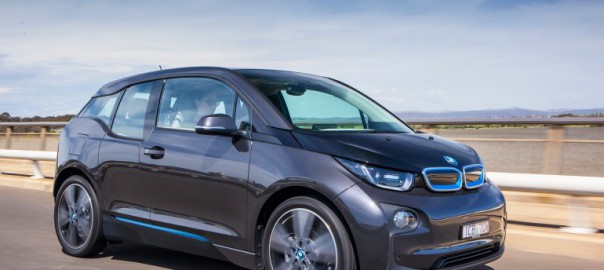
BMW i3: It zips off the mark, turns on a dime, provides good visibility and it's whisper quiet (Image: Gizmag)

She says, he says: BMW i3 REX

The German brand has used some radical new ideas for its new electric car.

He

The future is here! BMW has launched its long-awaited i3 electric city car in Australia. It’s certainly unlike any previous BMW, with its electric motors, carbon fibre reinforced plastic structure and cutting edge looks. What was your first impression, Daisy?

She

Looks, looks, looks. Yes, it may look a little like a grumpy porpoise – it wasn’t love at first sight – but the plastic i3 is unmistakably BMW thanks to its faux grill, solid backside and, in the car we tested, the alloy wheels, which elevate it from electric car to a truly original, exciting design. Inside it only gets better – I loved the wooden dash board panel, the recycled materials and exposed carbon fibre body peeking out from below the very slick “suicide” doors.

He

I’ve got to admit I’m underwhelmed by BMW’s usual interiors – they are conservative in terms of design and materials – but not the i3. I love the fact it uses the different materials like the wood and recycled fabric. I also liked the ‘floating’ infotainment screen in the centre of the console and the smaller tablet-style dashboard. The whole interior just looks fresh and original – it’s unlike anything else on the market. The carbon fibre body – or “Life module” in BMW-speak – you mentioned is a big part of what makes this car so special under the surface. Basically the i3 is built in two parts – the floor has the battery, motor and engine and the body sits on top. It’s all very clever but the proof is in the driving – how did you find the i3 on the road?

She

Onto my second impressions. Wow, this car can move. Granted, I’m new to the electric car game, but the feel of the motor is so unlike anything I have ever driven or even encountered on the road, that, well, it doesn’t really feel like driving. Incredibly nippy, accelerating from 0 to 100km/h in only 7.9 seconds, and with only a hushed, pulsing hum, it’s stealth, in family-friendly, city-minded disguise. The novelty of driving a car that sounds faintly like a nuclear submarine aside, it handles very neatly, is really responsive and is a breeze to control. Traditionalists – ie anyone who loves a manual gearbox and the mechanical rhythm and sound that comes with it – beware: the i3 is a drivable computer.

He

Yeah, it’s a strange sensation driving an electric car. The biggest difference for me, compared to a ‘traditional’ car, were the brakes. BMW harvests the energy when you slow down to charge the batteries, so as soon as you step off the accelerator you start slowing as if you have pushed the brake pedal. It took me a little while to get accustomed to it, but once I did it became normal. Did you get the range extender engine to kick in during your time behind the wheel? I got it to start at the end of a long trip, but even then I barely noticed because it was so quiet.

She

I didn’t get to see the “REX” in action, but did charge the car using the blue-lit power socket, which is a weird sensation. I don’t have a garage, let alone a parking space with ready electricity supply, so needed to plug it in in an underground carpark – I’m not sure how electric car-ready Sydney is. How many hours did you get out of one charge of the battery, Steve?

He

I live about 35km from the office, so I’m not exactly the target market, but it was more than capable of doing the round trip on a single charge. BMW claims 160km of range but even on a full charge the dashboard only claimed 100km was possible. And it did take several hours to recharge the battery so it does require patience and planning to get the most out of the i3. I agree, Daisy, I don’t think Australia is geared-up for electric cars just yet, but with the i3 and its supercar big brother the i8 – plus the Tesla Model S and Mitsubishi Outlander PHEV already here and others on the way – the tide is turning. Of course, if you’re spending $70,000 on an electric city car you’ve probably got a garage to charge it. Which leads to the obvious question – would you buy an i3, Daisy?

She

I’m not sure it could fit a surfboard and handle long road trips, but for city use, yes, in a heartbeat. I’ve always wanted a car that treads lightly and the i3 does a cracking – and very fun – job of that. I love this car and what it represents. It’s the way ahead.

Read more and see video: Drive.com.au

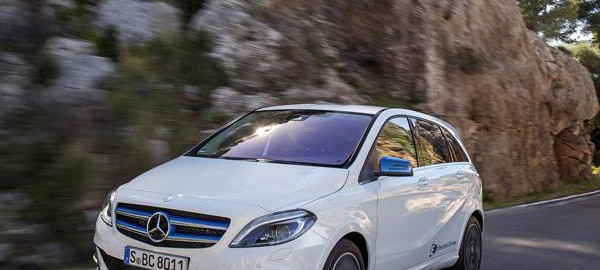
Mercedes B Class Electric (Image: MB)

Order books open for electric Mercedes B-Class

Mercedes has opened the UK order books for its first volume electric car, the B-Class Electric Drive.

Available in two trim levels – Sport and Electric Art – the B-Class Electric Drive can cover up to 142 miles on a single charge and accelerate from 0-62 mph in 7.9 seconds, making it, says Mercedes, the fastest five-seat electric car in its class.

The B-Class Electric Drive is powered by lithium-ion batteries located under the car floor, so it retains the versatility of the B-Class MPV on which it’s based, with seating for five and 501 litres of boot space – rising to 1,456 litres with the rear seats folded. It comes with a fast-charging cable, which enables a full charge in three to four hours, compared to up to nine hours from a conventional home supply.

Available in a choice of eight paint finishes, the Sport model’s standard equipment list includes 17-inch alloy wheels, unique front and rear bumper designs, LED daytime running lights, a 7-inch central display, Artico trim, automatic climate control, a reversing camera and cruise control.

The Electric Art model – available in either Cirrus White or South Seas Blue – features contrasting mirrors and radiator grille elements, 18-inch dual colour alloy wheels, automatic climate control, contrast blue stitching on the seats and aluminium trim.

Mercedes B Class Electric (Image: MB)

An optional Energy Assist Package (£945) features adaptive energy recuperation systems to sense road conditions via the forward facing radar. When traffic is identified, increased recuperation is employed to make the most of any deceleration. Likewise, it can use signals from the COMAND system (when specified) to read the topography of the road ahead and adapt accordingly. The driver can override the regenerative cycle via the paddles mounted behind the steering wheel to alter the level of retardation – reducing the likelihood of any energy being wasted.

Further measures fitted as part of the Energy Assist Package include privacy glass and a heated windscreen to reduce load on the air conditioning system, increased insulation around the doors and windows and the addition of a Range Plus button for occasional use, adding extra range to the battery capacity than would normally be feasible. Finally, the car will emit a subtle but audible signal at speeds of up to 18 mph to warn pedestrians of its presence.

The new Mercedes-Benz B-Class Electric Drive is available to order now for 2015 deliveries.

Mitsubishi Outlander GX4hs 2.0 PHEV Auto

MITSUBISHI believes it’s a game-changing SUV, but does the part electric Outlander spark our interest?

https://www.youtube.com/watch?v=-Wm_stGjr7k

On the road

THIS particular Outlander may look like any other 4×4 from the outside, but it’s much more than that on the inside.

And while the name might not exactly trip off the tongue, the technology under the skin comes across loud and clear.

The PHEV is a plug-in hybrid with all the capabilities of a serious off-roader.

With a two-litre petrol engine allied to an electric motor it offers the best of both worlds and what’s more it seamlessly shifts between the two.

The additional weight that comes with carrying two forms of propulsion feels like a benefit rather than a hindrance, in terms of body control, as the Outlander isn’t as ungainly as some cars of its ilk.


On the inside

THE interior of the Outlander strikes a balance between function and form.

I found it easy to get comfortable and all the things you need on a regular basis come easily to hand.

As you might expect, views from all angles are very good and while you are sat higher than much of the rest of the traffic, it is not so tall as to cause vertigo in the nervous driver. A negative comes in the form of the touchscreen satellite navigation, audio and information system, which isn’t the most intuitive and often requires you to negotiate a number of screens to get to where you want to be.


What do you get

ALONG with the usual adornments, our PHEV came with a rear view camera, powered boot, keyless ignition, dual zone climate control, DAB radio, leather seats, electric sunroof, electric folding and heating mirrors, 18ins alloys and Bluetooth. There was also privacy glass, steering wheel audio controls, cruise control and a – highly sensitive – lane departure warning function.


How practical is it

THERE are a couple of areas of practicality to consider when evaluating the PHEV. Obviously, space is one, given that this is a fully functioning SUV. There’s more than enough room for five and when you need to transport more passengers, there’s the addition of two seats stowed away in the boot floor. Perhaps better suited to the younger or more agile among us, they were nevertheless a welcome option.

The boot isn’t the biggest at 463 litres, but it’s more than capable of carrying an average sized payload for the sector. On the technological front, on a full charge – which takes the best part of a day unless you have the benefit of a quick charger – you can get around 30 miles of fully electric running. That’s enough for those faced with an average daily commute and means you may never have to visit the petrol station. Not only that but it can also charge while underway or idling.

If you need to cover more miles, on a weekend say or in an emergency then there’s the reassurance of that tank of petrol.


Running costs

The Outlander PHEV is competitively priced, is eligible for the Government’s £5,000 plug-in car grant and the entry level model costs the same as its diesel counterpart, which makes for a refreshing change.

As mentioned before, theoretically, you may never need to refuel again but when or if you do, you should be pleasantly surprised by the return you get. Mitsubishi states a theoretical high of 148mpg, but even an average of 50mpg in a real world driving scenario is a figure you wouldn’t baulk at from a diesel, never mind a petrol powered vehicle. CO2 emissions are incredibly low, from just 44g/km meaning no car tax.

Verdict: A BIG car that promises big savings.

Source: Northern Echo

PM at Stonehenge (Image: Gov.uk)

Biggest upgrade to roads in a generation

The £15 billion ‘Road investment strategy’ will increase the capacity and improve the condition of England’s roads.

An ambitious £15 billion plan to triple levels of spending by the end of the decade to increase the capacity and condition of England’s roads, was announced to Parliament today (1 December 2014) by Transport Secretary Patrick McLoughlin and Chief Secretary to the Treasury Danny Alexander.

The government is investing in more than 100 new road schemes over this parliament and next, 84 of which are brand new today.

These plans are published today in the first ever ‘Road investment strategy’, which has been developed to keep the population connected and the economy growing.

The strategy also contains measures to improve the lives of communities affected by road upgrades, including:

  • £100 million to improve cycling provision at 200 key locations across the network, as well as a commitment to cycle-proof any new schemes being developed
  • £300 million environmental fund to mitigate carbon emission and reduce the number of people affected by serious noise by 250,000 – this fund will create new charge points for low emission vehicles every 20 miles across the road network, as well as enhance the landscape, protect sites of cultural or historic heritage, and reduce the impact of improving our roads on wildlife, countryside and habitats
  • £100 million to unlock future growth and housing developments

Source: Gov.uk

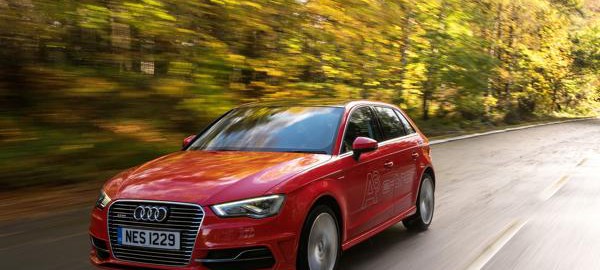
Audi A3 Sportback e-tron (Image: NCN)

First Impressions: Audi A3 Sportback e-tron

Tony Dron drives the new e-tron hybrid version of the Audi A3 Sportback.

Prepare to be seriously impressed. When I put the obvious question about their latest model to Audi, I was astonished by what happened next, but we’ll get to that later. First, things are moving fast in automotive technology and the changes in the next ten years are going to be much greater and more amazing than anything we have seen in the last three decades.

Audi’s first hybrid car, the A3 Sportback e-tron, is one step on the way. Wisely, they have applied the new engineering to an existing, top-seller and made it seem, most of the time, like a perfectly normal petrol-powered family wagon – complete with five seats and a decent boot. The difference is that you can switch it between four driving modes, one of which gives you purely electric drive for up to 31 miles.

There is no range anxiety because the A3 e-tron can always fall back on its petrol engine and the range from its combined power sources is over 580 miles. It looks sensible and it is sensible but it’s also fun to drive and, no doubt to the dismay of heads-in-the-sand anti-car bores who welcomed electric vehicles because they thought they’d be slow, this electric Audi is quick.

The combined 1.4TFSI petrol engine and 75kw electric motor give a top speed of 138mph and 0-62mph in 7.6 seconds, which is significantly quicker than a non-electric A3 Sportback 2.0 TDI Sport S tronic, a highly respected performer which looks almost exactly the same.

Audi, famed as a leading innovator in automotive engineering, is quick to remind us of the A3’s lightweight aluminium body construction and, equally, the pioneering race-proven hybrid technology that has delivered two outright wins in the Le Mans 24Hrs.

So what was the obvious question? Simple: given that all the above is true, and a large fortune has been spent developing that race-winning hybrid technology, why haven’t they used the same system in this road car? The Audi R18 e-tron Quattro race car that won at Le Mans in 2014 captures energy via a flywheel but the A3 Sportback e-tron has a permanent magnet synchronous electric motor/generator mated to the gearbox and a battery, with no flywheel to spin up under braking.

We were in the North East of England for the A3 Sportback e-tron launch when I put this question. Immediately, they sent a man with a mic down to the pit-road in Sao Paulo, Brazil, where the final round of the 2014 World Endurance Championship was taking place. My question was put directly to Chris Reinke, the Audi R18 Project Leader, and within minutes I received an email with an audio attachment of Mr Reinke, in person, in South America, answering the question – exclusively for NEW CAR NET readers. Wow.

Here’s the essence of what he said: the race car requires a very intense recuperation and boost cycle – about three seconds each way. The demand in road cars now is different: you recoup for quite a while and then you run on electric power, also for quite a while. For the moment, then, the road car with its battery and the race car with its flywheel have ideal systems for their different requirements.

There are, however, links between the race and road cars, particularly in electronics. The race team is at the forefront of the extreme end of development. Mr Reinke concluded, ‘But believe me, that kind of technology will reach relevance in years to come . . . the spin-off will be seen in road cars.’

In other words, when it come to road cars, you ain’t seen nothing yet. Meanwhile, this first Audi plug-in hybrid can be ordered now for deliveries starting in January 2015. As it qualifies for the Government’s OLEV grant of £5,000, the OTR pricing is from £29,950. That includes all-weather LED front and rear lights, special 17in wheels, light and rain sensors, a handy charging point concealed behind the four-rings badge on the front grille, a public charging cable kit, MMI Navigation with Audi Connect, and more.

Even so, it’s not difficult to add several thousand to that price with a few extras such as leather sports seats, a panoramic glass roof, a special paint job, optional 18in wheels and so on.

To drive, it does feel like a perfectly normal premium quality car, with a six-speed S tronic gearbox and surprisingly good torque and throttle response from its hybrid power sources. The main driving mode uses both petrol and electric, with the battery recouping and delivering power as required. The other three are ‘Hold’, retaining battery power for later EV use; ‘Charge’, generating maximum electric range as quickly as possible while using the petrol engine; and ‘EV’, which gives purely electric drive up to 81mph.

It’s pretty lively around town in EV mode but if you floor the throttle a kickdown switch starts the petrol engine for maximum performance. The transition between the two is so impressively smooth that you can’t feel it.

The lithium-ion battery is quite compact, adds only 125kg and is very securely bolted to the floor between the rear wheels. If it has to be recharged by cable, it takes 2 hours, 15 minutes (public point) or 4 hours (domestic point).

The A3 Sportback e-tron officially emits a mere 37g/km of CO2 and has an official combined mpg figure 176.6. That sounds incredible – in the real world, a very wide range of mpg figures can be achieved and it all depends on road conditions and, most important of all, how you choose to drive it. There is no VED charge in the first or subsequent years and it’s free of the London Congestion Charge.

Audi feels that it has timed the launch of this very interesting new car just right. Just a few thousand are likely to be sold in the first year but demand for electric vehicles, including hybrids such as this, is expected to double every year after that.

What is sure is that cars are going to change beyond all recognition in the next decade, with an enormous variety available. Small engine and big battery? Big engine and small battery? Four-wheel-drive, rear drive or front drive? Stuff we haven’t even heard about yet? The choice will be yours.

Source: New Car Net
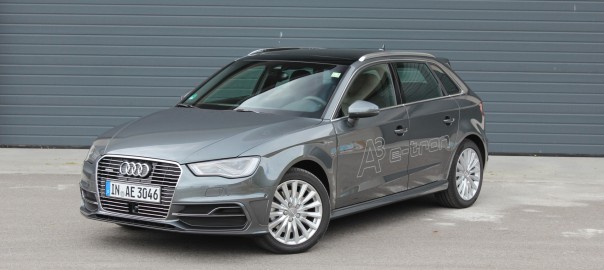
Audi A3 e-tron (Image: Green Car Reports)

Audi A3 e-tron: First Drive

Plug-in hybrids like the 2016 Audi A3 e-tron — especially those with well-tuned responses and zippy performance — are the evangelists that have the best chance of converting the masses to the joys of all-electric motoring.

Yes, electric-car fans, please set aside your all-the-way-or-nothing thinking for the moment. On one side, the A3 e-tron preaches to that inherent goodness, and serves as a stopgap solution, with limited EV range, until battery cost and packaging hurdles are overcome. On the other hand, even after you’ve used up your electric range and the gasoline engine starts up, the e-tron remains a cheerleader for how hybrids can be made more efficient—and even more fun to drive—with bigger batteries and stronger electric ‘boost.’

The production A3 e-tron, slated to reach the U.S. market next summer, is more of the latter. After several stints of driving with the e-tron—in final Euro-spec, and close to what we’ll see in the U.S.—earlier this month, in portions of three days and a drive from Vienna to Munich, over narrow, undulating Austrian and German back roads, larger two-lane highways, and some motorway time—we can say that it feels as if Audi has put forth tremendous effort into making the e-tron drive like a normal gasoline (or diesel) car.

And it might just be the best-handling (or best-balanced) model in the A3 lineup—certainly so if you only consider Audi’s front-wheel-drive cars.

More fun to drive than any other plug-in hybrid

To take it a step further, up against every other plug-in hybrid and range-extended EV on the market—or at least, those with a price tag lower than EV enthusiasts’ Holy Grail, the Tesla Model S—the e-tron is simply more fun to drive.

How can this be? In part, it’s a matter of weight. Because the battery pack and additional hybrid hardware add about 300 pounds of additional curb weight (the battery weighs just 276 pounds)—and by giving it aluminum fenders and hood and some other weight-saving measures, Audi’s kept this complex plug-in hybrid’s total curb weight at just under 3,400 pounds. That’s less than 400 pounds heavier than the base 1.8-liter A3, and roughly the same weight as a 2.0T quattro A3—an incredible feat, really. Furthermore, it’s that battery pack that makes the weight distribution more balanced (at 55/45 biased to the front, instead of up to 60/40 for some A3 models).

Read more: Green Car Reports

Electric Vehicle Charge Points

New measures announced to support the uptake of plug-in vehicles

[Useful information published February 2013]

A £37 million funding package is set to benefit drivers with plug-in vehicles

Drivers with plug-in vehicles are set to benefit from a £37 million funding package for home and on-street charging and for new charge points for people parking plug-in vehicles at railway stations.

The coalition government will provide 75% of the cost of installing new charge points. This can be claimed by:

  • people installing chargepoints where they live
  • local authorities installing rapid charge points to facilitate longer journeys, or providing on-street charging on request from residents who have or have ordered plug-in vehicles
  • train operators installing new charge points at railway stations.

The £37 million funding for the package comes from the government’s £400 million commitment to increase the uptake of ultra low emission vehicles and is available until April 2015.

Transport Secretary Patrick McLoughlin said:

This investment underlines the government’s commitment to making sure that the UK is a world leader in the electric car industry.

Plug-in vehicles can help the consumer by offering a good driving experience and low running costs. They can help the environment by cutting pollution. And most importantly of all, they can help the British economy by creating skilled manufacturing jobs in a market that is bound to get bigger.

Business Minister Michael Fallon said:

The government is supporting a range of ultra low emission vehicles. Today’s announcement will make the consumer environment for plug-in vehicles more attractive and, in turn, makes the UK a more compelling place to invest. There are huge business opportunities so we’re committed to ensuring the UK leads the way globally for low carbon vehicles.

The full package announced today includes:

  • up to £13.5 million for a 75% grant for homeowners in the United Kingdom wishing to have a domestic chargepoint installed
  • an £11 million fund for local authorities in England to:
    • install on-street charging for residents who have or have ordered a plug-in vehicle but do not have off-street parking – authorities can apply for up to 75% of the cost of installing a chargepoint
    • provide up to 75% of the cost of installing rapid chargepoints in their areas around the strategic road network
  • up to £9 million available to fund the installation of chargepoints at railway stations
  • up to £3 million to support the installation of chargepoints on the government and wider public estate by April 2015
  • a commitment to review government buying standards (mandatory for central government departments) to lower the fleet average CO₂/km of new cars and encourage the uptake of plug-in vehicles in central government.

The package also includes a previously-announced £280,000 of funding to expand the Energy Saving Trust’s plugged-in fleets initiative in England to help a further 100 public and private sector fleets to understand and identify where ultra low emission vehicles could work for them.

Source: Gov.uk