Daily Archives: December 5, 2014

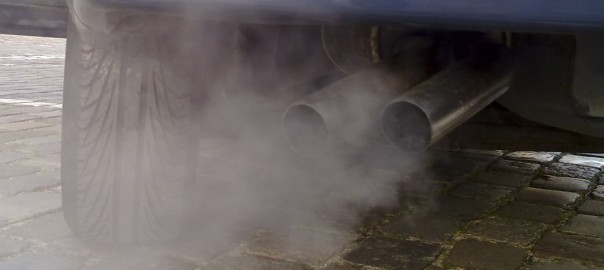
Car exhaust pollution (Image: Wikipedia)

Days Numbered For Dirtiest Diesels In Europe

For many European cities, diesel exhaust emissions have become a health as well as an environmental problem.

So in addition to promoting electric cars or alternative forms of transportation, lawmakers are beginning to crack down on the dirtiest diesels.

Next year, the French government will launch a car identification system that will rank vehicles by the amount of pollution they emit.

According to Reuters, this will allow local authorities to limit city access for the worst-polluting cars.

The move – announced in a speech by French Prime Minister Manuel Valls on Friday – is part of an effort to gradually phase out diesel fuel in the country.

In the 1960s, the French government and auto industry made the decision to move to diesel – which was viewed as less polluting than gasoline in the days before catalytic converters became standard.

Now, France is paying for that choice in the form of high levels of harmful particulate matter and other aftereffects of diesel-exhaust emissions from cars that don’t come close to meeting current diesel emission standards.

France has “long favored the diesel engine,” Valls said in his speech, but claimed that it was a “mistake” that must be undone with policy changes that could – in the long term – end diesel’s dominance.

Read more: Green Car Reports

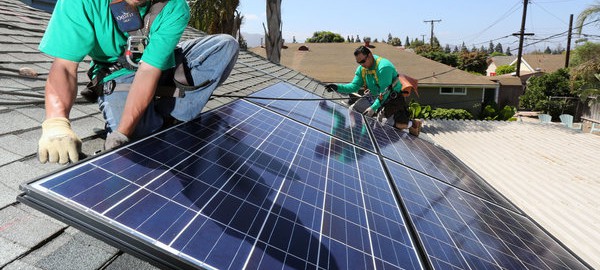
Workers for SolarCity installing solar panels (Image: JE Flores/NYTimes)

Why More Solar Panels Should Be Facing West, Not South

For years, homeowners who bought solar panels were advised to mount them on the roof facing south. That captures the most solar energy over the course of the day, which benefits the homeowner, but does so at hours that are not so helpful for the utility and the grid as a whole.

Mount them to catch the sunlight from the west in the afternoon, and the panels’ production over all would fall, but it would come at hours when the electricity was more valuable.

But that idea is slow to take hold. A new study of 110,000 California houses with rooftop solar systems confirmed that a vast majority of the panels were pointed south because most of the panel owners were paid by the number of kilowatt-hours the panels produced. Pointing them southward maximizes production over all, but peak production comes at midday, not in late afternoon, when it would be more helpful.

In late afternoon, homeowners are more likely to watch TV, turn on the lights or run the dishwasher. Electricity prices are higher at that period of peak demand.

“The predominance of south-facing panels may reflect a severe misalignment in energy supply and demand,”

said the authors of the study, Barry Fischer and Ben Harack. They work for Opower, a company that provides software that electric companies can use to manage their relationships with their customers.

Houses with solar systems consume less than half as much utility-delivered electricity as ordinary houses, the study found. But from about 4 p.m. through the night, they consume more, and they add to the system’s peak demand, which comes around 5 p.m.

Pointing panels to the west means that in the hour beginning at 5 p.m., they produce 55 percent of their peak output. So a 10-kilowatt system would make 5.5 kilowatts. But point them to the south to maximize total output, and when the electric grid needs it most, they are producing only 15 percent of peak, or 1.5 kilowatts.

Why wouldn’t everyone point the panels west? Some homeowners have their panels face south because that is the direction of the roof. While some solar panel owners are paid time-of-use rates and are compensated by the utility in proportion to prices on the wholesale electric grid, many panel owners cannot take advantage of the higher value of electricity at peak hours because they are paid a flat rate, the energy analysts said. So the payment system creates an incentive for the homeowner to do the wrong thing. The California Energy Commission recently announced a bonus of up to $500 for new installations that point west. A new solar installation is completed every 3.2 minutes, according to the authors of the analysis.

Solar panels do not have to be pointed in just one direction; a homeowner can buy a device called a tracker that will pivot them, over the course of the day, like a sunflower, so they always face the sun. A tracker can raise the output of a panel by 45 percent. But adding trackers can cost hundreds or thousands of dollars, and a cheaper way to get the same number of kilowatt-hours may be simply to buy a few extra panels.

Houses with solar panels are not necessarily efficient; during the hours when the sun is not shining, they use more electricity than houses without solar panels. It may be because the bigger users tend to install the panels in the first place. There may be another reason: People who own electric cars tend to also install solar panels, and their overall electricity consumption is higher. But from an environmental standpoint, it is still better to consume the energy as electricity rather than as gasoline.

Source: New York Times

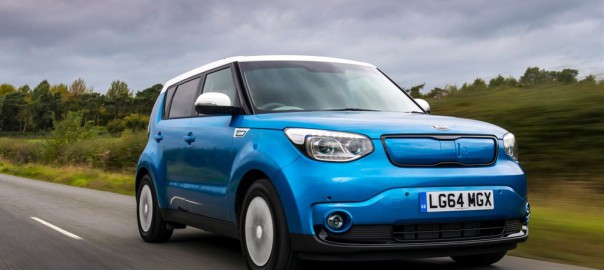
Kia Soul EV

Kia Soul EV UK first drive review

Smooth, refined and responsive, but some way behind the new EV models from Mercedes-Benz and Volkswagen in nearly all areas

What is it?

This is Kia’s first production electric vehicle, based on the familiar high-roofed Soul hatchback. Like all other Kia models, the Soul EV will get the same seven-year warranty which is a market first for battery-powered vehicles and should help reassure potential purchasers.

In the conversion to battery power, the core of the Soul – the conventional internal combustion engines, transmission and heating system – have all been dumped, the front and rear styling revamped and the structure reworked.

While the upper body structure is carried over, it has been further beefed up with extra strengthening in the B-pillars and sills. Five extra crossmembers have also been bolted across the floorpan to increasing the rigidity of the bodyshell by 27 per cent.

The Soul EV also gets a restyled front end and a plastic insert in the grille space, which opens up to revealed the twin charging sockets. The rear bumper and tailgate have also been restyled and LED rear lights have been added.

Inside, the dash is all new and built of higher-quality materials than the conventional models. The EV version gets OLED digital instruments, a large centre touch screen, a rather shapely steering wheel and a new shift lever and surround.

The 27kWh lithium ion polymer battery pack is packaged under the floorpan. Charging from a UK domestic socket could take up to 13 hours. Kia UK is, however, suppling owners with a wallbox charger, which should reduce charging time to around five hours. It is also fitted with a Japanese-standard Chademo fast-charging socket, which can deliver an 80 per cent charge in 33 minutes.

Kia engineers created a new low-energy heating and ventilations system based on the heat pump principle which also allows heating and ventilation to be restricted to just the driver, saving energy.

The 109bhp, 210lb ft electric motor drives a single-speed transmission and Kia claims a 0-60mph time of 10.8sec and a top speed of 90mph. The combination of the polymer battery cells and the new heating system will stretch the potential driving range out to 132 miles.

What is it like?

While the Soul EV delivers the typically compelling electric car dynamic of smooth and torquey performance and a quiet cabin, the whole package feels somewhat dated.

Had this car been launched three years ago, it would have been easily class-competitive with the Nissan Leaf. But the world of the EV has moved on rapidly and the new Volkswagen e-Golf and Mercedes-Benz B-Class Electric Drive are better cars than the Soul EV.

The two German models feel more refined both in terms of cabin ambience and ride quality, the drivetrains perform better and both cars have far superior handling.

The cartoonish looks might, of course, not matter to many potential buyers, but the clinching argument is that the entry-level VW e-Golf is only just over £1000 more than the Soul EV; the B-Class Electric Drive costs around £2000 more, and the excellent BMW i3 only a few hundred pounds more.

That’s not to say the Soul EV has nothing going for it; quite the opposite, in fact. In addition to its EV driving and performance traits, the lofty driving position and boxy styling make it easy to position in busy city-centre traffic.

Should I buy one?

If you are going to buy an electric car, it would be hard to find a compelling argument for the Soul over rival models. It does everything pretty well, aside from suffering a somewhat disturbed ride on poor roads, but is short of EV class leadership.

Kia has modest sales targets for the Soul EV, with next year’s sales tipped to be 100-200 units, the cars only being sold through a select 13 dealers who applied. Despite the £24,995 price (including government grant, battery pack, wall charger, Chargemaster account and generous standard spec), Renault’s Zoe and the Nissan Leaf also benefit from buying packages that make EV ownership even more affordable.

As it stands, the Soul EV, as competent as it is, is neither the best to drive nor the best value.

Source: Autocar
Inconveniences of Gasoline 1: Gas Station (Image: Clean Technica)

The Inconveniences of Buying Gasoline

Thanksgiving weekend has historically been the biggest driving weekend of the year. What better time to discuss buying gasoline?

This article is intended to be a little bit of a light article, but with some food for thought included for consumption. It is not intended to be a full review of the pros and cons of buying an electric vehicle (EV) article. In short, some insights are being put forth here to contribute to the conversation about EVs. This article is a result of my own inner dialogue that has moved me in the direction of buying an EV. An EV will be my next car, but I’m still currently driving an anachronistic internal combustion engine (ICE).

Finding a Gas Station

How far out of our route do we have to drive to get to the gas station? For me, this varies from trip to trip. As an environmentalist, I do my best to get gas right on the road on which I’m already traveling, but that isn’t always possible. How many stop lights do we go through to get to a gas station while paying good money to burn gasoline, and polluting with CO2s, at those stoplights? How much gasoline do we pay for to get us to and from those gas stations? With EVs that charge at home and/or work, this issue is eliminated.

The Cost

The cost savings of using electricity instead of buying gasoline is commonly quoted as between $1,000 and $1,500 per year. This will vary based on one’s electricity rates, the cost of gasoline, and the number of kilometers (miles) someone drives per year.

Premium Gasoline

When we hear the price of gasoline on the news or radio, they are always quoting the price of regular gas as though that’s the only price of gasoline. Many cars such as all ICE Mercedes vehicles require premium petrol. The cost of premium gas varies, but is roughly 8% more costly currently and has cost as much as 20% more than regular in the past (in 1998). With EVs, this issue is eliminated.

Read more: Clean Technica

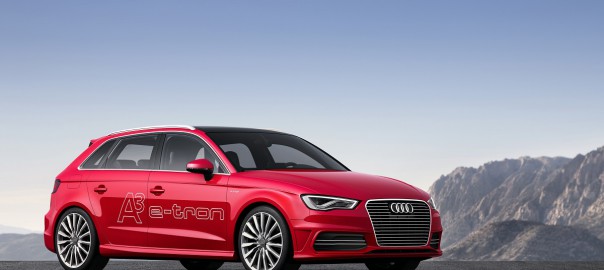
Audi A3 e-tron (Image: Audi)

Increased Production of the Audi A3 Sportback e-tron

  • First plug-in hybrid model drives off the assembly line in Ingolstadt
  • Assembly processes integrated into the A3 line
  • Maximum safety for employees, top quality for customers

Ingolstadt, November 21, 2014 –Approximately 50 cars every day, with the same timing and on the same assembly line as the other models: Audi is now ramping up production of the Audi A3 Sportback e-tron*. The premium manufacturer is producing its first plug-in hybrid model at the brand’s main plant in Ingolstadt.

Dr. Hubert Waltl, Board of Management Member for Production at AUDI AG. said:

“We started series production of the Audi A3 Sportback e-tron in the summer. Most of the assembly work is integrated into the A3 line; no separate manufacturing is necessary. That demonstrates the flexibility and efficiency of our production planners and employees.”

With the Audi A3 Sportback e-tron, Audi is launching the mobility of the future. The compact five-door combines a 1.4 TFSI combustion engine with a 75 kW electric motor, resulting in a total system output of 150 kW (204 horsepower). Despite the sporty driving performance, fuel consumption in the NEDC is just 1.5 liters per 100 kilometers (35 grams of CO2 per kilometer). The A3 Sportback e-tron can travel up to 50 kilometers in purely electric mode and up to 890 kilometers more with the gasoline engine.

“We first of all ramped up production of the A3 Sportback e-tron to about 30 cars a day in September,”

explained Board of Management member for Production Waltl.

“Our peak is approximately 50 units each day now. In any case, we are keeping additional capacity available.”

Peter Kössler, head of the Ingolstadt plant, stated:

“Working with high-voltage systems in series production was a new challenge for us, but we mastered it well. At all stages of assembly, we achieve maximum levels of safety for our employees and quality for our customers.”

Safety is given top priority during the entire assembly process. All the employees who come into contact with the A3 Sportback e-tron have received technical safety instructions for the new technology; some employee who are directly involved are qualified as specialist electricians for automotive technology.

*Fuel consumption of the models named above:

Audi A3 Sportback e-tron:
Combined fuel consumption in l/100 km: 1.7 – 1.5;
Combined electricity consumption in kWh/100 km: 12.4 – 11.4;
Combined CO2 emissions in g/km: 39 – 35

Audi A3 Sportback e-tron 16″:
Combined fuel consumption in l/100 km: 1.5;
Combined electricity consumption in kWh/100 km: 11.4;
Combined CO2 emissions in g/km: 35

Fast charging at one of the dozen rapid chargers at Stanmore (Image: T. Larkum)

People’s Climate March – Part 3

[Part 1]

[Part 2]

Once the Climate March was over I expected the return journey to be straightforward, but it wasn’t to be. I knew that there was extensive engineering work underway on the London Underground but it did not impact directly on the route I intended to use back from Westminster to Kentish Town.

However, early in the journey it became clear there was another problem. Announcements over the tannoy system indicated that a significant part of the northern section of the tube was experiencing a temporary closure. The reason given was that there was a person on the line, and the implication seemed to be that there had been a suicide attempt.

Nissan Leaf on charge in Highgate (Image: T. Larkum)

Anyway, after a number of changes of route and failed redirections I got back to Camden Town and decided to walk from there, even though it was further than I would have liked. At least, I felt, my progress was under my control.

On the way I spotted another electric car, this time a Nissan Leaf. It was plugged in and charging in the compound of a civil engineering firm off Highgate Road – an encouraging sign, I thought, a commercial company using an EV.

I got back to my car, unplugged and drove off without incident. I was actually still doing quite well for time so decided to take a detour. In planning the trip down I had considered parking at Stanmore Underground Station as I had read that it was equipped with a dozen fast chargers – an unprecedented concentration that doesn’t exist anywhere else in the UK, so far as I know.

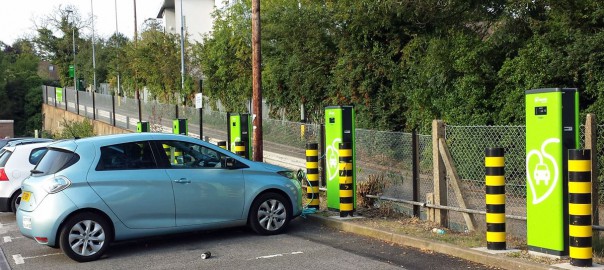
Fast charging at one of the dozen rapid chargers at Stanmore (Image: T. Larkum)

Finding the chargers was tricky as they were in a car park beside the station with a virtually concealed entrance. However, plugging in and charging was easy – there were half a dozen bright green charge points, each with two connectors, and no other cars charging.

I didn’t really need the charge, of course, since I was fully charged when I left Highgate – I just wanted to assure myself I could make use of them next time I came down to London. In fact, on this day I had made the right choice as – due to engineering works – there was only a replacement bus service from Stanmore.

The rest of the trip home went fine. I went at a steady pace and was able to go all the way to Northampton without needing to stop. I had enjoyed the day – my first time as an ‘activist’ – and committed myself to get more involved in climate change activities in the future.