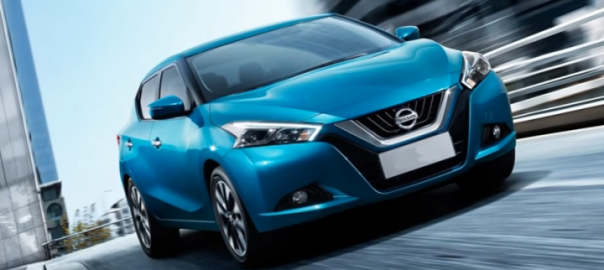
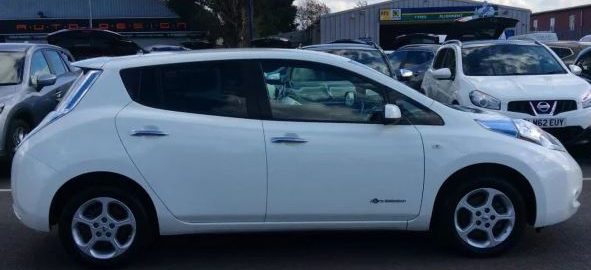
On a trip to Mexico City this week, I have just seen a lovely sight. A long row of all-electric Nissan Leafs lined up in a taxi rank ready to start the day.
Electric Taxi Rank in Mexico City
If you have ever been to Mexico City, then you will know that air pollution is a major issue here, as it is now becoming in all large cities. The taxi rank is not yet a full solution, and the city is still filled with diesels and petrol guzzlers blasting out noxious fumes, but it is a step in the right direction. I hope for many more.
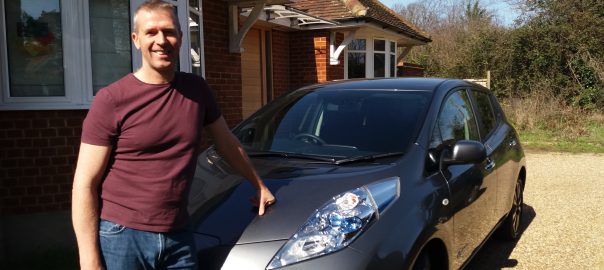
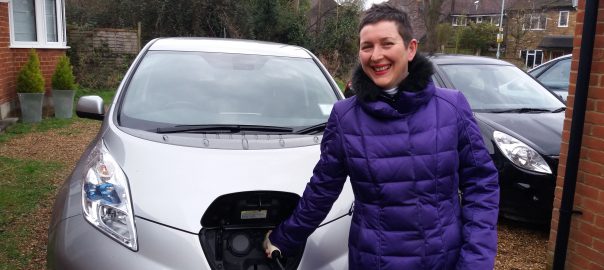
I love my electric car! It’s nippy and smooth to drive, all at the same time. Somehow it seems to glide effortlessly along and I can weave in and out of traffic very easily. I use it for all my local errands – family shop, trips to the gym, plus the never-ending Mum-taxi drop offs and pick ups……At night, I plug it in when I finally get home and it is fully charged the next day, ready to go.
Nissan Leaf – a Perfect Family Car
I rarely use up more more than 30% of the battery going about my usual day, so I don’t really have any concerns about the battery life. It took a little getting used to on longer journeys into London – I learned to drive just a little bit slower to conserve the battery – although when we get our new Nissan Leaf next week, it will have a longer range and I can then really put my foot down?. The free congestion charge and almost free parking in Westminster always make up for the extra 5 minutes in the car!
Most of all, I enjoy the engine quietness and the ‘smug value’ that comes from knowing that I am doing the right thing for my children by not adding more polluting emissions to the earth’s atmosphere. On top of that, it makes financial sense – a new car (let me say that again, a new car – I have NEVER had a new car before!) for just a little more per month than we previously paid for fuel. It’s a no-brainer for me.
An overhaul of UK car tax rules will increase the cost of motoring – but not if you’re buying a Nissan LEAF
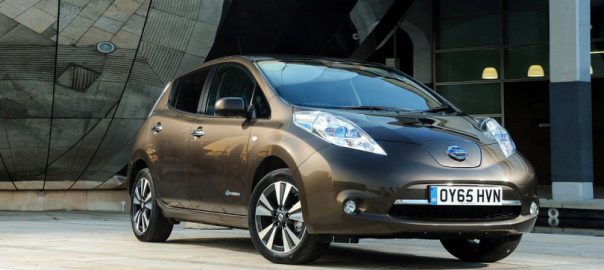
On April 1, the system for taxing new cars in the UK, known as Vehicle Excise Duty (VED), is being radically overhauled (click here for details). The revamp will make it more expensive to run certain types of low-emissions cars – but the Nissan LEAF, the world’s best-selling electric car, will remain exempt from tax.
If you’re confused by the changes, or uncertain of what they mean if you’re considering buying a new car, here’s a quick guide.
How car tax works now
The amount of VED you currently pay is based on your car’s CO2 emissions. There are 13 VED bands: vehicles that emit between 0 and 130g/km of CO2 (think electric vehicles and certain hybrids) don’t pay any VED in their first year. After that, vehicles that emit 101-120g/km of CO2 have to pay between £10 and £30. The duty jumps from there, to at least £100 for cars that emit 121g/km of CO2 or more.
What’s changing
From April 1, only vehicles that produce no emissions while driving, such as the Nissan LEAF, will be exempt from VED in year one. Vehicles that produce 1-50 g/km of CO2 pay £10; those that emit 51-75 g/km pay £25. VED then leaps to £100 for vehicles that emit 76-90 g/km. From year two on, CO2-producing vehicles costing less than £40,000 pay an annual rate of £140 – with a £310 premium for cars that cost more than £40,000.
Zero emissions, zero tax
Cars that produce 0g/km of CO2 and cost less than £40,000 will remain exempt from VED for their lifetime. The fully-equipped, five-seat electric Nissan LEAF falls into that category – and it’s also exempt from congestion charges. So as well as fuel costs of as little as 2p a mile, buying a safe and reliable LEAF could save you hundreds of pounds in tax.
When it comes to fuel efficiency, the British-built Nissan LEAF remains ahead of the pack – because it uses no combustible fuel at all.
When buying an electric car it is nearly always worthwhile to get a dedicated charge point installed at home.
It’s more convenient than an ‘occasional use’ or ‘granny’ (13 Amp) charge cable because you don’t need to reel it up and put it away each time.
Charging a Renault ZOE with a Home Charge Point (Image: Charging Solutions)
It will also be significantly faster because a dedicated charge point can provide more power without the risk of overheating. Also some electric cars, such as the Renault ZOE, don’t come with such a cable and buying one yourself can be very expensive (£500+).
The good news is that the installation of domestic charge points is subsidised by the UK government.
There are 3 decisions to be made when selecting the type of charge point for your car:
Tethered or Untethered
Connector Types
Power Level
Tethered or Untethered
There is usually the choice of a ‘tethered’ cable (it is fixed to the charge point) or an ‘untethered’ cable (it plugs into and can be removed from the charge point).
Untethered and Tethered Charge Points (Image: Chargemaster)
Untethered has the advantage of allowing different cables to be connected (for example you can use the same charge point for a Nissan Leaf and a Renault ZOE). However, most people choose tethered because it avoids the inconvenience of connecting a cable whenever you need to charge (usually daily). It also reduces the risk of the cable being stolen.
A charge point with a tethered cable will usually cost more than an untethered one (typically about £50 more) because of the cost of its cable.
Untethered and Tethered Charge Points (Images: POD Point)
If you choose untethered you will need to use your own cable to connect to the car; it is the same cable that would be used to connect to a public charging point. It may come free with the car, for example the Renault ZOE or the Nissan Leaf with the 6.6kW charge option come with one. Otherwise you will need to buy one (we can advise you on suppliers).
Connector Types
All untethered domestic charge points supplied in the UK come with a Type 2 socket on the charge point, just as all public charge points now have (or at least officially should have) Type 2 sockets. Similarly all charge cables have a Type 2 plug at the charge point end.
Type 1 (5 pin) and Type 2 (7 pin) connectors
If the cable is tethered then you need to tell the installer the type of plug you want at the car end. This will depend on the car:
Type 1 socket: Nissan Leaf, Mitsubishi Outlander PHEV, Kia Soul EV
Type 2 socket: Renault ZOE, BMW i3, Tesla, VW e-Golf and Hyundai IONIQ
The Type 2 or ‘Mennekes’ connector is the official standard in Europe and should eventually replace the Type 1.
Power Level
A dedicated charge point can provide higher powers than a typical occasional use charging cable which will run at 10 Amps, equivalent at 230 Volts to 2.3 kilowatts. The charge will take place at the highest power that both the charge point can provide and the car can use.
There are two common power levels:
16A = 3.5kW: This is the maximum charge level of the Nissan Leaf 3.3kW, the Mitsubishi Outlander and the VW e-Golf.
30A/32A = 7kW: This is the maximum charge level of the Nissan Leaf 6.6kW, BMW i3, Kia Soul EV and Hyundai IONIQ. The standard Renault ZOE can use this level, in fact anything up to 22kW.
The higher power reduces the charge time so a typical EV battery will charge in about 8 hours at 16A but in about 4 hours at 32A.
It may be best to install the highest power charge point you can afford; even if your current car can’t use all the power, the next one almost certainly will be able to.
Nissan has taken to social networking and microblogging site Twitter to announce the reveal of its next-generation all-electric vehicle.
The Japanese auto manufacturer tweeted on Friday, March 10, that the company’s all-new Nissan Leaf EV will be officially revealed in September and will go on sale before the year ends.
This is a screenshot of a video featuring the all-new Nissan Leaf EV (Image: HouseBear/YouTube)
Nissan tweets about the official release of its all-new Nissan Leaf. A September unveiling of its new Leaf means that excited fans could possibly see the all-electric vehicle at the Frankfurt Motor Show. The design of Nissan’s all-new EV is said to take inspiration from the IDS concept. The IDS concept debuted at the 2015 Tokyo Motor Show.
The Japanese auto manufacturer’s tweet specifically said that the all-new Leaf “will be globally revealed” in September. The tweet also mentioned that the vehicle will “go on sale before the end of the year.”
The current Leaf model has a range of 107 miles on a single charge. The next generation model is said to have increased mile range, possibly close to the Chevrolet Bolt EV’s range of 238 miles.
Asked if the all-new Nissan Leaf electric vehicle would be able to compete with Chevrolet’s Bolt EV at the 2017 Consumer Electronics Show, Nissan research and advance engineering Vice President Takao Asami answered,
“We can get to 200 or even 300. We can.” He further added, “The question is cost.”
The technology behind of the electric vehicle will most likely be the same one on the Renaut Zoe EV. The Renaut Zoe EV debuted at the Paris Motor Show in the previous year. The electric vehicle uses a lithium-ion battery pack supplied by LG Chem who also supplied Chevrolet with the Bolt EV’s battery. The Renaut Zoe EV, however, only boasts of a humble range of 189 miles compared to the Bolt EV.
Warning: preg_match(): Compilation failed: invalid range in character class at offset 4 in C:\inetpub\vhosts\fuelincluded.com\httpdocs\wp-content\plugins\maxbuttons\assets\libraries\simplehtmldom\simple_html_dom.php on line 1389
Warning: preg_match_all(): Compilation failed: invalid range in character class at offset 4 in C:\inetpub\vhosts\fuelincluded.com\httpdocs\wp-content\plugins\maxbuttons\assets\libraries\simplehtmldom\simple_html_dom.php on line 694
Warning: foreach() argument must be of type array|object, null given in C:\inetpub\vhosts\fuelincluded.com\httpdocs\wp-content\plugins\maxbuttons\assets\libraries\simplehtmldom\simple_html_dom.php on line 701
Warning: preg_match_all(): Compilation failed: invalid range in character class at offset 4 in C:\inetpub\vhosts\fuelincluded.com\httpdocs\wp-content\plugins\maxbuttons\assets\libraries\simplehtmldom\simple_html_dom.php on line 694
Warning: foreach() argument must be of type array|object, null given in C:\inetpub\vhosts\fuelincluded.com\httpdocs\wp-content\plugins\maxbuttons\assets\libraries\simplehtmldom\simple_html_dom.php on line 701