All posts by Trevor Larkum

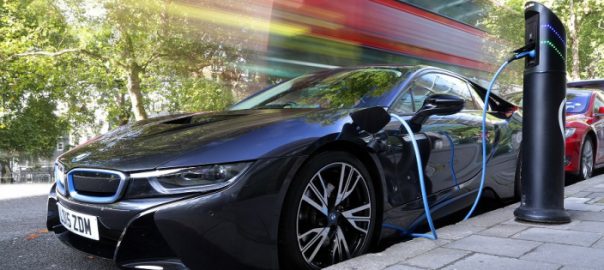
BMW i8 on charge (Image: Chargemaster)

Government sets out new powers to shape electric vehicle charging infrastructure

The government has set out its plans for the future of UK electric vehicle charging infrastructure in the UK, including powers to standardise new publicly accessible chargepoints; requirements for smart technologies to allow chargepoints to help balance the grid; and minimum provision of charging infrastructure at motorway services.

BMW i8 on charge (Image: Chargemaster)

The proposals have been unveiled as part of the government’s plans for a Modern Transport Bill, which will be introduced to Parliament at the earliest opportunity.

Within the response to a consultation on proposed ultra low emission vehicles (ULEVs) carried out at the end of 2016, the Department for Transport (DfT) has outlined a series of new powers to increase deployment of charging infrastructure.

Within this are plans to require infrastructure installed for the purposes of charging EVs to have ‘smart’ functionality to receive, understand and respond to signals sent by energy system participants.

This would allow charge points to help balance energy supply and demand in a similar way as battery storage, although the plans did not explain if this infrastructure would be able to access the same revenue streams open to storage.

This measure was met with overwhelming support from respondents, with 90% approving of the plans which could allow EV charging demand to “form a controllable load of immense proportions at a national scale”.

DfT also plans to adopt powers requiring operators of motorway service areas to ensure a minimum provision of electric and hydrogen fuels for ULEVs at their sites. This may mean they need to engage a third-party operator to provide the required infrastructure.

Read more: Clean Energy News

SolarCity System With Tesla Powerwall

Springtime May Be Coming Early for Britain’s Energy Storage Market

The U.K. government is on the verge of making structural changes to the energy market that will benefit storage

Powervault Energy Storage System (Image: Powervault.co.uk)

Last fall, the U.K. government reached out to players across the electricity industry for suggestions on how to reform the grid. Now industry observers are expecting the country’s energy storage market to take a major leap forward if legislation is enacted this spring.

The U.K. is set to become “the world’s best market for scaling up storage,” said Simon Daniel, CEO of energy storage developer Moixa.

“There’s a perfect storm on its way,”

thanks to a combination of new government promotion programs, a deregulated electricity market and a high adoption of solar, said Daniel.

The legislative changes should be implemented after the government finishes mulling over the results of a recent industry consultation on how to make the grid smarter and more flexible.

Joe Warren, managing director of storage developer Powervault, said the laws will

“focus on removing barriers and opening up access to electricity markets through smart tariffs and more stable network charging regimes.”

U.K. government officials have been warming to storage, most recently announcing funding for £9 million (USD $11 million) worth of projects. Storage advocates remain hopeful that the government will integrate their suggestions for market reform.

David Capper, deputy director and head of future electricity networks at the U.K.’s newly created department of Business, Energy and Industrial Strategy (BEIS), has expressed the need to encourage markets for flexibility services.

Removing the regulatory barriers for storage are a major priority for BEIS, Capper said. He also believes developers should be allowed to stack revenues.

Some regulatory changes boosting the prospects for storage are already underway. The regulator Ofgem is planning to separate management of the distribution system from National Grid’s management of the U.K. transmission system in order to encourage competition and improve flexibility.

The new distribution system operator role will allow for greater coordination with the regional network operators to help speed up the grid connection process for new projects, according to the Renewable Energy Agency.

Read more: Greentech Media

Met Police shifts gear with electric vehicle rollout

London’s Metropolitan Police Service has kick started its rollout of electric vehicles in a bid to help combat the capital’s air pollution problem.

The Met is currently working to introduce around 250 electric or hybrid vehicles into its fleet, with an overall target to replace 700 of the police force’s vehicles throughout 2017.

The Met confirmed that vehicles being rolled out will be similar to the BMW i3 which was successfully trialled as an emergency incident response vehicle in various London boroughs.

In January last year the Met took delivery of its first BMW i3 Range Extender ahead of it being tested in Westminster, Greenwich and Bexley after it was considered to be a “brilliant fit” for the Met’s demands.

Jiggs Bharij, head of fleet at the Met, said the force was now looking at various plug-in hybrids and alternative fuel-powered vehicles, however stressed the need for the operational fleet to remain available at all times.

“We have an ambition to deploy 250 [alternative energy] cars, vans and motorcycles on the road within the next 12 months. To support this we need to make sure that there are charging points available across the estate and that the vehicles are capable of carrying and powering additional police equipment which enables officers and members of the public to remain safe at the scene of an incident,” he added.

Bharij also revealed that the response from officers to the new vehicles had been “very positive”.

“The Met is leading the way – certainly in the police sector – and this compliments the decision in late 2015 to stop mandating diesel fuel for our fleet. We continue to work with a variety of vehicle manufacturers to explore the range of technology and the use of vehicles for evaluation has been a great success,” he said.

Read more: Clean Energy News

UK electric vehicle boom drives new car sales to 12-year high

The number of new cars registered in the UK hit a 12-year high in January, with electric vehicles taking a record share of the market, according to the Society of Motor Manufacturers and Traders (SMMT).

The industry body had warned of a slowdown in the motor trade in 2017 because of the impact of the weak pound, but there was no sign of deceleration in the first monthly numbers of the year.

Drivers registered 174,564 cars in January, up 2.9% on last year, to reach the highest monthly level since 2005, the trade body said.

Alternative fuel vehicles, mainly electric cars, such as the Nissan Leaf, increased by a fifth to reach a record 4.2% share of new vehicle registrations, beating a previous high of 3.6% in November last year.

Read more: The Guardian

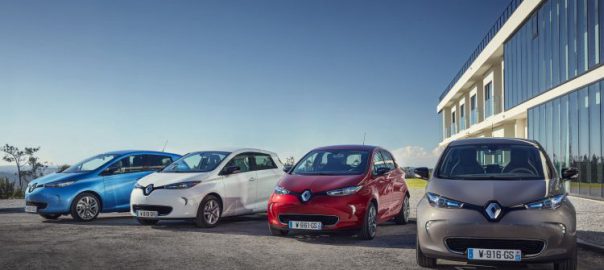
Renault ZOE Z.E. 40 Example Colours (Image: Renault)

New PCP Prices for long range Renault ZOE ZE40


Warning: preg_match(): Compilation failed: invalid range in character class at offset 4 in C:\inetpub\vhosts\fuelincluded.com\httpdocs\wp-content\plugins\maxbuttons\assets\libraries\simplehtmldom\simple_html_dom.php on line 1389

Warning: preg_match_all(): Compilation failed: invalid range in character class at offset 4 in C:\inetpub\vhosts\fuelincluded.com\httpdocs\wp-content\plugins\maxbuttons\assets\libraries\simplehtmldom\simple_html_dom.php on line 694

Warning: foreach() argument must be of type array|object, null given in C:\inetpub\vhosts\fuelincluded.com\httpdocs\wp-content\plugins\maxbuttons\assets\libraries\simplehtmldom\simple_html_dom.php on line 701

Warning: preg_match_all(): Compilation failed: invalid range in character class at offset 4 in C:\inetpub\vhosts\fuelincluded.com\httpdocs\wp-content\plugins\maxbuttons\assets\libraries\simplehtmldom\simple_html_dom.php on line 694

Warning: foreach() argument must be of type array|object, null given in C:\inetpub\vhosts\fuelincluded.com\httpdocs\wp-content\plugins\maxbuttons\assets\libraries\simplehtmldom\simple_html_dom.php on line 701

Fatal error: Uncaught Error: Attempt to assign property "href" on array in C:\inetpub\vhosts\fuelincluded.com\httpdocs\wp-content\plugins\maxbuttons\blocks\basic.php:171 Stack trace: #0 C:\inetpub\vhosts\fuelincluded.com\httpdocs\wp-content\plugins\maxbuttons\classes\button.php(382): MaxButtons\basicBlock->parse_button() #1 C:\inetpub\vhosts\fuelincluded.com\httpdocs\wp-content\plugins\maxbuttons\classes\button.php(476): MaxButtons\maxButton->parse_button() #2 C:\inetpub\vhosts\fuelincluded.com\httpdocs\wp-content\plugins\maxbuttons\classes\button.php(903): MaxButtons\maxButton->display() #3 C:\inetpub\vhosts\fuelincluded.com\httpdocs\wp-content\plugins\maxbuttons\classes\maxbuttons-class.php(525): MaxButtons\maxButton->shortcode() #4 C:\inetpub\vhosts\fuelincluded.com\httpdocs\wp-includes\shortcodes.php(434): MaxButtons\maxButtonsPlugin->shortcode() #5 [internal function]: do_shortcode_tag() #6 C:\inetpub\vhosts\fuelincluded.com\httpdocs\wp-includes\shortcodes.php(273): preg_replace_callback() #7 C:\inetpub\vhosts\fuelincluded.com\httpdocs\wp-includes\class-wp-hook.php(324): do_shortcode() #8 C:\inetpub\vhosts\fuelincluded.com\httpdocs\wp-includes\plugin.php(205): WP_Hook->apply_filters() #9 C:\inetpub\vhosts\fuelincluded.com\httpdocs\wp-includes\post-template.php(256): apply_filters() #10 C:\inetpub\vhosts\fuelincluded.com\httpdocs\wp-content\themes\twentythirteen\content.php(43): the_content() #11 C:\inetpub\vhosts\fuelincluded.com\httpdocs\wp-includes\template.php(812): require('...') #12 C:\inetpub\vhosts\fuelincluded.com\httpdocs\wp-includes\template.php(745): load_template() #13 C:\inetpub\vhosts\fuelincluded.com\httpdocs\wp-includes\general-template.php(206): locate_template() #14 C:\inetpub\vhosts\fuelincluded.com\httpdocs\wp-content\themes\twentythirteen\author.php(49): get_template_part() #15 C:\inetpub\vhosts\fuelincluded.com\httpdocs\wp-includes\template-loader.php(106): include('...') #16 C:\inetpub\vhosts\fuelincluded.com\httpdocs\wp-blog-header.php(19): require_once('...') #17 C:\inetpub\vhosts\fuelincluded.com\httpdocs\index.php(17): require('...') #18 {main} thrown in C:\inetpub\vhosts\fuelincluded.com\httpdocs\wp-content\plugins\maxbuttons\blocks\basic.php on line 171