Monthly Archives: May 2017

Re-Energizing Earth Day 

The eco-dream of the ’90s is alive in the electric car
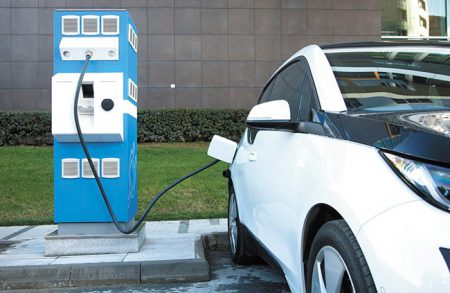
Electric motors have instant acceleration, like a roller coaster on wheels

I haven’t bought gas in a year. Yes, you read that right. Go ahead and let that sink in a bit.

Last April, when I was looking for a new ride, my wife told me I should try an electric car. Why not? Skeptically, I tested a used BMW i3, and it was like going out to take a look at a puppy. Of course we brought it home.

You should know that my first car was a Chevy Celebrity — probably the least sexy car to come off an American production line in the past 50 years. So I was overdue, but who knew the solution to my midlife crisis would look more like a golf cart than a Mustang?

A year in, I can tell you it’s the coolest car I’ve owned — the technology makes you feel like you’re driving around inside an iPhone. It’s also an instant conversation starter. “What is that thing?” asks the dude in the parking lot or the woman working the drive-through window.

“It’s an electric car,” I say. “Did I mention that I haven’t bought gas for it in a year?”

What I didn’t realize at first was that the simple act of driving an electric car is kinda subversive. Lots of powerful people don’t want us to go electric. Sticking with gasoline to power our lives is part economics, but part unfair play, as oil-industry fat cats have long pulled the levers of power to kill the dream of emission-free travel.

There were electric cars going all the way back to the dawn of the automobile, but the concept was put on the shelf as Henry Ford’s factories dictated the future of the industry.

Then in the 1990s, with the dawning realization that our cars were like cigarettes, choking our planet’s health, electricity got another look. Starting in 1996, GM built more than 1,000 prototype EV1 vehicles, and celebrities and other energy rebels started leasing them. (As a test vehicle, they couldn’t buy them.)
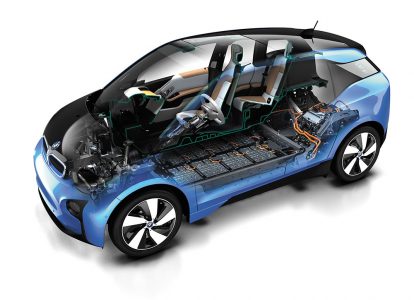
The electric BMW i3’s passenger compartment is made from strong, lightweight carbon fiber manufactured in Moses Lake.

The test was going well — too well, and those big-oil folks, some claim (as documented in the 2006 film Who Killed the Electric Car?) got nervous. The project was not only ended, but the cars were repossessed by GM and nearly all of them were crushed into oblivion.

Instead GM doubled down on the all-American, gas-guzzling SUV. Meanwhile, America changed. We bought a lot of SUVs, sure, but we also learned about some nasty things that some of the money we were spending on foreign oil was being used to fund. The growing desire to clean up our carbon footprint led Toyota to launch the Prius hybrid; in 2008 Elon Musk sold his first Tesla. In 2009, outgoing GM CEO Rick Wagoner said his biggest mistake was killing the EV1.

And in a sign of how far the tables have turned, last week Tesla surpassed Ford in total market value — and is only $3 billion behind General Motors. Here in 2017, driving an electric car isn’t so subversive any more.

Read more: Inlander

Receding glacier causes immense Canadian river to vanish in four days

First ever observed case of ‘river piracy’ saw the Slims river disappear as intense glacier melt suddenly diverted its flow into another watercourse

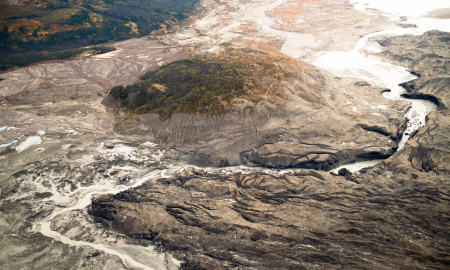
A view of the ice canyon that now carries meltwater from the Kaskawulsh glacier, seen here on the right, away from the Slims river and toward the Kaskawulsh river. Photograph: Dan Shugar/University of Washington Tacoma

An immense river that flowed from one of Canada’s largest glaciers vanished over the course of four days last year, scientists have reported, in an unsettling illustration of how global warming dramatically changes the world’s geography.

The abrupt and unexpected disappearance of the Slims river, which spanned up to 150 metres at its widest points, is the first observed case of “river piracy”, in which the flow of one river is suddenly diverted into another.

For hundreds of years, the Slims carried meltwater northwards from the vast Kaskawulsh glacier in Canada’s Yukon territory into the Kluane river, then into the Yukon river towards the Bering Sea. But in spring 2016, a period of intense melting of the glacier meant the drainage gradient was tipped in favour of a second river, redirecting the meltwater to the Gulf of Alaska, thousands of miles from its original destination.

The continental-scale rearrangement was documented by a team of scientists who had been monitoring the incremental retreat of the glacier for years. But on a 2016 fieldwork expedition they were confronted with a landscape that had been radically transformed.

The retreat of the Kaskawulsh glacier has resulted in a drastic change in the destination of its meltwater

“We went to the area intending to continue our measurements in the Slims river, but found the riverbed more or less dry,”

said James Best, a geologist at the University of Illinois.

“The delta top that we’d been sailing over in a small boat was now a dust storm. In terms of landscape change it was incredibly dramatic.”

Dan Shugar, a geoscientist at the University of Washington Tacoma and the paper’s lead author, added:

“The water was somewhat treacherous to approach, because you’re walking on these old river sediments that were really goopy and would suck you in. And day by day we could see the water level dropping.”

The team flew a helicopter over the glacier and used drones to investigate what was happening in the other valley, which is less accessible.

“We found that all of the water that was coming out from the front of the glacier, rather than it being split between two rivers, it was going into just one,”

said Best.

The Kaskawulsh River, seen here near its headwaters, is running higher now thanks to the addition of water that used to flow into the Slims River. Photograph: Jim Best/University of Illinois

Read more: The Guardian


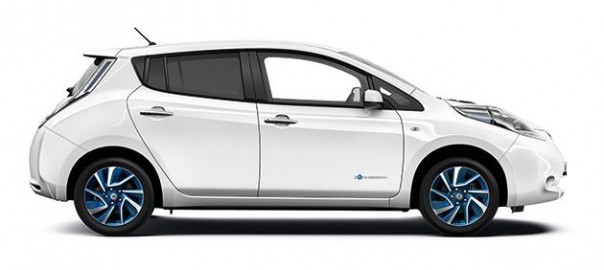
The new Acenta+ will come with a 6.6kW on-board charger as standard (Image: Nissan)

Fantastic May Prices on Used Nissan Leafs


Warning: preg_match(): Compilation failed: invalid range in character class at offset 4 in C:\inetpub\vhosts\fuelincluded.com\httpdocs\wp-content\plugins\maxbuttons\assets\libraries\simplehtmldom\simple_html_dom.php on line 1389

Warning: preg_match_all(): Compilation failed: invalid range in character class at offset 4 in C:\inetpub\vhosts\fuelincluded.com\httpdocs\wp-content\plugins\maxbuttons\assets\libraries\simplehtmldom\simple_html_dom.php on line 694

Warning: foreach() argument must be of type array|object, null given in C:\inetpub\vhosts\fuelincluded.com\httpdocs\wp-content\plugins\maxbuttons\assets\libraries\simplehtmldom\simple_html_dom.php on line 701

Warning: preg_match_all(): Compilation failed: invalid range in character class at offset 4 in C:\inetpub\vhosts\fuelincluded.com\httpdocs\wp-content\plugins\maxbuttons\assets\libraries\simplehtmldom\simple_html_dom.php on line 694

Warning: foreach() argument must be of type array|object, null given in C:\inetpub\vhosts\fuelincluded.com\httpdocs\wp-content\plugins\maxbuttons\assets\libraries\simplehtmldom\simple_html_dom.php on line 701

Fatal error: Uncaught Error: Attempt to assign property "href" on array in C:\inetpub\vhosts\fuelincluded.com\httpdocs\wp-content\plugins\maxbuttons\blocks\basic.php:171 Stack trace: #0 C:\inetpub\vhosts\fuelincluded.com\httpdocs\wp-content\plugins\maxbuttons\classes\button.php(382): MaxButtons\basicBlock->parse_button() #1 C:\inetpub\vhosts\fuelincluded.com\httpdocs\wp-content\plugins\maxbuttons\classes\button.php(476): MaxButtons\maxButton->parse_button() #2 C:\inetpub\vhosts\fuelincluded.com\httpdocs\wp-content\plugins\maxbuttons\classes\button.php(903): MaxButtons\maxButton->display() #3 C:\inetpub\vhosts\fuelincluded.com\httpdocs\wp-content\plugins\maxbuttons\classes\maxbuttons-class.php(525): MaxButtons\maxButton->shortcode() #4 C:\inetpub\vhosts\fuelincluded.com\httpdocs\wp-includes\shortcodes.php(434): MaxButtons\maxButtonsPlugin->shortcode() #5 [internal function]: do_shortcode_tag() #6 C:\inetpub\vhosts\fuelincluded.com\httpdocs\wp-includes\shortcodes.php(273): preg_replace_callback() #7 C:\inetpub\vhosts\fuelincluded.com\httpdocs\wp-includes\class-wp-hook.php(324): do_shortcode() #8 C:\inetpub\vhosts\fuelincluded.com\httpdocs\wp-includes\plugin.php(205): WP_Hook->apply_filters() #9 C:\inetpub\vhosts\fuelincluded.com\httpdocs\wp-includes\post-template.php(256): apply_filters() #10 C:\inetpub\vhosts\fuelincluded.com\httpdocs\wp-content\themes\twentythirteen\content.php(43): the_content() #11 C:\inetpub\vhosts\fuelincluded.com\httpdocs\wp-includes\template.php(812): require('...') #12 C:\inetpub\vhosts\fuelincluded.com\httpdocs\wp-includes\template.php(745): load_template() #13 C:\inetpub\vhosts\fuelincluded.com\httpdocs\wp-includes\general-template.php(206): locate_template() #14 C:\inetpub\vhosts\fuelincluded.com\httpdocs\wp-content\themes\twentythirteen\archive.php(42): get_template_part() #15 C:\inetpub\vhosts\fuelincluded.com\httpdocs\wp-includes\template-loader.php(106): include('...') #16 C:\inetpub\vhosts\fuelincluded.com\httpdocs\wp-blog-header.php(19): require_once('...') #17 C:\inetpub\vhosts\fuelincluded.com\httpdocs\index.php(17): require('...') #18 {main} thrown in C:\inetpub\vhosts\fuelincluded.com\httpdocs\wp-content\plugins\maxbuttons\blocks\basic.php on line 171