Monthly Archives: March 2017

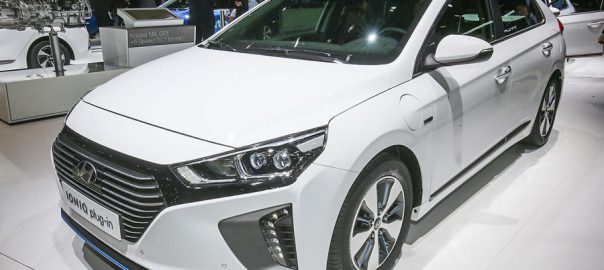
Hyundai IONIQ Plug-in Hybrid (PHEV)

New Hyundai Ioniq plug-in joins hybrid and electric models at Geneva

Hyundai’s first dedicated alternative fuel car is now on sale in all three specifications

The Hyundai Ioniq plug-in (PHEV) model has made its debut at the Geneva motor show, joining the recently launched hybrid and electric versions that are already on sale priced from £19,995 and £24,495 respectively.

Hyundai IONIQ Plug-in Hybrid (PHEV)

The Ioniq is Hyundai’s first dedicated hybrid and full-electric model and also the first car from any manufacturer to be offered with three electric powertrain options within a single body type.

Engines and gearbox

The Ioniq PHEV combines a 104bhp 1.6 GDI direct-injection petrol engine that’s mated to a 55bhp electric motor. The motor is powered by a 8.9kWh lithium ion polymer battery to enable 39 miles of pure electric driving. The car produces CO2 emissions of 26g/km and offers up to 257mpg, according to the New European Driving Cycle.

It joins the hybrid comprised of a 1.6-litre Kappa GDi engine that produces a peak of 103bhp and 108.5lb ft of torque, and a lithium ion battery-powered, permanent magnetic electric motor which contributes a maximum of 43bhp and 125lb ft of torque. The Ioniq hybrid is claimed to have a thermal efficiency of 40% – which conveniently matches its arch-rival, the Toyota Prius.

This efficiency is possible thanks to the combustion engine’s use of optimised cooling and a 200 bar six-point direct fuel injection system, while the electric motor benefits from declination coils that allow it to work with a claimed 95% efficiency.

Drive is sent to the front wheels via a six-speed DCT dual clutch transmission that’s been optimised to offer as much as 97.5% efficiency – another class leading feature, according to Hyundai.

The Ioniq Electric features an uprated lithium-ion battery pack, and is good for an estimated 155 miles of pure electric driving. Its electric motor produces 118bhp and 218lb ft of torque, with drive channelled through a single-speed transmission. In this form, the Ioniq has a top speed of 103mph.

A key standard feature of the electric model is rapid charge compatibility: it can be charged to 80% capability in 33min from a 50kW CCS Combo Rapid public charger. Owners can also plug their car into a conventional domestic charger. To help boost energy when on the move, the Ioniq Electric features regenerative braking which can be adjusted via steering column-mounted paddles.

Read more: Autocar
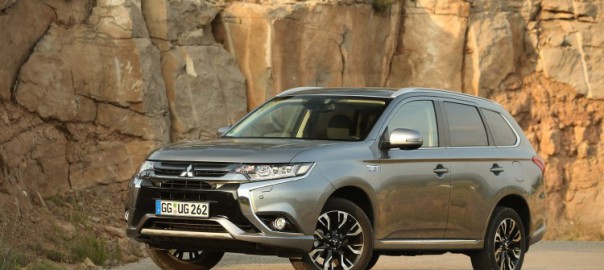
2016 Mitsubishi Outlander PHEV

Last Chance to Register a Tax Free Plug-in Hybrid (PHEV)

In just a few weeks time there will be a big change in the car tax (‘vehicle excise duty’ or VED) arrangements for plug-in hybrid electric vehicles (PHEVs) such as the Mitsubishi Outlander PHEV; here’s a brief summary.

The government has changed the basis on how the tax rates for cars are calculated – previously it was just on carbon dioxide emissions, so many low emission vehicles (such as small cars and all PHEVs) had no tax to pay. Now all cars with emissions that are non-zero, so all cars that aren’t 100% electric, have to pay tax. In the first year the amount depends on the level of emissions; in subsequent years it is £140 across the board.

Mitsubishi Outlander PHEV 4x4
Mitsubishi Outlander PHEV 4×4

The most popular plug-in hybrid in the UK is the Mitsubishi Outlander PHEV so it will be most affected. However, there remains just enough time to buy one from stock and get it registered before the deadline. In this case it gets free car tax for life; if registered after the deadline it pays tax for life.

Furthermore, there is an additional tax element for cars with a value over £40000; this is know as the ‘Premium Rate’ and adds an additional £620 over three years. Top-end Outlanders, typically above the GX4h spec, would get hit with this on top.

For more details see the Car tax 2017 article on the Next Green Car site.

Edit 22/3/17: Having looked into this a little further, I think NextGreenCar may have made a mistake. They are considering PHEVs to be petrol whereas they should probably be considered to be Alternative Fuel Vehicles which include hybrids (though in what sense any car running 100% on fossil fuels can be considered ‘alternative fuel’ beats me). Anyway, if so, the first year cost would be £0 rather than £10 and the follow-on years would cost £130 not £140. The overall message, however, is unchanged. The official guidance is here: Vehicle tax rate tables.

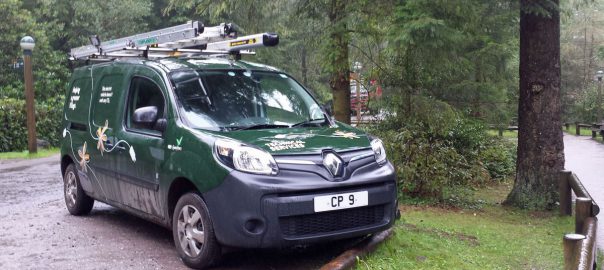
CenterParcs' All-Electric Renault Kangoo ZE Van (Image: T. Larkum)

Staying at Center Parks with a Renault ZOE EV

In the summer we spent the bank holiday weekend at Center Parks Longleat Forest with family. We travelled there and back in the ZOE.

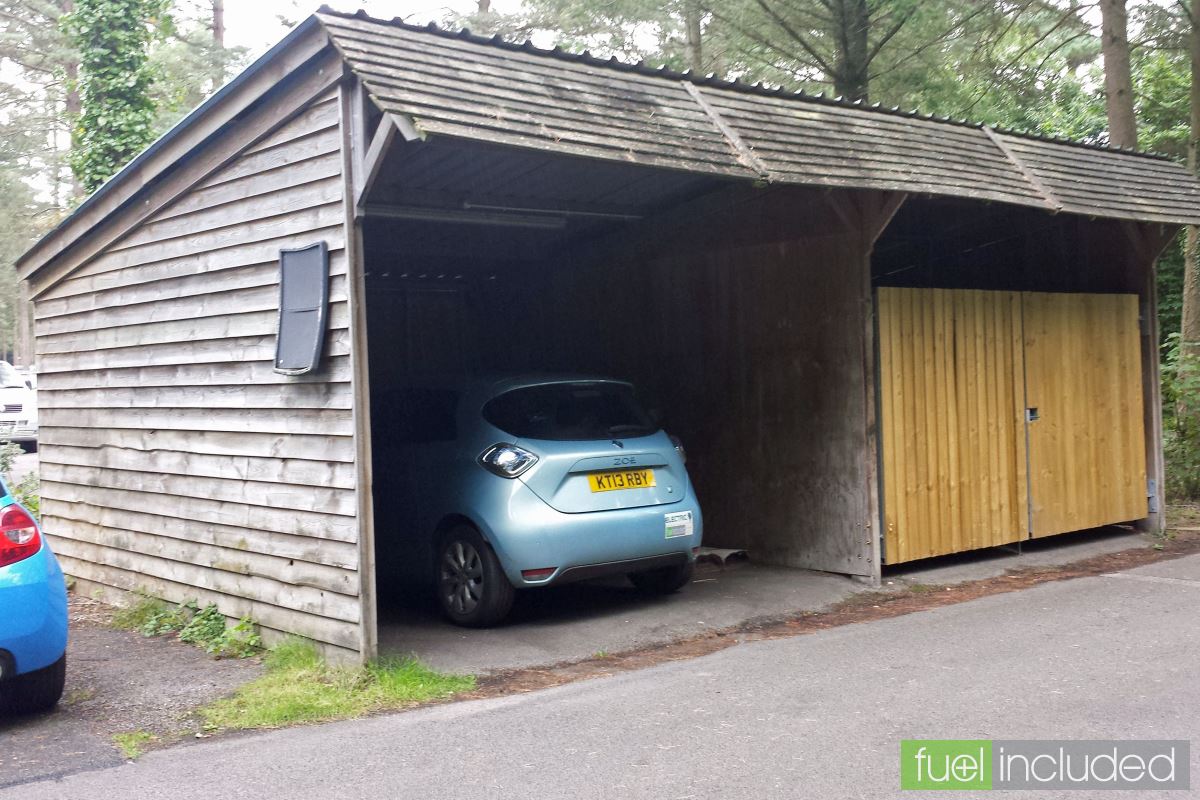
Naturally I hoped to charge while there but it turned out to be problematic. It seemed pretty clear that CenterParks was not setup for EV charging. Initially we were offered the use of a 13A socket in a shed in a far corner of one of the main car parks.

CenterParcs EV Charging Point in a Car Park Equipment Shed (Image: T. Larkum)

I plugged in and charging started fine. However, I was a bit sceptical and went back after a few hours to find that the charging had stopped, seemingly a circuit breaker had triggered. I restarted the charge, but disappointingly, I returned after a few hours to check on it to see that it had failed again.

CenterParcs EV Charging Point: the 13A socket above the bicycle (Image: T. Larkum)

I reported this and that night I was allowed to charge at the external sockets by the main entrance (next to the in and out barriers). However, the same thing happened and I gave up at that point. Instead we charged on our way home. So, overall, we were not too impressed with CenterParks’ provisions for EV charging (though apparently the provision of charge points has improved since).

CenterParcs' All-Electric Renault Kangoo ZE Van (Image: T. Larkum)
CenterParcs’ All-Electric Renault Kangoo ZE Van (Image: T. Larkum)

On the plus side, we did see that Center Parks were making use of all-electric Kangoo ZE vans for work around the park. And we did enjoy our time there, even if it was a bit pricey.

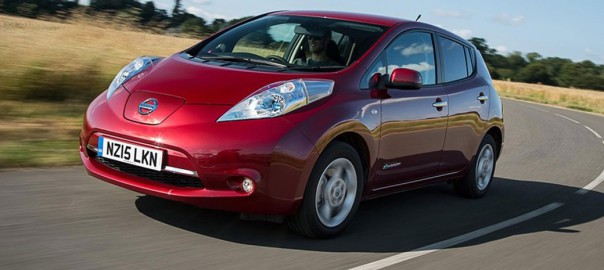
New Lower Nissan Leaf Prices


Fatal error: Uncaught TypeError: count(): Argument #1 ($value) must be of type Countable|array, null given in C:\inetpub\vhosts\fuelincluded.com\httpdocs\wp-content\plugins\maxbuttons\classes\button.php:115 Stack trace: #0 C:\inetpub\vhosts\fuelincluded.com\httpdocs\wp-content\plugins\maxbuttons\classes\button.php(115): count() #1 C:\inetpub\vhosts\fuelincluded.com\httpdocs\wp-content\plugins\maxbuttons\classes\button.php(802): MaxButtons\maxButton->set() #2 C:\inetpub\vhosts\fuelincluded.com\httpdocs\wp-content\plugins\maxbuttons\classes\maxbuttons-class.php(525): MaxButtons\maxButton->shortcode() #3 C:\inetpub\vhosts\fuelincluded.com\httpdocs\wp-includes\shortcodes.php(434): MaxButtons\maxButtonsPlugin->shortcode() #4 [internal function]: do_shortcode_tag() #5 C:\inetpub\vhosts\fuelincluded.com\httpdocs\wp-includes\shortcodes.php(273): preg_replace_callback() #6 C:\inetpub\vhosts\fuelincluded.com\httpdocs\wp-includes\class-wp-hook.php(324): do_shortcode() #7 C:\inetpub\vhosts\fuelincluded.com\httpdocs\wp-includes\plugin.php(205): WP_Hook->apply_filters() #8 C:\inetpub\vhosts\fuelincluded.com\httpdocs\wp-includes\post-template.php(256): apply_filters() #9 C:\inetpub\vhosts\fuelincluded.com\httpdocs\wp-content\themes\twentythirteen\content.php(43): the_content() #10 C:\inetpub\vhosts\fuelincluded.com\httpdocs\wp-includes\template.php(812): require('...') #11 C:\inetpub\vhosts\fuelincluded.com\httpdocs\wp-includes\template.php(745): load_template() #12 C:\inetpub\vhosts\fuelincluded.com\httpdocs\wp-includes\general-template.php(206): locate_template() #13 C:\inetpub\vhosts\fuelincluded.com\httpdocs\wp-content\themes\twentythirteen\archive.php(42): get_template_part() #14 C:\inetpub\vhosts\fuelincluded.com\httpdocs\wp-includes\template-loader.php(106): include('...') #15 C:\inetpub\vhosts\fuelincluded.com\httpdocs\wp-blog-header.php(19): require_once('...') #16 C:\inetpub\vhosts\fuelincluded.com\httpdocs\index.php(17): require('...') #17 {main} thrown in C:\inetpub\vhosts\fuelincluded.com\httpdocs\wp-content\plugins\maxbuttons\classes\button.php on line 115